Key Points
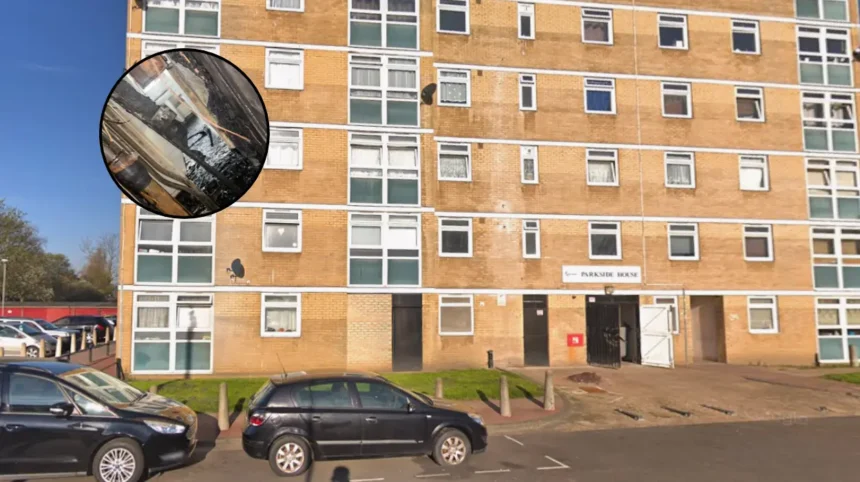
- Residents of Parkside House in Bell Farm Avenue, Dagenham, state they feel “abandoned and ignored” by Barking and Dagenham Council one year after a major fire damaged their residential block.
- The fire broke out on 11 October 2025 in an electrical intake cupboard located on the second floor, causing immediate power outages, structural disruption, and displacement of occupants.
- Impacted tenants report ongoing infrastructure issues following their return, including a total lack of heating, missing hot water supplies, and spreading damp and mould within individual flats.
- Affected residents report incurring high personal electricity costs from running electric space heaters without receiving financial reimbursement or official compensation from local authorities.
- Barking and Dagenham Council issued a statement thanking residents for their patience, confirming ongoing work to restore a fully compliant and safe electrical supply across the site.
Dagenham (East London Times) October 17, 2026 – Residents living in a residential tower block damaged by a severe electrical blaze last year have voiced strong criticism against local housing authorities, alleging they have been left without basic household utilities for months. Exactly twelve months following the incident at Parkside House on Bell Farm Avenue, tenants state that conditions inside the building remain severely compromised due to incomplete repair work, leaving families to cope with cold flats and rising utility bills without local authority intervention.
- Key Points
- Why Are Parkside House Residents Expressing Discontent With Barking And Dagenham Council?
- How Has The Local Authority Responded To The Infrastructure Demands?
- What Is The Background Of The Parkside House Fire Development?
- What Is The Future Prediction For Affected Residents And Local Housing Operations?
Why Are Parkside House Residents Expressing Discontent With Barking And Dagenham Council?
As reported by local news reporting from the Barking and Dagenham Post, occupants of the Bell Farm Avenue property have expressed deep frustration over their living conditions since being re-housed back into the premises. One local resident and grandmother, who was permitted to move back into her property on 13 July following temporary displacement, explained that critical residential services have never been fully restored. As recorded by the media title, the resident stated:
“We feel we’ve been abandoned and ignored. We still have no heating, no hot water and no compensation or reimbursement for using boosters at our own cost.”
The absence of functional central heating systems has forced tenants to rely entirely on portable electrical plug-in space heaters and water boosters to maintain basic warmth and sanitation within their homes. Residents report that running high-wattage heating appliances continuously has driven up household electricity bills substantially during cold spells. Furthermore, multiple households within the block have documented deteriorating internal conditions, including visible damp and black mould spreading across living spaces, which residents attribute to prolonged unheated conditions inside the building structure.
How Has The Local Authority Responded To The Infrastructure Demands?
In response to the complaints raised by affected residents, representatives from Barking and Dagenham Council addressed the ongoing maintenance delays and outlined the scope of works required to restore the property. As reported by the Barking and Dagenham Post, a spokesperson for Barking and Dagenham Council stated:
“We appreciate the patience shown by affected residents and remain committed to restoring a safe, reliable and fully compliant electrical supply as quickly as possible, while continuing to support residents throughout the process.”
Local authority updates published during the initial recovery period noted that the fire caused major damage to the primary electrical distribution cabling within the building. Isolation of the compromised electrical network required extensive testing and replacement of heavy infrastructure before full power and heating systems could be certified safe for standard operation.
What Is The Background Of The Parkside House Fire Development?
The emergency incident at Parkside House took place on the evening of Saturday, 11 October 2025, when a fire originated inside an electrical intake cupboard located on the second floor of the residential block. London Fire Brigade crews attended the scene quickly to contain the blaze, which affected an unoccupied flat alongside the main utility infrastructure. Although emergency responders successfully extinguished the fire and no severe physical injuries were recorded—with two families taken to hospital purely as a precaution—the internal disruption was extensive.
Because the fire compromised the main power lines, the building was left completely devoid of functional lighting, working lifts, running water, and electricity. On 12 October 2025, council officials notified all occupants that they could not return to their homes immediately, setting up temporary assistance procedures and holding community meetings at the nearby Dagenham and Redbridge Football Club. Over the following months, displaced households were placed in temporary emergency accommodation while structural engineers and electrical contractors assessed the damage, with gradual re-entry offered to residents between late spring and mid-summer 2026 as initial safety clearances were granted.
What Is The Future Prediction For Affected Residents And Local Housing Operations?
This ongoing development points to sustained operational and financial challenges for both the residents of Parkside House and the wider public housing management of Barking and Dagenham Council. For the affected residents, continued delays in reinstating core heating and hot water infrastructure ahead of the winter months present heightened risks of cold-related health issues, respiratory strain from expanding damp and mould, and persistent financial pressure due to uncompensated electricity costs from space heaters.
For the local authority and surrounding social housing communities, the situation underscores the systemic difficulties municipal bodies face when handling major electrical infrastructure failures in multi-occupancy residential towers. Until full electrical compliance and core utility connections are certified, Barking and Dagenham Council is likely to face increased scrutiny over tenant welfare protocols, maintenance response timelines, and emergency financial support frameworks for social housing tenants experiencing prolonged displacement.