Key Points
- Transport for London (TfL) has confirmed a deployment of Enforcement Officers across Dagenham Heathway and Elm Park stations, following direct intervention by Labour MP Margaret Mullane.
- The operational surge complements ongoing enforcement activities at Dagenham East, alongside routine on-train ticket checks along the eastern District line stretch between Bromley-by-Bow and Upminster.
- The local Member of Parliament took action after observing “brazen” barrier-pushing at ticket gatelines during her daily commute, in addition to receiving multiple complaints from constituents regarding intimidation at stations.
- TfL revealed that over 4,000 individuals have been referred for criminal prosecution within the past year for gate-pushing and barrier-tailgating across the London public transport network.
- Revenue protection teams are leveraging intelligence and fare evasion data to dynamically target hotspot stations, supporting TfL’s broader strategic ambition to reduce network-wide fare evasion below 1.5%.
Dagenham (East London Times) August 20, 2026 – Transport for London (TfL) has committed to escalating its enforcement presence across key District line stations in East London following representations made by Margaret Mullane, the Labour Member of Parliament for Dagenham and Rainham.
- Key Points
- How Did Local Passenger Complaints Prompt Transport for London to Escalate Enforcement Actions?
- What Operational Data and Enforcement Methods Are Being Used to Target Ticketless Travel Hotspots?
- Background of the Particular Development
- Prediction: How This Development Can Affect Dagenham and Elm Park Commuters
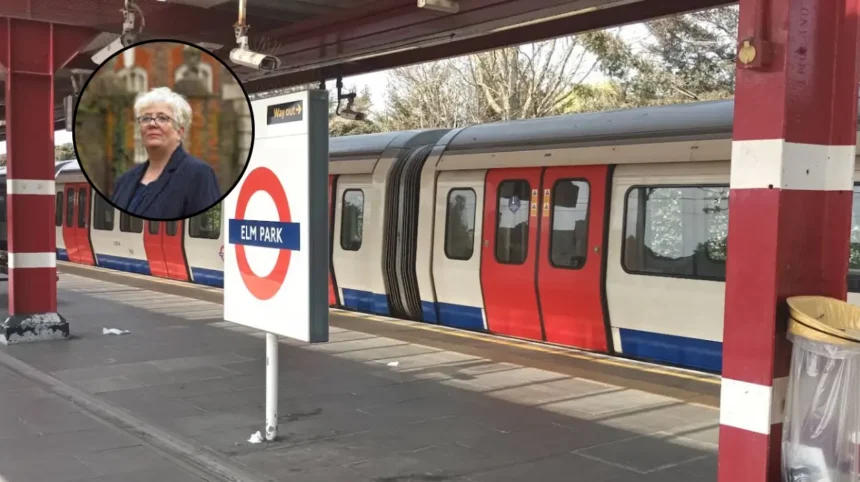
As reported by local media outlets, TfL confirmed that additional Revenue Enforcement Officers will be deployed specifically to target ticket barrier irregularities at Dagenham Heathway and Elm Park stations. The increased boots-on-the-ground presence builds upon active measures already taking place at Dagenham East and forms part of an escalated network strategy to stamp out ticketless travel across the eastern London borough.
How Did Local Passenger Complaints Prompt Transport for London to Escalate Enforcement Actions?
The strategic shift by transport authorities came after fare-paying commuters directly contacted Margaret Mullane MP to report widespread and deliberate barrier-breaching at Dagenham Heathway, Dagenham East, and Elm Park. Reports highlighted how individuals were routinely barging through closed ticket gates or closely tailgating paying passengers.
The Parliamentarian stated that she personally witnessed instances of gate-pushing while commuting to work, prompting her to escalate the matter to transport executives and law enforcement bodies.
As reported by the Havering Daily, Margaret Mullane MP stated:
“I had already raised this with the British Transport Police and Transport for London but there had appeared to be a lack of action. Decent fare paying passengers are outraged and often intimidated by the brazen actions of fare dodgers who barge their way through the ticket barriers.”
Mullane further explained that her continued engagement with regional transport leaders yielded direct commitments:
“Fare evasion has been happening at Dagenham East, Heathway and Elm Park stations in my constituency, and I have been calling for action to stop this for many months. I am pleased and relieved to say that I have now had a positive response from Transport for London. They tell me that they have been deploying their Enforcement Officers to target hotspots to deter fare evaders and that they are routinely carrying out on train checks between Bromley-by-Bow and Upminster.”
What Operational Data and Enforcement Methods Are Being Used to Target Ticketless Travel Hotspots?
In response to the formal representations submitted by the MP, TfL outlined its methodology for deploying physical compliance teams. Transport officials explained that revenue protection operations rely on real-time intelligence platforms and ticketing data to identify stations experiencing unusual trends in gateline irregularities.
By analyzing data feeds from automatic ticket gates and passenger flow monitors, TfL dynamically directs mobile enforcement units to location hotspots where revenue leakage and anti-social behaviour are most prevalent.
As reported by the Havering Daily, TfL confirmed that Dagenham Heathway and Elm Park form an integral part of the regular eastern District Line enforcement zone.
Officers are assigned to conduct continuous ticket inspections on board moving trains, operating along the busy corridor between Bromley-by-Bow and Upminster.
Transport authorities noted that this model ensures fare evaders remain subject to detection and enforcement action while in transit, even when physical inspection teams are not visibly stationed at gatelines.
To emphasize the severity of the crackdown, TfL disclosed key enforcement figures regarding deliberate barrier evasion. As reported by the Havering Daily, Margaret Mullane MP stated:
“TfL have assured me that so far in the last year over 4,000 individuals have been referred for prosecution for pushing through ticket barriers, and that TfL is on course to slash fare evasion to below a 1.5% target.”
Explore More Dagenham News
Dagenham Vet Practice Launches Unlimited Pet Consultation Healthcare Scheme 2026
East London Primary Teacher Permanently Banned After Conviction: Dagenham 2026
Background of the Particular Development
Fare evasion on London’s public transport network represents a persistent operational and financial challenge for Transport for London. Unpaid journeys cost the transport authority tens of millions of pounds in lost revenue each year—funds that would otherwise contribute directly to maintenance, infrastructure upgrades, and service reliability.
Beyond financial losses, public consultation data consistently demonstrates that gateline jumping is strongly correlated with anti-social behaviour, violent incidents, and passenger intimidation across underground platforms.
Over recent years, TfL has introduced multi-faceted revenue protection strategies, including expanding its team of uniformed revenue protection inspectors and working in close partnership with the British Transport Police.
The transport body has also upgraded ticket barrier mechanics and increased penalty charges to act as a stronger financial deterrent.
Despite these measures, specific suburban corridors—particularly high-volume commuter routes on the outer branches of the District line—have continued to experience elevated levels of gateline non-compliance. Local representatives across East London have increasingly voiced concerns that visible fare-dodging undermines public confidence in local transport security and burdens honest taxpayers.
Prediction: How This Development Can Affect Dagenham and Elm Park Commuters
The targeted escalation of revenue enforcement across Dagenham Heathway, Elm Park, and Dagenham East is likely to produce noticeable operational shifts for the local traveling public:
- Enhanced Safety and Reduced Anti-Social Behaviour: The heightened presence of dedicated Enforcement Officers at gatelines and on board trains will serve as an immediate visual deterrent to opportunistic gate-pushers. For daily commuters and vulnerable travelers, this visible policing presence is likely to improve perceived safety and reduce instances of confrontation or physical intimidation at ticket barriers.
- Improved Revenue Capture for Infrastructure Investment: By actively curbing ticketless travel along the Bromley-by-Bow to Upminster line, TfL can recover vital ticket revenue. In the medium to long term, higher fare compliance supports service sustainability and funding for local station improvements along the District line.
- Increased Scrutiny and Travel Delays for Commuters: Passengers who routinely travel through East London stations can expect more frequent revenue checks both at station entrances and during their train journeys. Honest commuters may experience minor delays during peak hours if revenue teams execute full gateline audits, while non-compliant passengers face a significantly elevated risk of incurring immediate penalty fares or formal criminal prosecution.