Key Points
- Beam Park is a c. 4,000-home regeneration scheme in east London, delivered by Countryside Partnerships (part of Vistry) and L&Q.
- The government, via the Ministry of Housing, Communities and Local Government (MHCLG), has confirmed that a future rail station at Beam Park could be accommodated within the existing rail network.
- This announcement comes through the Government’s New Homes Accelerator programme.
- The Greater London Authority (GLA), London Borough of Havering, Transport for London (TfL), and partners are now working to identify and assemble the funding package for the station.
- The statement strengthens the Beam Park masterplan, supporting delivery of thousands of new homes on one of London’s largest brownfield regeneration schemes.
- It highlights collaborative partnerships between central government, the Mayor of London, GLA, local authorities, transport partners, and delivery partners to overcome longstanding constraints.
- Beam Park’s status as a New Homes Accelerator site underscores its strategic importance for accelerating housing delivery in London.
- The future station is key to making Beam Park a highly connected neighbourhood, promoting sustainable travel and better access to employment and transport.
- Beam Park is one of only three London regeneration schemes delivering more than 3,000 homes, with 50% affordable and 25% suitable for families.
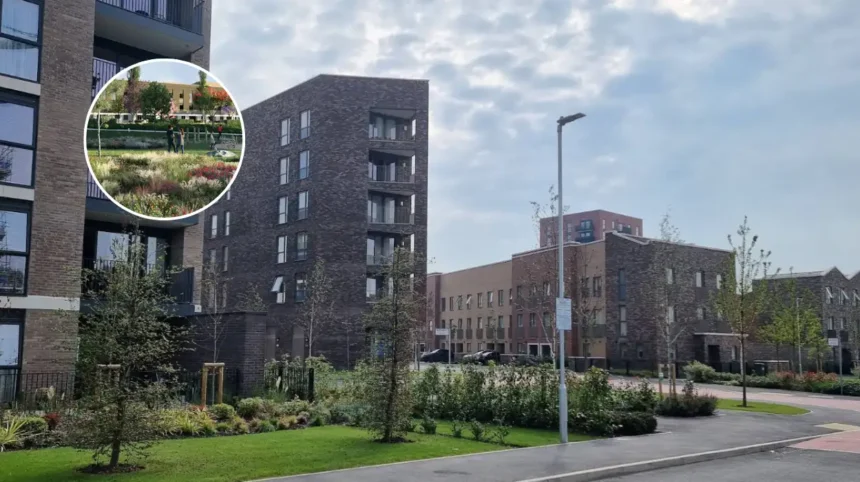
- To date, 1,158 high-quality homes completed (544 affordable), plus a new primary school, nursery, health centre, retail units, and major open spaces like Central Park.
- A further 520 homes are set for handover to BeFirst (part of London Borough of Barking & Dagenham).
- Masterplan includes 58% open space, two schools, multi-faith centre, gym, two energy centres, and extensive landscaping.
- Kevin Delve, Managing Director for Vistry East London, welcomed the milestone as reflecting collaborative efforts.
- Jacqueline Esimaje-Heath, Growth and Sales Director at L&Q, described the station as transformative for transport and growth.
Beam Park (East London Times) April 3, 2026 – The ambitious Beam Park regeneration scheme has achieved a significant breakthrough after the government confirmed that a proposed new rail station can integrate into the existing network, paving the way for enhanced connectivity and accelerated housing delivery in this east London brownfield site.
- Key Points
- What has the government confirmed about the Beam Park rail station?
- Why is Beam Park a New Homes Accelerator site?
- How will the new rail station transform Beam Park?
- What progress has been made on homes and community facilities at Beam Park?
- What are developers saying about this government milestone?
- Which partners are involved in funding the rail station?
- How does Beam Park fit into east London’s regeneration landscape?
- What challenges has Beam Park overcome to reach this point?
- What’s next for Beam Park’s masterplan?
The Ministry of Housing, Communities and Local Government (MHCLG) announcement, delivered via the Government’s New Homes Accelerator programme, marks a pivotal moment for the 72-acre development led by Countryside Partnerships—a subsidiary of Vistry—and housing association L&Q. This confirmation provides a clearer pathway for the station’s development, with the Greater London Authority (GLA), London Borough of Havering, Transport for London (TfL), and other partners now tasked with securing the necessary funding.
What has the government confirmed about the Beam Park rail station?
The MHCLG’s statement explicitly assures that the future rail station at Beam Park
“could be accommodated within the existing rail network.”
This development, as detailed in the official New Homes Accelerator programme update, resolves a key infrastructural hurdle that had previously stalled progress. It underscores Beam Park’s selection as one of the programme’s priority sites, signalling its role in the government’s push to boost housing supply across the capital.
As reported in the scheme’s press release covered by multiple outlets, this endorsement strengthens the overall masterplan. It supports the delivery of thousands of new homes on what is described as one of London’s largest brownfield regeneration projects.
The collaborative framework—encompassing central government, the Mayor of London’s office, the GLA, local councils, TfL, and private delivery partners—exemplifies how partnerships can unlock longstanding constraints.
Why is Beam Park a New Homes Accelerator site?
Beam Park’s designation under the New Homes Accelerator programme highlights its strategic importance to both national government and City Hall.
The programme aims to fast-track housing delivery in high-potential areas, and Beam Park stands out as one of only three London schemes poised to deliver more than 3,000 homes. A core commitment is that 50% of homes will be affordable, with 25% designed to suit families, addressing acute demand in east London.
This status, as noted in the MHCLG announcement, recognises the project’s potential to
“significantly accelerate housing delivery in the capital.”
It builds on existing momentum, with partners now focusing on funding assembly to bring the station to fruition.
How will the new rail station transform Beam Park?
Progress on the station is deemed “fundamental” to positioning Beam Park as a highly connected new neighbourhood. Enhanced rail links will promote sustainable travel modes, offering residents better access to jobs, services, and broader transport networks across London.
This infrastructure boost signals strong momentum on the site and bolsters confidence in the long-term vision.
The station’s integration into the existing network, as confirmed by MHCLG, will make Beam Park more attractive for future phases of development. It aligns with wider goals for east London regeneration, where improved connectivity can drive economic growth and reduce reliance on cars.
What progress has been made on homes and community facilities at Beam Park?
To date, 1,158 high-quality homes have been completed at Beam Park, including 544 affordable units.
These form part of a multi-phase rollout, with a further 520 homes scheduled for handover to BeFirst, the development arm of the London Borough of Barking & Dagenham. This handover, as outlined in project updates, ensures continued delivery across the site.
Beyond housing, the scheme has delivered essential community infrastructure: a new primary school, nursery, health centre, retail units, and extensive open spaces. Central Park, a standout riverside green area, features improved biodiversity, play facilities, and enhanced landscaping. The masterplan allocates 58% of the 72-acre site to open space, prioritising placemaking.
Future elements include a second school, multi-faith centre, gym, two energy centres, and further landscaped areas. This holistic approach emphasises liveability, blending residential growth with green infrastructure.
What are developers saying about this government milestone?
Kevin Delve, Managing Director for Vistry East London, commented on the significance of the MHCLG statement:
“Beam Park is one of London’s most important regeneration projects and we welcome the progress that has been made on the future station. Today’s milestone reflects the positive, collaborative effort between developers, local authorities, transport partners, the GLA and central government to unlock a complex site and maintain momentum. The statement released by MHCLG strengthens our ability to deliver the high-quality homes, community facilities and infrastructure that east London needs.”
Jacqueline Esimaje-Heath, Growth and Sales Director at L&Q, echoed this optimism:
“This is a very positive step forward for Beam Park and the wider community. The new station will be transformative for the area, improving transport connections and unlocking growth, making the area an even more attractive neighbourhood to live in. Working with our partners, we’re already building high-quality and affordable homes, as well as brilliant community facilities and green spaces, and this latest milestone strengthens our vision. We look forward to seeing the new station open and continuing our partnership to deliver homes Londoners need.”
These statements, drawn directly from the joint press release, highlight the shared enthusiasm among delivery partners.
Which partners are involved in funding the rail station?
Following the MHCLG confirmation, the GLA, London Borough of Havering, TfL, and other stakeholders are collaborating to
“identify and assemble the funding package required for delivery.”
This multi-agency effort builds on the New Homes Accelerator framework, pooling resources from public and potentially private sources. The involvement of TfL is particularly crucial, given its oversight of London’s rail and transport infrastructure.
Local authorities like Havering and Barking & Dagenham play key roles, with BeFirst already receiving homes for managed delivery. This partnership model, as emphasised in the announcement, demonstrates “partnerships working at its best.”
How does Beam Park fit into east London’s regeneration landscape?
Beam Park emerges as a flagship brownfield project amid east London’s ongoing transformation. Its scale—c. 4,000 homes on 72 acres—positions it alongside few peers, tackling housing shortages while revitalising underused land. The 50% affordable housing pledge addresses affordability crises, particularly for families needing larger units.
The scheme’s emphasis on sustainability, with energy centres and biodiversity enhancements, aligns with broader urban development goals. Central Park and 58% open space allocation create a green lung, fostering community wellbeing.
What challenges has Beam Park overcome to reach this point?
Longstanding constraints, including rail infrastructure uncertainties, had previously hampered progress. The MHCLG announcement overcomes this by confirming network accommodation, allowing focus to shift to funding and construction. Collaborative efforts have sustained momentum, from initial site clearance to current completions.
Developers Countryside Partnerships and L&Q have navigated complex brownfield issues, delivering 1,158 homes despite challenges. Ongoing phases, including the 520-home handover to BeFirst, show resilience.
What’s next for Beam Park’s masterplan?
With station funding in sight, attention turns to full masterplan rollout: additional schools, community hubs, and infrastructure. The project’s New Homes Accelerator status ensures priority support, potentially expediting timelines. Stakeholders anticipate the station’s opening as a catalyst for further investment, solidifying Beam Park as a model for connected, sustainable neighbourhoods.
This milestone not only unlocks housing potential but reinforces east London’s role in meeting national targets. As partners advance, Beam Park exemplifies how targeted government backing can turn ambition into reality.