Key Points
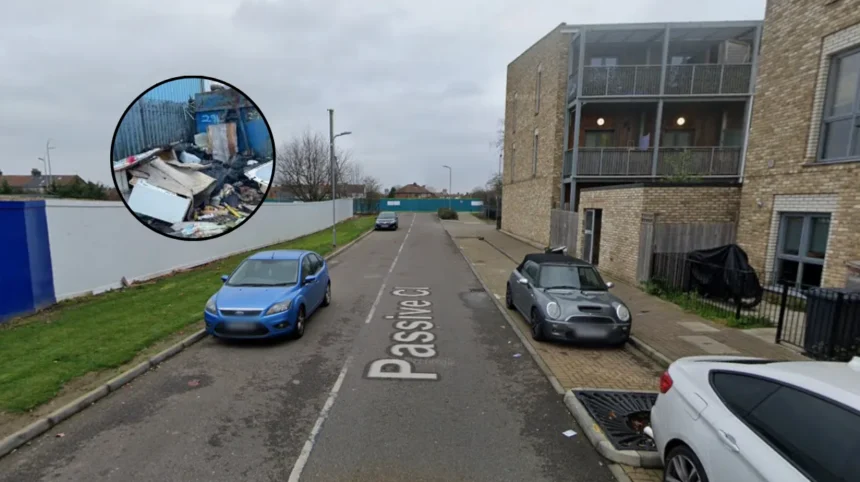
- Beam Park Labour Councillors Matthew Stanton and Trevor McKeever have demanded urgent, coordinated action to tackle persistent fly-tipping and poor environmental conditions at Passive Close in Beam Park
- Clarion Housing confirmed CCTV is now operational at the site and is developing a long-term response, inviting the Council to join discussions on future arrangements
- Both councillors argue current proposals fail to address root causes, particularly the lack of routine street cleansing and estate maintenance
- Passive Close is an unadopted road, meaning residents face repeated fly-tipping alongside inconsistent cleansing and maintenance
- Clarion indicated solutions like gated access or parking controls may require resident consultation and could lead to additional service charges
- Councillors warned against shifting costs onto residents for issues beyond their control, stating service charges must be reasonable and properly attributable
- With CCTV reinstated, councillors called for greater enforcement against fly-tipping offenders through tenancy enforcement or legal routes
- Both councillors are demanding a clear coordinated plan between Clarion and the Council establishing consistent street cleansing baselines and clearly defining responsibilities
- Further meetings between Clarion, the Council, and local representatives are expected to develop a long-term response
Beam Park (East London Times) May 20, 2026 – Beam Park Labour Councillors Matthew Stanton and Trevor McKeever have called for urgent and coordinated action to tackle ongoing fly‑tipping and poor environmental conditions at Passive Close in Beam Park, following a response from Clarion Housing.
- Key Points
- Why Does Passive Close’s Unadopted Road Status Matter for Fly‑tipping Responsibility?
- What Has Clarion Housing Said About CCTV and Long‑term Solutions?
- Why Are Councillors Opposed to Passing Fly‑tipping Costs to Residents Through Service Charges?
- How Will CCTV Enable Enforcement Against Fly‑tipping Offenders?
- What Is the Councillors’ Proposed Coordinated Plan Between Clarion and the Council?
- What Actions Have Residents Already Taken Regarding Fly‑tipping at Passive Close?
- Background: Understanding Fly‑tipping, Unadopted Roads, and Service Charge Law in the UK
- Prediction: How This Development Could Affect Beam Park Residents and the Wider Havering Community
The two councillors, who were re-elected in the May 7, 2026 Havering London Borough Council election, represent the Beam Park ward which includes the eastern part of the new neighbourhood of Beam Park.
Speaking following receipt of the response, Councillor Matthew Stanton said:
“We welcome Clarion’s willingness to engage and attend meetings, and we will be participating in those discussions. However, we cannot lose sight of the fundamental issue here. Passive Close is an unadopted road, and residents are dealing with repeated fly‑tipping alongside what appears to be a lack of consistent cleansing and maintenance”.
Councillor Trevor McKeever added:
“This has been a persistent concern for residents, and it is clear that piecemeal responses are not enough. People living here should not feel that their neighbourhood is being neglected simply because of unclear responsibilities”.
Why Does Passive Close’s Unadopted Road Status Matter for Fly‑tipping Responsibility?
Passive Close is an unadopted road, which means it is not maintained by the local authority as a public highway. This legal status creates ambiguity about who bears responsibility for street cleansing, estate maintenance, and waste management.
As reported in wider fly-tipping guidance, it is the landowner’s responsibility to remove rubbish from their land and do what they can to stop it happening again.
Councillor Stanton emphasised:
“Any long‑term solution must start with getting the basics right. Without a proper and regular estate management regime, other measures risk being ineffective”.
The councillors have stressed that residents should not feel their neighbourhood is being neglected simply because of unclear responsibilities between the housing association and the local authority.
What Has Clarion Housing Said About CCTV and Long‑term Solutions?
Clarion Housing has confirmed that CCTV is now operational at the site. The housing association also stated that it is developing a broader, long‑term response and has invited the Council to take part in discussions on future arrangements.
However, Clarion has indicated that potential solutions such as gated access or parking controls may require consultation with residents and could lead to additional service charges. This has raised concerns among the councillors about whether residents will be asked to pay for measures that should be the responsibility of the landowner or managing agent.
Why Are Councillors Opposed to Passing Fly‑tipping Costs to Residents Through Service Charges?
The councillors have cautioned against shifting costs onto residents for issues beyond their control. Councillor Stanton said:
“Residents should not be expected to pay more through service charges to deal with persistent environmental problems, fly‑tipping by third parties, or shortcomings in estate management. The law is clear that service charges must be reasonable and properly attributable”.
He continued:
“There is a duty on landowners and managing agents to take reasonable steps to prevent and manage waste. That responsibility cannot simply be passed on to tenants and leaseholders”.
This position aligns with wider housing sector practices where fly-tipping and graffiti removal are often funded directly from service charges, meaning the bill frequently lands on tenants’ doorsteps.
One tenant shared on Reddit that their service charge bill included an £80 charge per tenant just for others’ fly-tipping, with the service charge increasing four-fold that year.
How Will CCTV Enable Enforcement Against Fly‑tipping Offenders?
Both councillors emphasised that, with CCTV now reinstated, there should be greater use of enforcement against those responsible for fly‑tipping. Councillor McKeever said:
“With CCTV now in place, there is a real opportunity to take firm action against offenders through tenancy enforcement or other legal routes”.
He added:
“The focus should be on stopping the problem at source, not asking residents who follow the rules to pick up the bill”.
Research on fly-tipping prevention shows that after installing integrated CCTV with number plate recognition across vulnerable entry points, incidents dropped by 85% within six months.
Where the offender is unknown, enforcement agencies can investigate using CCTV and other methods before passing investigation details to authorities for prosecution.
Fly-tipping is a criminal offence under Section 3 of the Environmental Protection Act 1990, carrying penalties of up to £50,000 and/or imprisonment.
What Is the Councillors’ Proposed Coordinated Plan Between Clarion and the Council?
Councillors Stanton and McKeever are now calling for a clear and coordinated plan between Clarion and the Council that establishes:
- A consistent baseline for street cleansing and estate maintenance
- Clearly defined responsibilities between the housing association and the local authority
- Assurance that any future charges are lawful, proportionate and fair to residents
They added that they are committed to working constructively with all parties to resolve the issue, but stressed that residents deserve a solution that is both effective and fair.
Further meetings between Clarion, the Council and local representatives are expected as part of efforts to develop a long‑term response.
What Actions Have Residents Already Taken Regarding Fly‑tipping at Passive Close?
Local residents have been actively addressing the problem themselves. One resident reported continuing to litter pick Passive Close, removing 14 bags of litter and submitting 4 fly-tipping reports in a single day, totaling 22 full bags of waste removed.
The councillors themselves have previously reported overflowing bins at the Passive Close play area to Clarion. Residents have also been raising issues with Clarion Housing regarding maintenance of communal gardens, repairs to doors, and fly-tipping at Passive Close.
The fly-tipping problem at Passive Close has been ongoing for some time, with residents reporting the issue in December 2024 when they were
“out and about raising issues with Clarion Housing, maintenance of communal gardens, repairs to doors, and flytipping at Passive Close”.
Background: Understanding Fly‑tipping, Unadopted Roads, and Service Charge Law in the UK
Fly-tipping is the illegal dumping of waste or rubbish, and it is a criminal offence under Section 3 of the Environmental Protection Act 1990. The crime can carry a penalty of up to £50,000 and/or imprisonment.
On private land, including unadopted roads like Passive Close, it is the landowner’s responsibility to remove rubbish from their land and do what they can to stop it happening again. Councils can take action against landowners who refuse to clean things up by issuing legal notices requiring clearance within 21 days or facing fines or prosecution.
Unadopted roads are streets not maintained at public expense by the local authority as public highways. This means the landowner or managing agent bears responsibility for maintenance, cleansing, and waste management rather than the council.
Regarding service charges, UK law requires that charges must be reasonable and properly attributable to services provided. Under the Commonhold and Leasehold Reform Act 2002, service charges must relate to costs reasonably incurred and work or services of a reasonable standard. There is a duty on landowners and managing agents to take reasonable steps to prevent and manage waste, and that responsibility cannot simply be passed on to tenants and leaseholders.
Housing associations often have their own contractors who attend to clear excess waste, fly-tipping, and contaminated recycling, and often act promptly once notified.
However, this service may already be included in property service charges paid by residents to the managing company.
Prediction: How This Development Could Affect Beam Park Residents and the Wider Havering Community
If councillors’ demands are met and a coordinated plan is established between Clarion and Havering Council, Beam Park residents could see significant improvements in their neighbourhood environment. A consistent baseline for street cleansing and estate maintenance would directly address the root causes of fly-tipping that councillors identified.
Residents would benefit from clearer responsibility definitions between the housing association and local authority, removing the uncertainty that currently allows problems to persist. This clarity could prevent future disputes about who should pay for cleansing and maintenance services.
If the councillors’ warning about service charges is heeded, residents would avoid unexpected cost increases. Currently, fly-tipping removal costs often land on tenants through service charges, with some seeing charges increase four-fold in a single year. Preventing such increases would provide financial relief for households already facing cost-of-living pressures.
Full enforcement using the newly operational CCTV could deter fly-tippers and reduce incidents significantly. Evidence shows CCTV can reduce fly-tipping by up to 85% within six months when properly implemented. This would create a cleaner, safer environment for families using the Passive Close play area, which councillors have previously inspected.
However, if the councillors’ concerns are not addressed and costs are shifted to residents through service charges, Beam Park households could face increased monthly expenses without seeing improvements in environmental conditions. This could create resentment toward both Clarion Housing and the local authority, potentially affecting community relations and trust in local governance.
For the wider Havering community, the outcome of this dispute could set a precedent for how unadopted roads are managed across the borough. With 97 fixed penalty notices issued for fly-tipping in 2025/26 and eight prosecutions underway in similar cases, Havering Council has shown commitment to enforcement. A successful coordinated approach at Passive Close could be replicated at other unadopted roads in the borough, improving environmental conditions across multiple neighbourhoods.