Key Points
- Fines totaling £510,000 for illegal employment have been levied against eleven firms in East London.
- The operation was done by immigration enforcement officials from January 1 to March 31.
- The Home Office released a press statement on 27th August that featured details of the liable parties, the company names, and the fines.
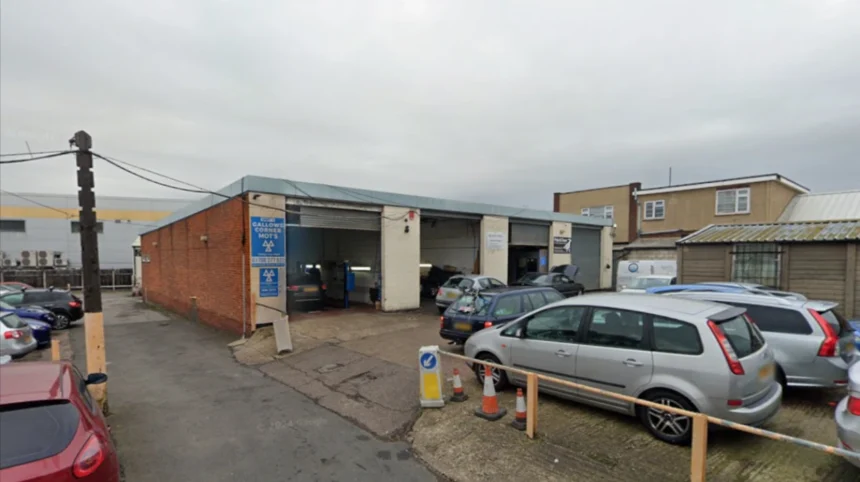
- The largest individual fine in East London, at Gallows Corner MOT Centre, Harold Wood, reached £80,000.
- This covers the Havering, Barking and Dagenham, Redbridge, and Tower Hamlets boroughs, but not Newham and Waltham Forest.
East London (East London Times) September 10, 2026 — Eleven businesses operating across East London have been ordered to pay a combined total of £510,000 in civil penalties after being found in breach of national immigration employment laws, according to government data published on 27 August.
The official list, released by the Home Office’s Immigration Enforcement department, covers enforcement operations carried out between 1 January and 31 March this year. The published record outlines the commercial trading names, legal entities, address locations, and specific monetary penalties imposed on businesses found to be employing staff who lacked the legal right to work in the United Kingdom. The data reveals that firms across Havering, Barking and Dagenham, Redbridge, and Tower Hamlets received penalties, whereas no businesses based in the neighbouring London boroughs of Newham or Waltham Forest were featured in this specific quarterly update.
Which East London businesses were penalised in the government’s latest report?
As reported by Gianni Cirillo of the Ilford Recorder, three commercial establishments in the London Borough of Havering were named in the official government publication, accruing £170,000 in combined fines.
V&A Sons Ltd, trading at 102-106 South Street in Romford, received a fine of £45,000. Kevin Car Sales & Hand Car Wash, operated under the legal entity Kevin Car Sale & HCW Ltd at 49 New Road in Rainham, was similarly handed a £45,000 civil penalty. The highest individual penalty served to an East London business in the entire report was levied against Gallows Corner MOT’s, located on Southend Arterial Road in Harold Wood. Operated by Jagdeep Lotey, the motor service company was fined £80,000 following the enforcement checks.
In the London Borough of Barking and Dagenham, enforcement officers penalised two commercial entities across two locations, resulting in £135,000 in total fines.
SA Installation and Maintenance Limited, operating from 160 London Road in Barking, received a £45,000 penalty. Meanwhile, a site recorded as DPD Depot, located at Unit 2, Orion Park, Messina Way in Dagenham, appeared twice within the Home Office report under two distinct liable parties. Diamond Courier UK Services Ltd was issued a £45,000 fine in connection with the premises, while a separate £45,000 penalty was formally linked to Amir Khan at the same address.
What were the penalties issued in Redbridge and Tower Hamlets?
Four commercial businesses based in the London Borough of Redbridge received civil penalties totalling £165,000 during the three-month enforcement window.
Faisal Hair Stylist Ilford, operated by Faisal Gents Hairdressers Ltd at 381 Eastern Avenue in Gants Hill, was fined £40,000. Swirldrop Treats Ltd, located at 522 High Road in Ilford, was also penalised £40,000. Shish Broadway Ltd, trading at 23A The Broadway in Woodford Green, was issued a £45,000 fine. Additionally, fast-food establishment New Yankees Chicken, operated by Samuel Iqbal at 1205 High Road in Chadwell Heath, received a £40,000 penalty.
In the London Borough of Tower Hamlets, a single firm was named in the quarterly data release. D Neat Construction Ltd, registered at 95 Middlesex Street, was handed a £40,000 fine by Immigration Enforcement officers.
The combined penalties listed across the eleven penalised East London firms total £510,000. The Home Office explicitly notes that the published dataset encompasses only those employers issued with civil penalties whose cases were finalised and cleared for publication for the period between 1 January and 31 March.
What is the background of this particular development?
The publication of civil penalties forms part of an ongoing, nationwide compliance campaign by the UK government to target illegal working practices across various commercial sectors. Under statutory UK immigration law, all employers maintain a legal obligation to conduct rigorous “right to work” checks prior to employing staff to verify that prospective workers hold valid immigration status or work permits.
The Home Office periodically publishes quarterly reports naming companies that have failed to comply with these statutory requirements and have exhausted the relevant administrative appeal processes. Under updated legislative thresholds, the financial civil penalties for employing undocumented workers were significantly increased to act as a stronger financial deterrent against non-compliance. Where employers are found to have knowingly hired individuals without valid legal status, criminal prosecution can follow, carrying potential prison sentences of up to five years in addition to severe operational sanctions.
Prediction: How will this development affect local businesses and workers?
This development is likely to prompt heightened scrutiny among business communities across East London, particularly within high-turnover sectors such as catering, construction, vehicle care, and logistics.
For local employers, the publication of substantial fines—ranging up to £80,000 for single locations—serves as a clear signal that regulatory enforcement remains active and financially punitive. Small to medium-sized business owners in the region will likely be compelled to audit their human resources practices and implement stricter right-to-work verification processes to avoid similar penalties or reputational impact.
For the local workforce, increased enforcement activity typically leads to tighter hiring protocols across regional job markets. Legitimate job seekers may experience more formal verification procedures during the recruitment process, while vulnerable workers operating outside legal frameworks face reduced employment opportunities and heightened risk of discovery during ongoing Home Office inspections.