
Anime and Manga consumption has blown up in recent years, thanks largely to COVID lockdowns. But its presence has always been a staple across the world.
- What was the inspiration behind bringing diverse manga talent together?
- How did you get introduced to manga and anime?
- How did growing up in East London impact your storytelling?
- How did Somerset House become involved in Naniverse?
- What is your long-term vision for the NaniVerse community?
- How was the Naniverse Clubhouse for you? Did it feel euphoric?
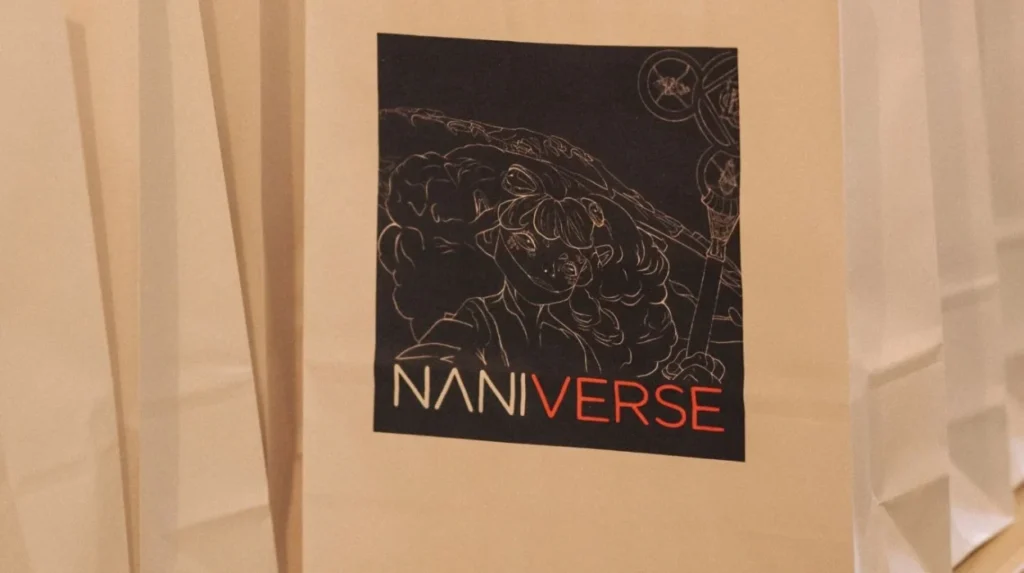
Naniverse is a creative technology company working across storytelling, platform engineering, publishing, community and culture, founded by East Londoners who have been anime fans for decades.
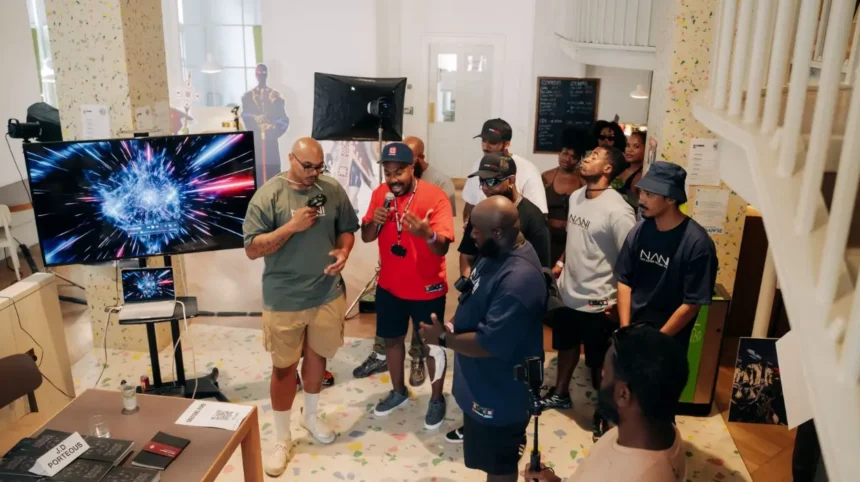
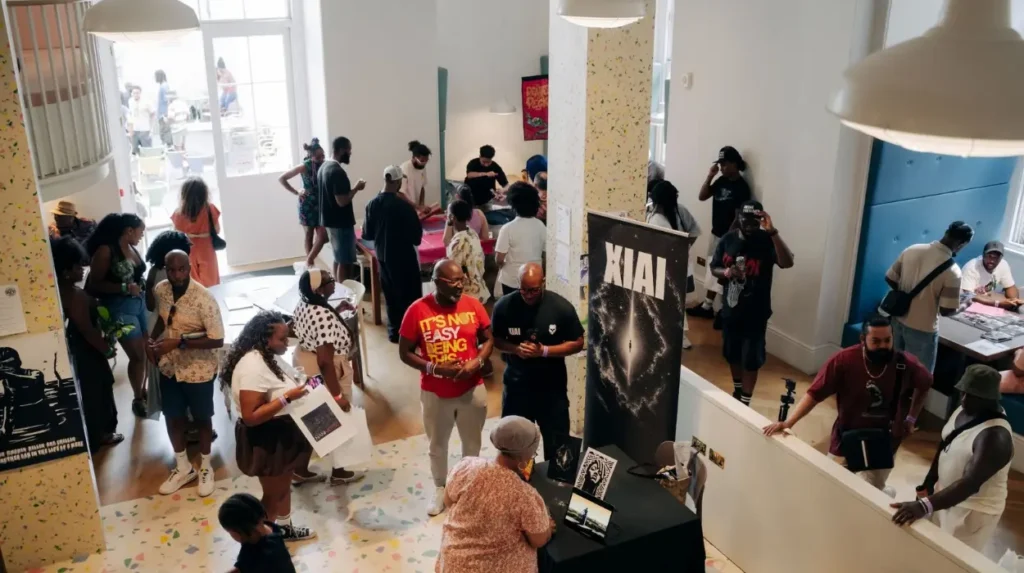
Last month, Somerset House Exchange’s Black Business Residency programme housed NANIVERSE Clubhouse, a space to play, watch, read, create and connect with other fans and artists.
I spoke with the CEO Anthony Charlery, all about the inception of Naniverse, his introduction to anime and manga, and where he sees Naniverse’s future.
What was the inspiration behind bringing diverse manga talent together?
Anthony: The mission is definitely to champion diverse storytelling. It’s not just about Black manga artists. It’s about global storytelling, whether that be Black, Asian, Polynesian or Filipino. There are a lot of cultures that aren’t being shown and don’t have representation. I don’t think it’s just a Black thing. It’s a global thing.
Our founders are Black and, that being said, it is quite close to our hearts that there is representation for the younger generation, especially as all the founders have children of their own. We just realised the importance of everybody being able to see themselves, regardless of their colour. Because I’ve grown up in East London, I would say that it is probably one of the most diverse places to grow up in the world. I’m privy to so many different cultures that I think are cool as hell. I’d love to see their stories in anime form, so that we don’t just get the same old blonde hair and blue eyes.
How did you get introduced to manga and anime?
Anthony: My CTO, Christopher Charles, is my older cousin. He was into it from as far back as I can remember.
He’ll be able to tell you the exact year that he started watching anime, but he must have been 10 or so when he first started. I’m 38 now and he is 42. The deciding factor that made me say, “Okay, cool, this is my thing,” was when he gave me about 134 episodes of Naruto on DVD one day and sent me on my way home. I don’t think I did anything else that summer holiday. It was literally just me and Naruto. From then, I was super locked in, so it’s been from the age of about 13.
How did growing up in East London impact your storytelling?
Anthony: I’m certainly accustomed to drama, that’s for sure. Growing up in East London does not come without drama. There’s navigating the streets as a teenager and everything that comes with that.
I was never really that guy that was gangster or anything like that. It was definitely hard to navigate because, if you’re on the streets in East London between the ages of 10 and 15, it can be quite daunting, especially if you’re not one of the strongest or biggest kids growing up. You’re constantly navigating how people perceive you. I think that’s what you navigate the most as a young man growing up in East London: a bunch of egos trying to be bigger and badder than they actually are. I feel like that’s where there is a lot of misinformed identity among young men right now, where they have this perception that they need to be something they’re not.
How did Somerset House become involved in Naniverse?
Anthony: We have a business mentor called Dawood Gustave who ran a company called Reluctantly Brave. That was all about talking to business owners from across the diaspora and helping them find the best version of themselves.
He took us on board outside of his business, mentoring my whole team one-to-one, to the point where he ended up coming on board as a director.
Last year, Dawood got a contract with Somerset House for an event at the venue to mark its 25th anniversary of being open to the public. That was our first time actually showcasing anime, art and stories at Somerset House. Out of the 400 applicants, we were one of the 25 picked for Cohort Six of Somerset House’s Black Business Residency. Our residency has been one of the closest-knit groups. The sense of community is almost like a brotherhood/sisterhood thing.
It was a lot of learning, becoming a sponge, networking, creating new contacts and finding ourselves in a new space of business that we’d never been in before.
What is your long-term vision for the NaniVerse community?
Anthony: I see us becoming the middleman for Netflix, Prime, Disney and Crunchyroll. Don’t get me wrong, I feel like it’s a bit late in the game to compete. But I do think that there is a problem within Hollywood, and there’s a problem within Japan.
I think Hollywood’s in a bad moment where they don’t actually know what to produce, so they just repeat the same cycle. I don’t know when you last went to the cinema, but to me it feels quite same-y, and I’m hearing that all over. There is a culture in Japan that, in order to break through, you copy a well-done manga and put your own spin on it, because you know that people like that and you pay homage to it.
I don’t know if you know what isekai means, but it’s a subgenre of Japanese fantasy and science fiction that revolves around a person who is transported to another world. Once you’ve seen three or four isekai stories, you’ve seen them all, but there are hundreds of isekai being produced.
We’re trying to make a fully stacked creators’ hub, a backend for creators, so creators have all their tools there. Even to the point where they don’t have to create a Patreon, bring their community to another space and hope that they track over.
How was the Naniverse Clubhouse for you? Did it feel euphoric?
Anthony: Definitely euphoric. I’d never experienced in my life being lost for words. I had to do a presentation and I don’t normally write things down, but this time I wish I did. It was awesome. It was absolutely amazing.
We’ve got a great online situation happening. But I feel like, when you’re trying to build a real community, you need to have a great offline situation as well. A real space to come together and actually connect. I feel like, with what we’ve got going on with AI right now, that organic experience where you can see, touch and smell is going to be so much more important now than it’s ever been before.
The biggest thing that we noticed with anime conventions right now is that you have to be a superfan. If you’re not a superfan, you’re not one of us. Our main aim was making it so that anybody could come. If my mum wanted to come, or your mum wanted to come, they could. They could come and just appreciate storytelling because, essentially, that’s all anime is.
The flow of how the Clubhouse worked was great because you got to experience all the different creators that had IP, you got to do live art and painting, and there were all these different dynamics of being a creator.
The vibe was there, the energy was there, and the community seemed like they absolutely loved it. In turn, we loved it.