East London is witnessing significant social change as rapid population growth, cultural diversity, and urban mobility continue to reshape neighbourhood life. Against this backdrop, a new community initiative is emerging with the aim of rebuilding social connections between residents, supported by recent statistics highlighting increasing levels of social isolation across urban areas in the United Kingdom.
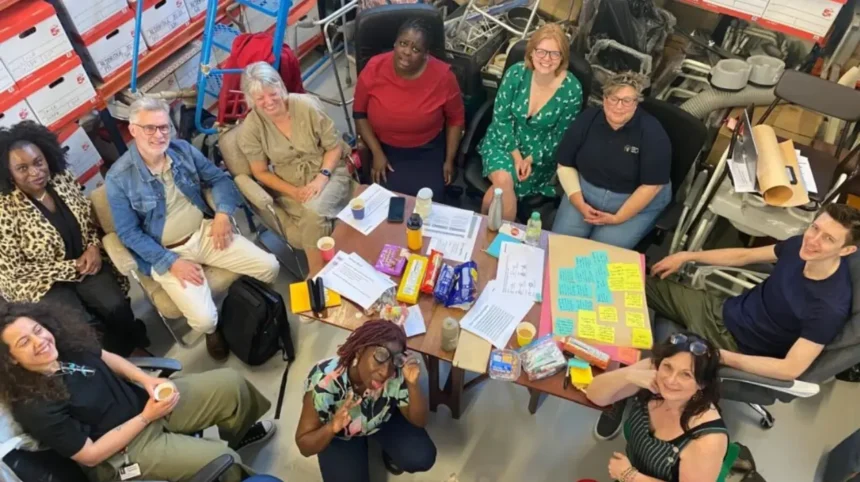
The initiative, titled “Neighbours Reconnected”, was launched at a community centre in Hackney by a group of local volunteers and residents from diverse cultural backgrounds. Its core objective is to strengthen relationships between long-term residents and newcomers through weekly social programmes designed to encourage interaction, skill-sharing, and community participation.
Data Highlights a Growing Social Challenge
Recent figures from the UK’s Office for National Statistics (ONS) indicate that approximately 1 in 8 adults in the UK report feelings of loneliness frequently or always, with higher rates observed in major metropolitan areas such as London. Researchers attribute this trend to several factors, including fast-paced lifestyles, increased housing mobility, and reduced face-to-face interaction between neighbours.
In addition, social research conducted by UK-based community studies suggests that more than 60% of urban residents do not know their neighbours personally, despite living in the same building or street for extended periods. In densely populated areas of East London, informal local surveys suggest that regular social interaction between neighbours may fall below 30%, particularly in high-turnover housing communities.
Experts argue that while digital communication has increased connectivity globally, it has not replaced the value of local, in-person social networks, which remain essential for emotional well-being and community resilience.
Objectives of the Initiative
The “Neighbours Reconnected” programme aims to address these challenges by creating structured opportunities for residents to meet and engage. The initiative is built around the idea that neighbourhoods should function not only as residential spaces but also as active social ecosystems.
According to the programme coordinator, the initiative seeks to reduce social isolation by encouraging regular interaction between residents. She explained that
“many people live side by side for years without ever forming meaningful connections, and this project is designed to change that reality step by step.”
The weekly programme includes a range of activities such as open community discussions, family-friendly events, and skill-sharing workshops. Residents are encouraged to teach and learn practical skills, including cooking, basic home repairs, language support, and digital literacy.
Language support sessions have proven particularly valuable for new arrivals in the area, many of whom face challenges integrating into the local community due to language barriers and unfamiliarity with local systems.
Early Results Show Promising Trends
Preliminary data collected by the organisers suggests that the initiative is already producing measurable social impact. Approximately 70% of participants reported forming at least one new social connection within the first two months of involvement, while around 55% indicated a noticeable reduction in feelings of loneliness.
Although these figures are based on early-stage community feedback rather than large-scale academic research, they indicate a positive direction for locally driven social interventions.
Voices from the Community
Participants have described the initiative as transformative in terms of improving their sense of belonging. One resident, who has lived in Hackney for over five years, said he had never spoken to his neighbours before joining the programme.
“I used to feel completely disconnected from the place I live in,”
he said.
“Now I have people I can talk to, and it feels like I’m part of a real community rather than just living in the same building.”
Another participant noted that the initiative has also improved perceptions of safety within the neighbourhood, particularly among elderly residents who often experience higher levels of isolation.
Growing Local Interest and Future Expansion
Local community organisations have begun expressing interest in expanding the initiative to other parts of East London. Discussions are underway regarding potential partnerships with local authorities and charitable organisations to secure additional funding and support.
Social researchers suggest that community-led initiatives like “Neighbours Reconnected” could reduce urban loneliness levels by an estimated 20–30% over time, particularly when consistently implemented across multiple neighbourhoods.
Building a More Connected East London
Plans are already in place for a larger community event titled “East London Community Day”, scheduled for next month. The event will bring together residents from across different cultural backgrounds through music, food, art, and interactive workshops, aiming to celebrate diversity while strengthening social cohesion.
As East London continues to evolve, initiatives like this highlight the growing importance of rebuilding local connections in an increasingly fast-moving urban environment. While the challenges of modern city life remain complex, early signs suggest that small-scale, community-driven efforts may play a significant role in restoring social ties.
Ultimately, “Neighbours Reconnected” represents more than just a local programme—it reflects a broader movement toward rethinking how people live together in modern cities, and how neighbourhoods can once again become places of connection rather than isolation.