Key Points
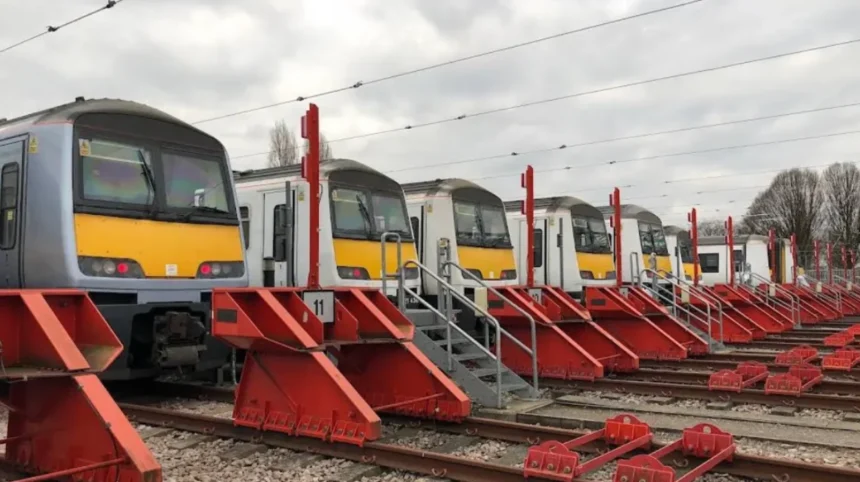
- £6 Million Investment: Greater Anglia has finished a £6 million infrastructure project at its Orient Way depot near Stratford in East London.
- Modern Fleet Support: The extensive upgrades directly support the operator’s new generation of Class 720 and Class 745 electric trains.
- Depot Enhancements: Works included installing 70 Controlled Emission Toilet (CET) emptying units, over 3km of raised walkways, and a 16-tonne sand storage silo.
- Infrastructure Upgrades: Mechanical and electrical systems across the site were modernised to streamline round-the-clock maintenance and cleaning.
- Operational Continuity: The complex multi-million pound overhaul was successfully delivered without interrupting daily depot operations or passenger services.
- Wider Modernisation: The project forms part of Greater Anglia’s broader £1.4 billion investment initiative across its regional rail network.
Stratford (East London Times) October 27, 2026 — Rail operator Greater Anglia has completed a major £6 million upgrade project at its Orient Way depot in East London to enhance maintenance facilities for its modern train fleet.
- Key Points
- What Specific Infrastructure Improvements Were Made at Orient Way Depot?
- Why Is the £6 Million Depot Project Important for Greater Anglia Services?
- Background to the Orient Way Depot Infrastructure Upgrade
- Prediction: How Will This Infrastructure Upgrade Affect Passengers and Rail Operations?
Located strategic to main commuter corridors near Stratford, the Orient Way facility plays a crucial operational role in servicing and maintaining Greater Anglia rolling stock. The facility features twelve dedicated sidings that facilitate continuous cleaning, servicing, and overnight parking for trains operating across the East of England network.
As reported by Danny Longhorn of Rail Business Daily, Andrew Goodrum, Infrastructure and Major Projects Director at Greater Anglia, stated that
“this major investment will help ensure Orient Way can support our fleet for many years to come and help us deliver a consistently high standard of service for our customers.”
As reported by Danny Longhorn of Rail Business Daily, Andrew Goodrum further stated that
“completing this extensive upgrade while keeping the depot fully operational was a significant achievement, and a testament to how our teams can deliver infrastructure improvements without impacting passenger experience.”
What Specific Infrastructure Improvements Were Made at Orient Way Depot?
The £6 million overhaul comprised several key engineering and operational additions designed to service state-of-the-art train units. A central component of the project involved the installation of 70 new Controlled Emission Toilet (CET) emptying units across the depot site.
CET systems are vital components for modern rolling stock maintenance. The technology uses vacuum-powered hoses to safely extract waste from train toilet tanks before flushing the system with fresh water. The collected waste is transferred directly into the depot water treatment facilities for safe disposal. Completely separate, dedicated hose systems are utilised to refill clean water tanks servicing toilet cisterns and hand-wash basin taps on board.
In addition to sanitation facilities, engineering teams installed more than three linear kilometres of new raised walkways and access routes throughout the depot. These walkways allow staff safe, ergonomic, and efficient access to train doors and roofs during round-the-clock maintenance cycles.
The project also encompassed comprehensive upgrades to the site’s core mechanical and electrical infrastructure to increase capacity and reliability. To support ongoing operational safety during autumn and winter conditions, a new 16-tonne silo was installed on site. This facility stores the specialized sand required for on-board sanding equipment, which applies sand directly to the railhead to improve wheel-rail traction during slippery conditions.
Why Is the £6 Million Depot Project Important for Greater Anglia Services?
The upgrades at Orient Way form a key element of Greater Anglia’s comprehensive £1.4 billion investment strategy designed to replace every single train on its network with new, higher-capacity models. The Orient Way facility specifically supports the operational upkeep of the operator’s five-carriage and ten-carriage Class 720 Alstom Aventra electric multiple units, as well as its twelve-carriage Class 745 Stadler FLIRT trainsets.
By increasing servicing efficiency and capacity at the depot, the operator aims to maintain higher fleet reliability and cleanliness standards across its network. Carrying out these structural and mechanical works while keeping the twelve-siding facility fully operational ensured that routine train preparation and cleaning schedules remained unaffected throughout the construction period.
Background to the Orient Way Depot Infrastructure Upgrade
The completion of the £6 million Orient Way project represents the latest milestone in Greater Anglia’s ongoing fleet renewal and depot modernisation strategy, which began following the award of the East Anglia rail franchise in 2016.
Under the conditions of the franchise agreement, Greater Anglia committed to replacing its legacy rolling stock—including older Mark 3 locomotive-hauled sets, Class 317, Class 321, and Class 360 electric units—with an entirely new fleet of modern trains. To accommodate these longer, technologically advanced Class 720 and Class 745 trains, existing depot facilities required substantial civil engineering and mechanical modifications.
Prior to these upgrades, older depot configurations across the East of England were primarily tailored to legacy rolling stock, which featured different door positions, traditional toilet systems, and legacy maintenance requirements. Orient Way, located near the busy Stratford transport hub, was identified as a critical operational node for servicing trains operating in and out of London Liverpool Street.
To support the transition, Greater Anglia initiated a series of infrastructure projects across its depot estate—including locations at Ilford, Clacton, Norwich Crown Point, and Orient Way. The £1.4 billion fleet replacement program required expanded siding lengths, enhanced electrical supply systems, elevated safety walkways for high-level maintenance, and modern CET infrastructure to handle vacuum-tank waste systems.
The completion of the Orient Way works marks the conclusion of a key phase in aligning regional maintenance infrastructure with the technical demands of 21st-century passenger trains.
Prediction: How Will This Infrastructure Upgrade Affect Passengers and Rail Operations?
The completion of the £6 million upgrade at Orient Way depot is set to deliver tangible operational benefits for passengers travelling on Greater Anglia services, particularly those utilizing suburban and mainline routes connecting London Liverpool Street, Essex, Cambridgeshire, and East Anglia.
First, passengers are likely to experience improved service reliability and fewer rolling stock cancellations. With upgraded mechanical, electrical, and sanding infrastructure in place, routine inspections and pre-service preparation can be conducted more rapidly and thoroughly. The addition of the 16-tonne sand silo will directly enhance operational resilience during autumn leaf-fall seasons and adverse winter weather, reducing instances of low adhesion and associated signal or station delays.
Second, the installation of 70 new CET units ensures that on-board toilet facilities can be emptied, cleaned, and refilled efficiently during brief turnaround periods at the depot. This reduces the likelihood of on-board facilities being taken out of service during peak travel hours, directly improving comfort and satisfaction for daily commuters and long-distance travellers.
From an operational standpoint, the provision of over three kilometres of raised walkways enhances workplace safety and efficiency for maintenance staff. This allows depot personnel to perform visual checks, exterior cleaning, and minor repairs concurrently, maximizing the availability of Class 720 and Class 745 units during morning and evening rush hours.