Key Points
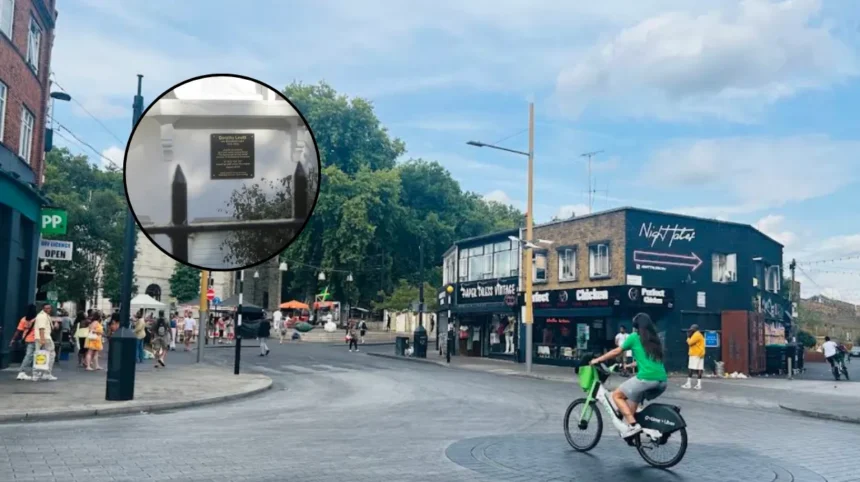
- A commemorative plaque celebrating Dorothy Levitt, Britain’s first female professional racing driver, has been unveiled in Hackney, East London.
- Levitt achieved history as the first woman to hold both world land and water speed records during the early 20th century.
- The memorial was installed at her former residential address in Hackney to acknowledge her pioneering achievements in motorsport and aviation.
- The initiative was organized by Hackney-born Jewish community historian and AJEX archivist Martin Sugarman.
- The plaque was funded and donated by American philanthropist Jerry Klinger, president of the Jewish American Society for Historic Preservation.
Hackney (East London Times) October 3, 2026 — A official commemorative plaque was unveiled in Hackney, East London, celebrating the life and achievements of Dorothy Levitt, Britain’s first female professional racing driver and world speed record holder.
- Key Points
- Who Was Dorothy Levitt and Why Is She Honoured in Hackney?
- Who Organized and Funded the Commemorative Plaque?
- What Legacy Did Dorothy Levitt Leave in British Motorsport?
- Background of Dorothy Levitt and Women in Early Motoring
- Prediction: How Will This Commemorative Plaque Affect the Local Community and Motorsport Historians?
Who Was Dorothy Levitt and Why Is She Honoured in Hackney?
Dorothy Levitt stands as one of the most prominent pioneers in early 20th-century motorsport. Born Elizabeth Levi in Hackney in 1882, she broke gender barriers in automotive and maritime engineering during a period when women were largely excluded from competitive sport and mechanics.
Levitt rose to prominence through her association with Napier & Son, an influential British motor manufacturer. Recognized for her natural aptitude for driving and mechanical repairs, she became the first woman to compete in a motor race in 1903. Beyond setting the women’s world land speed record, she set the world water speed record by reaching over 19 miles per hour in a Napier motorboat.
The newly installed plaque marks her former residence in Hackney, ensuring her role in British motorsport history is permanently memorialised within her birthplace.
Who Organized and Funded the Commemorative Plaque?
The installation of the plaque was made possible through a collaboration between local historical researchers and international historic preservation organizations.
The initiative was driven by Martin Sugarman, a Hackney-born historian specializing in British Jewish history and an archivist for the Association of Jewish Ex-Servicemen and Women (AJEX). Sugarman identified Levitt’s local heritage and worked to ensure her historical contributions received permanent recognition in London.
Funding for the memorial was provided by Jerry Klinger, an American philanthropist and president of the Jewish American Society for Historic Preservation. Klinger’s organization regularly supports projects globally that honor notable Jewish historical figures whose contributions have been overlooked.
What Legacy Did Dorothy Levitt Leave in British Motorsport?
Levitt was not only a competitive driver but also an author and advocate for female emancipation in motoring. In 1909, she published The Woman and the Car: A Chatty Little Handbook for All Women Who Motor or Who Want to Motor, offering practical advice on driving, routine vehicle maintenance, and mechanics.
Her book introduced several innovations that later became standard across the automotive industry. Notably, Levitt recommended that women carry a small hand mirror to reflect traffic behind them while driving, predating the mainstream adoption of the rear-view mirror by several years.
Throughout her career, she earned the moniker “The Fastest Girl in the World” from the press, demonstrating that female drivers were capable of high-speed performance and precise mechanical management.
Background of Dorothy Levitt and Women in Early Motoring
The early 1900s represented a transformative era for automotive technology, coinciding with the rise of the women’s suffrage movement in the United Kingdom. When Levitt began competing, motoring was considered a domain restricted primarily to wealthy male enthusiasts due to the physical effort and mechanical expertise required to operate early automobiles.
Levitt’s career broke structural barriers within the Royal Automobile Club and national racing circuits. Despite social prejudices of the Edwardian era, her performances in reliability trials, hill climbs, and speed trials established precedents for female participation in professional sports.
Her connection to Hackney highlights the area’s rich social and industrial history, linking local heritage to broader historical advances in engineering and gender equality.
Prediction: How Will This Commemorative Plaque Affect the Local Community and Motorsport Historians?
The installation of the plaque in Hackney is likely to influence both local historical tourism and educational awareness regarding female figures in STEM (science, technology, engineering, and mathematics) and sports history.
For the local community in Hackney, the plaque serves as a public educational point, bringing visibility to a historical local figure who achieved global milestones. It adds to the growing effort across London to address the historical underrepresentation of women on public commemorative plaques.
For historians and motorsport institutions, this recognition may encourage further research into early 20th-century female athletes and pioneers. By anchoring Levitt’s memory to a physical site in London, local heritage bodies and educational groups have a visible focal point to promote women’s historical contributions to technology, racing, and British social history.