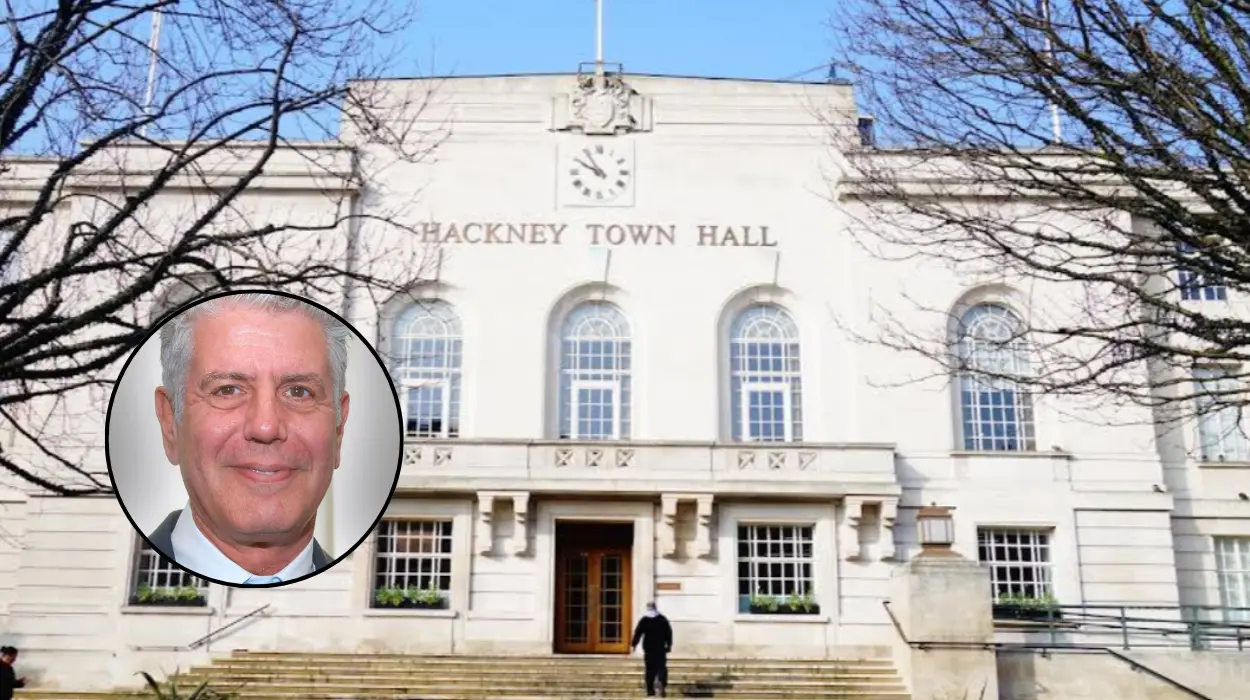
Key Points:
- Anthony Burton, a South Hackney resident, has pursued Hackney Council for nearly 19 years over a compensation claim.
- The claim stems from a 2007 burglary at Burton’s Regent Estate home, where council-run CCTV cameras—funded through service charges—were not working.
- Burton’s home insurance was invalidated because the lack of CCTV footage left no evidence of the incident.
- He has repeatedly sought £2,000 in compensation, asserting the council’s responsibility due to the CCTV failure.
- Hackney Council maintains no record of promising reimbursement and considers the matter closed.
- Conservative councillor Simche Steinberger has described the continuing dispute as something that should be in the Guinness Book of Records for its duration.
- Burton once withheld council tax and service payments in protest but later paid £1,800 in arrears plus £200 court costs.
- Legal advisers told Burton litigation would cost more than the compensation sought.
- Burton now says the claim’s value has tripled or quadrupled due to the delays.
Why has the CCTV dispute lasted nearly two decades?
A homeowner’s battle with Hackney Council over unpaid compensation has entered its 19th year, highlighting long-running frustrations over council accountability and public service reliability.
- Key Points:
- Why has the CCTV dispute lasted nearly two decades?
- What does Hackney Council say about the claim?
- How did the dispute begin?
- What steps did Anthony Burton take in protest?
- Have councillors commented on the situation?
- What are Mr Burton’s latest comments?
- Could other residents be affected?
- What does this case reveal about council accountability?
- Has Hackney Council faced similar scrutiny before?
- What is the current status of the claim?
As reported by the BBC’s Local Democracy Reporting Service (LDRS), South Hackney resident Anthony Burton has been pursuing £2,000 in damages since a 2007 burglary at his Regent Estate property. Despite repeated promises from various council representatives over the years, Burton says no payment has ever been made.
The Burton family discovered that none of the estate’s surveillance cameras—paid for through their Hackney Council service charges—were operational when thieves broke in. The burglary led to the loss of cash, a television, a PlayStation, and several personal belongings.
Frustratingly, the thief was never caught, and without functional CCTV, Burton’s insurer declined to compensate him, leaving the family with no recourse but to seek reimbursement directly from the council.
What does Hackney Council say about the claim?
According to a spokesperson for Hackney Council, the authority has “no record promising to reimburse” the service charges or losses claimed by Mr Burton. In a statement reported by the BBC LDRS, the council said:
“Following our investigations, we have no record promising to reimburse service charges, as Mr Burton suggested. We now consider this matter closed. If Mr Burton remains unhappy with this outcome, he should seek independent legal advice.”
The council also noted it had been in regular contact with Mr Burton during the years following the incident but did not accept liability for the loss of property or the failure of CCTV systems at that time.
How did the dispute begin?
As detailed by the Local Democracy Reporting Service, Anthony Burton first contacted Hackney Council shortly after the break-in in 2007. He was told by multiple officers that he would be reimbursed for his losses since the surveillance system was council-operated and billed through his leaseholder service charges.
However, after years of correspondence, Burton still hadn’t received any funds. “I’ve been told time and again that I would be reimbursed,” he told the LDRS, “but every time, they find a different excuse.”
The burglary’s impact extended beyond financial loss: the invalidated insurance claim and delayed justice compounded his frustration.
What steps did Anthony Burton take in protest?
Years into his unresolved claim, Mr Burton stopped paying council tax and service charges, reasoning that he had already lost more than the amount owed.
As reported by the BBC LDRS, the council subsequently took him to court, where he was ordered to pay £1,800 in arrears plus £200 in court fees.
Though the decision did not help his case financially, Burton continued pressing his complaint on the grounds of moral and administrative accountability, saying that Hackney Council had failed the residents who funded ineffective CCTV systems.
Have councillors commented on the situation?
Yes. The case has not gone unnoticed in local political circles. Conservative councillor Simche Steinberger, who has monitored the dispute for several years, described the saga as remarkably protracted.
Speaking to the Local Democracy Reporting Service, Councillor Steinberger said the dispute “should go into the Guinness Book of Records” for its longevity and complexity, given how many different councillors and council staff had been involved over time.
He also emphasised the broader issue of public accountability, urging the council to address long-standing complaints from residents about estate maintenance and broken systems.
What are Mr Burton’s latest comments?
In his most recent remarks to the LDRS, Anthony Burton remained defiant and deeply frustrated. He said that after nearly two decades of chasing Hackney Council, the financial and emotional toll had multiplied:
“Even if tomorrow they came round and said ‘OK, we’re paying’ – if you assess it now, the amount is probably three or four times the value,” he said.
“It’s a disgrace – how many more people have been affected by this?”
Mr Burton’s remarks highlight what he perceives as a systemic failure within housing management services across council estates, particularly in maintaining critical security infrastructure intended to keep residents safe.
Could other residents be affected?
While Hackney Council insists this is an isolated matter, Burton has raised concerns that other Regent Estate leaseholders may have also been charged for defunct CCTV systems without their knowledge.
He contends that if the council collected service charges for security measures that were inactive, “more families may have unknowingly paid for protection they never received.”
No other residents have formally come forward with similar claims, but the case has stirred discussion among Regent Estate community groups about transparency in service charge spending and accountability for faulty public-safety infrastructure.
What does this case reveal about council accountability?
The near two-decade timeline underscores the difficulty individual residents face when challenging council decisions—especially over low-value financial claims.
Legal experts cited by the BBC’s LDRS noted that while Burton might technically have a case under contract law (as his payments helped fund the CCTV network), pursuing such claims can be uneconomical when the amount in question is under £5,000.
Burton’s experience is emblematic of a larger issue across UK local authorities, where disputes over estate maintenance, safety systems, and mismanagement of service fees can drag on for years due to bureaucratic complexity.
Has Hackney Council faced similar scrutiny before?
Hackney Council has, in past years, faced criticism over estate maintenance, including lighting faults, waste management issues, and security concerns in its residential properties.
While these are unrelated cases, they reveal a recurring challenge for councils managing large housing estates and limited maintenance budgets. The LDRS has reported on multiple complaints over defective systems across estates in East London, though none have matched Burton’s case in duration or tenacity.
What is the current status of the claim?
As of early 2026, Hackney Council maintains the case is closed and no further compensation will be offered. Mr Burton has stated he intends to keep pressing his complaint and may consider renewed legal advice if further evidence of mismanagement comes to light.
The case remains a striking example of how small compensation disputes can evolve into protracted confrontations between citizens and public authorities, especially when questions of public accountability and service reliability are at stake.