Key Points
- Watchdog Fine: The Local Government and Social Care Ombudsman (LGSCO) fined Hackney Council a sum of £4,500 to be paid to the family of an autistic child who suffered from systemic delays in educational provision.
- Extended Absence: The young child, known by the name Y, missed roughly one complete term of schooling because of administrative mishaps.
- Failure of Statutory Responsibility: It was found out that local authorities had neglected their duties under the provisions of the Education Act 1996 as they failed to assess alternative education needs timely.
- Financial Delays: Though agreeing to pay for private tuition, the council could not arrange appropriate teachers for one more term due to the lack of competitiveness of £75 hourly rate.
- Insufficient Initial Redress: The initial offer made by the council to pay £200 in connection with missing its internal deadline on complaint investigation by two months has been regarded as inadequate.
- Initiation of Structural Changes: The council agreed to create an inclusion panel along with early tracking system.
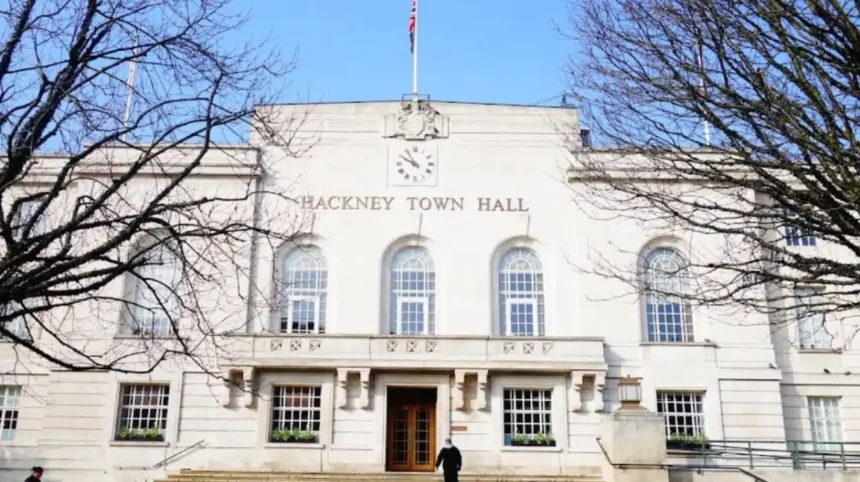
Hackney (East London Times) September 9, 2026 – An investigation by the Local Government and Social Care Ombudsman has compelled Hackney Council to issue a formal apology and pay £4,500 in financial compensation after severe administrative errors left a young autistic boy without schooling for months. As reported by Josef Steen of The Standard, the local authority committed a “service failure” by failing to establish alternative educational measures for the child, identified only as Y, after he had been absent from the classroom for a prolonged period.
The child received an official autism diagnosis in March 2023, having already been absent from formal schooling for a significant duration. In July of the following year, the child’s father, referred to as Mr X, formally petitioned Hackney Council to undertake an Education, Health and Care (EHC) needs assessment. Although municipal officers were fully aware that Y was not attending school, several months elapsed before the local authority gave proper consideration to its legal responsibilities regarding alternative instruction.
Under the explicit provisions of the Education Act 1996, local authorities maintain a statutory duty to arrange suitable, full-time education for children of compulsory school age who, due to illness, exclusion, or special educational needs and disabilities (SEND), would not otherwise receive it. When a child is granted an EHC plan, the council carries an ongoing legal responsibility to deliver all specified support provisions without delay.
How Did Local Authority Delays Prevent Access To Critical Tuition?
National statutory guidelines stipulate that when parents or guardians request an EHC assessment, local councils must determine whether to proceed within six weeks, while the entire process—up to the issuance of a finalized plan—must not exceed a strict 20-week limit. While Hackney Council completed the base EHC plan within the required timeline, it failed to integrate an agreed Education Other Than At School (EOTAS) package until January 2025, despite explicit requests submitted by Mr X prior to November.
According to the rulings of the Local Government and Social Care Ombudsman, municipal officers “conflated” the father’s specific request for an EOTAS package with their independent, statutory obligation to supply immediate alternative education. Consequently, the child suffered an educational loss equivalent to roughly a full academic term.
Even after the child’s entitlement to fully funded home-based tuition was formally approved, Y spent a further half-term without instruction. As highlighted by reporter Josef Steen, the watchdog noted that the local authority struggled to secure qualified educational professionals due to a self-imposed financial ceiling of £75 per hour, which proved uncompetitive in sourcing suitable tutors.
Why Was The Council’s Internal Complaints Process Deemed Defective?
When Mr X formally challenged the council’s handling of the situation, the local authority failed to meet its own Stage 1 complaint response timeframe, missing the two-month deadline by a further eight weeks. In an attempt to settle the matter internally, Hackney Council issued an apology and offered the family £200 to acknowledge their “time and trouble and distress and inconvenience”.
This financial remedy was deemed wholly inadequate by the Ombudsman. The independent watchdog determined that the council’s systematic delays caused the child and his parents severe, avoidable distress and educational disruption. The watchdog subsequently directed Hackney Council to issue an official written apology and increase the payout to £4,500. This figure comprised £3,000 to reflect the delay in integrating alternative provision into the EHC plan, alongside £1,500 for the total failure to supply required tuition.
Addressing the findings, a representative speaking on behalf of Hackney Council stated:
“We recognise the failings outlined in the Ombudsman’s report and are very sorry for the distress caused to the child and their family. We are implementing new systems to identify children missing school due to illness, absence, exclusion and suspension earlier, and will ensure the Ombudsman’s findings are reflected in these changes”.
The official added that the council is introducing a dedicated inclusion panel to monitor children out of full-time education, alongside enhanced complaint tracking systems designed to resolve family grievances more rapidly.
Background of Special Educational Needs Provision in Local Government
The statutory framework governing special educational needs and disability (SEND) support across England operates under the Children and Families Act 2014 and the Education Act 1996. Under these statutory statutes, local councils are legally bound to identify, assess, and secure appropriate educational provisions for children requiring additional support.
Over the past decade, local authorities across England have faced rising pressures within their SEND departments. National statistics indicate a substantial increase in requests for Education, Health and Care (EHC) plans, which has strained council budgets, administrative resources, and specialized educational capacity nationwide.
The Ombudsman has repeatedly issued national warning reports highlighting persistent systemic bottlenecks in council SEND operations. Common issues flagged by the watchdog include structural delays in completing 20-week assessment cycles, failure to secure specialized tutors, and administrative confusion over local authority legal obligations to provide alternative education when children are out of school.
Prediction: How This Ruling Will Impact Local Families, Schools, and Council Operations
The Ombudsman’s ruling against Hackney Council serves as an important precedent that will likely influence SEND operations, family advocacy, and administrative processes across local government.
Impact on Families and SEND Advocates
For parents of neurodivergent children and SEND advocacy groups, this decision reinforces the legal accountability of local authorities under statutory law. The size of the financial penalty demonstrates that watchdogs are prepared to penalize councils that allow internal procedural confusion or financial constraints—such as arbitrary hourly fee caps—to delay required educational support. Families facing similar delays may feel encouraged to use independent Ombudsman processes to challenge administrative inaction.
Impact on Local Authority Operations and Spending
To avoid similar legal breaches and watchdog penalties, local councils across London and the wider UK will likely re-examine their out-of-school provision frameworks and complaint procedures. Councils may be forced to adjust capped tuition rates to align with competitive market pricing for specialized tutors. Furthermore, the introduction of early-identification systems and oversight panels, like those adopted by Hackney Council, could become standard operational procedure to ensure statutory duties are met promptly.