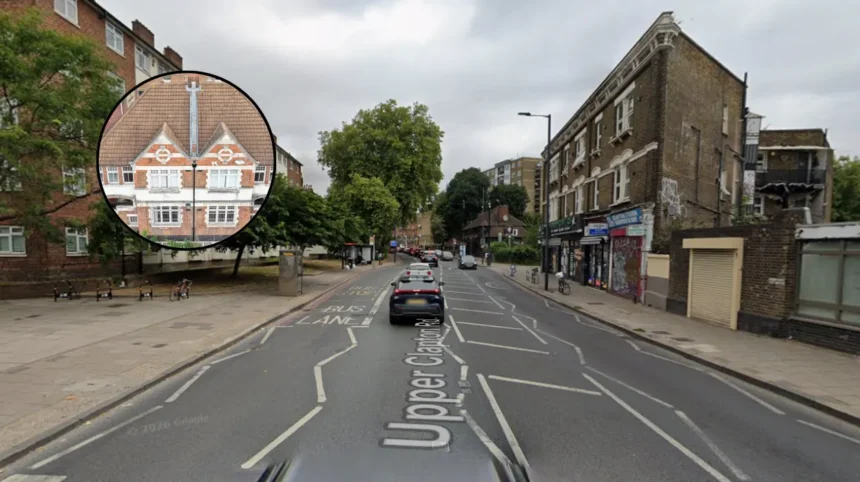
Key Points
- The Hackney Borough Disinfecting Station in Clapton, east London, has been placed on the Victorian Society’s “Top Ten Endangered Buildings List 2026”, raising alarm over its long‑term future.
- The Grade II listed Victorian complex, built in 1901, is thought to be the last purpose‑built municipal disinfecting station of its kind surviving in England.
- The site has stood empty since 1984 and currently has no approved plan for reuse or redevelopment.
- Disinfecting stations across London were established after the Local Government Act 1899 empowered councils to enter homes, remove contaminated belongings, and disinfect them using steam cleaning.
- In its first full year of operation, the Hackney station reportedly treated more than 2,400 rooms and disinfected over 24,000 items.
- The Victorian Society warns that the station could be lost “for good” unless a viable new use is found and heritage protections are reinforced.
- The charity’s president, Griff Rhys Jones, has described the original facility as a “vital and ground‑breaking” initiative that should be preserved as a “monument to Victorian foresight”.
Hackney (East London Times) April 28, 2026 Borough Disinfecting Station on Millfields Road is one of the most endangered heritage sites in England, according to the Victorian Society, which has placed it on its
- Why is this Victorian disinfecting station so historically significant?
- How did the disinfecting station function in Victorian and early‑20th‑century London?
- What powers did councils have to enforce disinfection in homes?
- Why is the site now considered endangered?
- What has the Victorian Society said about the station’s future?
- What makes this particular site unique in England’s heritage landscape?
- What has happened to the site since it stopped operating?
- How might this endangered listing affect local planning and policy?
- What message does this send to other heritage‑at‑risk sites in east London?
“Top Ten Endangered Buildings List 2026”.
As reported by the BBC, the Grade II listed Victorian building is thought to be the last remaining purpose‑built municipal disinfecting station of its type in the country. Conservationists warn that, unless a new use is secured quickly, the site could be lost permanently.
Hackney Council has owned the complex since it ceased operating in 1984, but the building has remained vacant ever since, with no adopted long‑term plan for its future. In a statement released alongside the 2026 list, the Victorian Society underscored that the site’s “outstanding architectural and historic interest” is not matched by any current repurposing strategy. Griff Rhys Jones, president of the charity, said the original disinfecting station should be preserved as a “monument to Victorian foresight”, highlighting its role in pioneering public‑health measures during an era of deadly infectious disease.
Why is this Victorian disinfecting station so historically significant?
The Hackney Borough Disinfecting Station was constructed in 1901 specifically to help the council combat epidemics such as measles, diphtheria and smallpox.
As documented by the Victorian Society, the complex was built from high‑quality materials including Portland stone, with decorative leadwork and purpose‑designed rooms for steam cleaning and processing contaminated belongings.
The facility’s creation was directly tied to the Local Government Act 1899, which allowed councils to enter homes, remove infected items and disinfect them using steam cleaning techniques.
Public‑health scholar and author Gareth Thomas, who has written about the site, notes that the Hackney station was part of a broader network of disinfecting stations that arose across London in the late nineteenth and early twentieth centuries.
In the first full year of operation, the site treated more than 2,800 rooms and disinfected over 24,000 items, according to figures cited by the Victorian Society.
How did the disinfecting station function in Victorian and early‑20th‑century London?
Archival records cited by Griffith Roberts of the Victorian Web describe how the disinfecting process worked in practice. When a household was identified as suffering from an infectious disease, council workers could legally enter, remove contaminated belongings, and transport them to sites such as the Millfields Road facility for steam disinfection.
The building’s original layout, preserved in a groundplan held by Hackney Archives, shows clearly labelled “Infected” and “Disinfected” rooms linked by a central boiler, alongside workshops, laundries, ironing and drying rooms, and stables.
Writing for Smithsonian Magazine, reporter Sarah Laskow explains that the Metropolitan Borough of Hackney, established under the London Government Act 1899, was a key driver behind the facility’s creation. John King Warry, the borough’s medical officer for health at the time, successfully campaigned for a state‑of‑the‑art disinfecting and disinfesting station that also included accommodation for affected residents. As Laskow outlines, if the disinfection process rendered a family temporarily homeless, they could be offered overnight accommodation in a modern one‑bedroom apartment adjacent to where their belongings were being sanitized.
What powers did councils have to enforce disinfection in homes?
The Victorian Society’s 2026 listing note explains that the Local Government Act 1899 gave local authorities the legal ability to enter premises, remove contaminated items and disinfect them using steam. This was part of a wider shift in public‑health policy, as detailed in
“History of Public Health in the United Kingdom”
by the Well‑come Trust, which traces how late‑Victorian reforms began to institutionalize municipal responsibility for hygiene and disease control.
Under the framework described by the Victorian Society, councils could spend “whatever was necessary” to cleanse people and premises “infested with vermin”, reflecting the increasing belief that environmental sanitation was key to preventing contagion.
As the Victorian Web notes, this approach emerged from earlier public‑health campaigns driven by figures such as Edwin Chadwick, whose reports on the “Health of Towns” helped lay the groundwork for later sanitary legislation. The Hackney station thus sits at the intersection of Victorian social reform, emerging germ theory and the practicalities of urban sanitation in a densely populated area such as east London.
Why is the site now considered endangered?
Despite its architectural and historical value, the Hackney Borough Disinfecting Station has stood empty for more than four decades.
The building’s derelict condition has been highlighted by the Victorian Society, which notes that the lack of an approved reuse scheme heightens the risk of deterioration or piecemeal redevelopment.
In compiling its 2026 list, the charity emphasises that the site is “at risk of being lost for good”, and calls for a new use that respects both its heritage and civic significance.
Yahoo News, echoing the BBC’s coverage, reports that the Victorian Society is now urging Hackney Council and developers to prioritise a sensitive adaptive‑reuse plan rather than allowing the site to fade into abandonment.
The charity’s listing documents note that any future scheme should preserve the original fabric of the building, including the distinctive stonework and layout features that reflect its historic function.
What has the Victorian Society said about the station’s future?
In statements released with the 2026 Endangered Buildings List, the Victorian Society frames the Hackney station as a “vital and ground‑breaking” part of London’s public‑health history. Griff Rhys Jones, the society’s president, said the facility should be preserved as a “monument to Victorian foresight”, underlining the role that municipal authorities played in confronting infectious disease before the advent of modern antibiotics and vaccines.
The charity’s official entry stresses that the Millfields Road complex is “extraordinary” not only because of its Grade II listing but also because of its rarity as the last surviving example of its type in England.
The listing concludes by urging stakeholders to “find a viable new use” that ensures the building “remains in community use”, without damaging its historic character.
Background of the development
Disinfecting stations arose in London during a period of rapid urbanisation and repeated outbreaks of infectious diseases such as cholera, typhus and smallpox. As outlined in “Health and Hygiene in the Nineteenth Century” by the Victorian Web, reformers such as Edwin Chadwick argued that overcrowding, poor sanitation and contaminated water were central to the spread of disease, prompting local authorities to adopt more intrusive, but systematic, public‑health measures.
The London Government Act 1899 and the wider Local Government Act framework enabled the creation of metropolitan boroughs such as Hackney, which were given explicit powers to intervene in homes and public spaces to prevent contagion.
Within this context, disinfecting stations such as the one at Millfields Road became a practical expression of the new public‑health model, combining steam disinfection, municipal authority and, in some cases, temporary housing for affected residents.
What makes this particular site unique in England’s heritage landscape?
The Victorian Society stresses that the Hackney Borough Disinfecting Station is “the last remaining purpose‑built municipal disinfecting station of its kind in England”. Other disinfecting stations once operated across London, but many were demolished, repurposed beyond recognition or remain in such altered form that their original function is no longer legible.
The Millfields Road complex stands out because much of its original layout and architectural detailing survives, including the clear separation of “Infected” and “Disinfected” zones, the boiler room connections, and ancillary service spaces such as laundries and drying rooms. In the context of England’s evolving public‑health infrastructure, the site represents a tangible link between Victorian sanitary reform and the later development of the modern National Health Service, which would eventually reduce the need for such specialised disinfecting facilities.
What has happened to the site since it stopped operating?
Operations at the Hackney Borough Disinfecting Station ceased in 1984, after generations of service in tackling infectious disease. The building has since been owned by Hackney London Borough Council, but no large‑scale redevelopment or conservation project has been implemented.
Archival records at Hackney Archives show that the site was once a hive of activity, with staff handling thousands of items each year and coordinating with local medical officers. Today, the same complex stands silent, with conservationists warning that prolonged vacancy increases the risk of structural decay and makes future restoration more difficult and costly.
How might this endangered listing affect local planning and policy?
The inclusion of the Hackney Borough Disinfecting Station on the Victorian Society’s
“Top Ten Endangered Buildings List 2026”
is likely to raise the profile of the site with local planners, developers and heritage bodies. As the charity’s listing notes, the designation is intended to prompt councils and investors to consider heritage‑led redevelopment options rather than allowing the building to fall into further disrepair.
For Hackney residents, the listing could translate into greater scrutiny of any future planning applications affecting the Millfields Road site.
Community groups and heritage activists may use the Victorian Society’s intervention as leverage to argue for a mixed‑use scheme that includes public space, educational facilities, or a museum‑type element that reflects the site’s public‑health history.
What message does this send to other heritage‑at‑risk sites in east London?
The publicity around the Hackney station may encourage similar campaigns for other locally significant buildings that currently lack clear futures. The Victorian Society’s 2026 list includes several structures across London and the wider UK, and the inclusion of the disinfecting station underscores how even relatively modest civic buildings can embody important strands of social and medical history.