Key Points
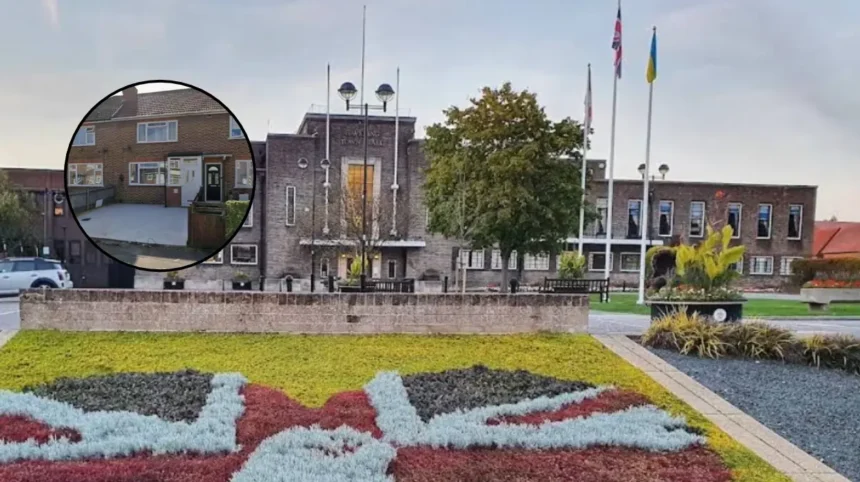
- Havering Council issued a formal planning enforcement notice on November 10 regarding a property at 86 Waverley Crescent in Harold Hill.
- The homeowner has been ordered to remove hard surfacing installed within the property’s front curtilage without planning permission.
- Council officials stated the surface lacks an adequate drainage system, creating uncontrolled surface water runoff and increasing the risk of urban flooding.
- The authority ruled out granting retrospective planning permission, noting that planning conditions would not resolve the drainage issues.
- All associated materials, rubble, rubbish, machinery, apparatus, and installations must also be cleared from the site.
- The enforcement notice takes effect on December 10 unless appealed, giving those responsible two months from that date to comply.
Harold Hill (East London Times) November 13, 2026 — A Harold Hill homeowner has been ordered to remove hard surfacing from the front of their property due to drainage and flood risk concerns.
- Key Points
- Why did Havering Council issue an enforcement notice for 86 Waverley Crescent?
- How does the hard surfacing affect local drainage and flood risks?
- What are the exact requirements and deadlines for the homeowner?
- Background of the development
- How could this enforcement action affect local homeowners?
Why did Havering Council issue an enforcement notice for 86 Waverley Crescent?
Havering Council issued the formal planning enforcement notice relating to the home at 86 Waverley Crescent on November 10. According to the local authority, a hard surface had been constructed within the front curtilage of the property “without planning permission”.
How does the hard surfacing affect local drainage and flood risks?
Explaining its formal reasons for taking enforcement action, Havering Council stated that the hard surface, due to its “lack of any adequate drainage system to accommodate uncontrolled surface water runoff”, has an “adverse impact on the council’s storm water drainage systems and cumulatively contributes to increased risk of urban flooding”.
The enforcement notice also addressed whether the development could be regularised through standard planning processes. The notice stated:
“The council does not consider that planning permission should be granted because planning conditions attached to any consent would not overcome these problems.”
What are the exact requirements and deadlines for the homeowner?
Under the terms of the enforcement notice, Havering Council has ordered that all hard surfacing be removed from the front curtilage of the property.
In addition to removing the surface itself, the council has required the complete removal of all materials, rubble, rubbish, machinery, apparatus, and installations used in connection with, or resulting from, carrying out the work.
The enforcement notice is scheduled to take effect on December 10, unless an appeal is lodged beforehand. Once the notice takes effect, those responsible will have a period of two months to fully comply with its requirements.
Background of the development
Under UK planning regulations regarding permitted development rights for householders, paving over a front garden is subject to strict rules designed to manage rainwater runoff. Homeowners are generally permitted to lay a hard surface in their front curtilage without applying for planning permission only if the surface is made of porous materials, or if provision is made to direct rainwater runoff from the hard surface to a permeable or porous area within the property’s boundary, such as a lawn or border. When an impermeable surface is laid without adequate drainage—especially where the area exceeds five square metres—planning permission is legally required. Without it, local planning authorities have the statutory power to issue enforcement notices to protect public infrastructure from excess surface water.
How could this enforcement action affect local homeowners?
This development serves as a regulatory reminder for homeowners across Harold Hill and the wider London Borough of Havering who are considering converting front gardens into driveways or paved areas. Property owners who install non-permeable hard surfacing without ensuring compliant drainage or obtaining prior planning consent risk facing formal enforcement action. For affected residents, non-compliance with such notices can lead to costly remediation work, as they are legally required to excavate and remove the unauthorised surfacing alongside all associated waste and equipment within strict statutory timeframes.