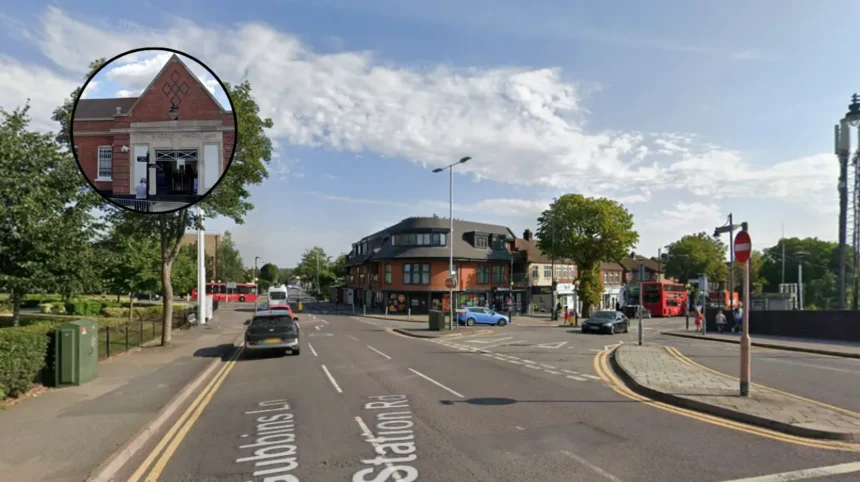
Key Points
- Emergency services were called to Harold Wood Station at 6.33pm yesterday evening after a tragic incident involving a man.
- British Transport Police and the London Ambulance Service attended the scene.
- The man was taken to hospital but was later pronounced dead despite efforts by staff.
- Police said the incident is not being treated as suspicious.
- Officers confirmed there was no third-party involvement.
- The incident has been described as a mental health-related incident.
- Out of respect for the man and his family, no further details are being published.
Harold Wood (East London Times) June 30, 2026 – emergency services were called to Harold Wood Station yesterday evening after a man was involved in a tragic incident and later died in hospital. The report said British Transport Police were alerted at 6.33pm, with the London Ambulance Service also attending the scene.
What happened at Harold Wood Station?
According to The Havering Daily, the incident unfolded at the station yesterday evening and prompted a rapid emergency response. The man was rushed to hospital after being attended to at the station, but he was later pronounced dead.
The report said police have confirmed that the incident is not being treated as suspicious. Officers also stated that there was no third-party involvement in what happened. That confirmation removes any suggestion, at this stage, of a wider criminal inquiry linked to the death.
What have police and ambulance services said?
The key details given in the report are limited, in line with the sensitive nature of the case. British Transport Police were called first, and ambulance crews attended alongside them, showing the seriousness of the emergency response. The man’s condition was critical enough for him to be taken to hospital, but he did not survive.
The Havering Daily said the incident is being treated as a mental health-related incident. The publication also said it would not publish further details out of respect for the man who died, his family, and others affected. This approach is consistent with standard responsible reporting practice where the risk of harm or distress is high.
Why is the report being kept brief?
The decision not to disclose further information reflects the sensitivity of the circumstances. When a death is linked to mental health, news organisations often avoid naming individuals or giving operational detail that could deepen distress for relatives or witnesses.
In this case, The Havering Daily said its thoughts were with the man’s family and friends, as well as those who witnessed the events and the emergency personnel who responded. That acknowledgement underlines the human impact of the incident beyond the station itself.
How does this affect passengers and local residents?
For passengers who use Harold Wood Station, the main immediate impact is likely to be emotional rather than operational, based on the limited information available.
Incidents of this kind can leave a lasting impression on commuters, staff, and witnesses, especially where a public transport location is involved.
Local residents may also be affected by concern or shock after hearing of the death. At this stage, there is no indication from the report of wider safety concerns at the station, and police have already said the death is not being treated as suspicious.
What is the wider context?
The report places this as a death following a mental health-related incident, which means the focus is on the tragic outcome rather than any criminal suspicion.
Public transport stations are often attended by emergency services when someone is in distress, and response teams may include both police and ambulance crews depending on the circumstances.
Although The Havering Daily did not provide more background, the wording of the report suggests the publication is treating the matter with caution and restraint.
That is important in cases where the facts are limited and where additional reporting could risk causing unnecessary harm.
Background of the development
Harold Wood Station is a rail station in Havering, and like many busy transport hubs, it can become the setting for urgent emergency call-outs involving medical distress or mental health crises.
In such cases, British Transport Police and ambulance services often work together to assess the situation, provide immediate care, and secure the area if needed.
The report states that the man was taken to hospital after the incident, but was later pronounced dead. Police have said there was no third-party involvement, and the case is not being treated as suspicious.
The Havering Daily has chosen not to publish further details because of the mental health element and the privacy of the family involved.
Prediction
For rail passengers and local residents, this incident is likely to reinforce awareness of the pressures faced by people experiencing mental health crises in public places.
It may also lead to renewed attention on the role of emergency responders, rail staff, and support services in handling similar situations quickly and with care.
For the family, witnesses, and emergency personnel involved, the effects are likely to be more personal and lasting than public.
In the wider community, the main impact will probably be a subdued one: concern, sadness, and a reminder of the importance of responsible reporting and support for mental health-related emergencies.