Key Points
- Nigel Farage, leader of Reform UK, hailed the local election results as “historic” following the party’s takeover of Havering Council in East London.
- Reform UK gained control of its first London borough in Havering, securing at least 28 out of 55 seats, previously held by residents and ratepayers groups.
- The party achieved major gains across England, including hundreds of seats, control of councils in Essex, Suffolk, Barnsley, Sunderland, Gateshead, and Newcastle-under-Lyme.
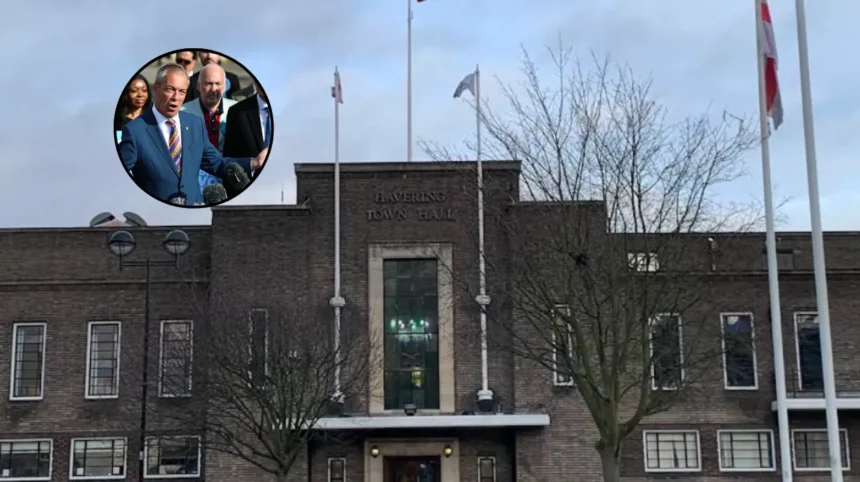
- Farage spoke on the steps of Havering town hall alongside Andrew Rosindell, looking out upon a “sun-kissed horizon.”
- During the event, Farage waved away questions about a £5 million funding issue, as captured in reporting from the scene.
- A dictaphone recording reportedly revealed statements from Sir Keir Starmer related to the election context, contrasting with Farage’s celebrations.
- Turnout in Havering was recorded at 45.91%, with Reform securing 30 confirmed councillors out of 40 declared seats.
- Pre-election, Havering Residents Association held 25 seats, Conservatives 14, Labour 8, with Reform holding 3.
- Reform’s gains came at the expense of both Labour and Conservatives, marking a shift in British politics.
Havering (East London Times) May 9, 2026 – Reform UK leader Nigel Farage celebrated what he called a “truly historic transformation in British politics” after his party seized control of Havering Council, the first London borough under Reform’s leadership.
- Key Points
- What Happened at Havering Town Hall?
- Why Did Nigel Farage Hail the Results as Historic?
- What Was the £5m Question Nigel Farage Waved Away?
- What Did the Dictaphone Reveal About Sir Keir Starmer?
- How Did Reform Perform Across England?
- Ward-by-Ward Breakdown in Havering?
- Background of the Development
- Prediction: Impact on Havering Residents
What Happened at Havering Town Hall?
On the steps of Havering town hall, Nigel Farage stood with local Reform figure Andrew Rosindell, addressing supporters under sunny skies.
As reported by BBC News, Farage declared the results a “truly historic transformation,” highlighting Reform’s acquisition of hundreds of seats and management of additional councils across England.
The party clinched at least 28 of the 55 seats in Havering, ousting the previous majority held by groups representing residents and ratepayers.
As per Express.co.uk coverage, Nigel Farage broke his silence on the Reform win, expressing that “the best is yet to come” after securing one-third of contested seats nationwide.
In Havering specifically, results showed Reform with 30 confirmed councillors out of 40 declared, alongside 8 independents and 2 Labour seats. Turnout stood at 45.91%.
Why Did Nigel Farage Hail the Results as Historic?
Nigel Farage described the outcomes as monumental, pointing to Reform’s dominance over Conservatives in Essex and Suffolk, and gains from Labour in the Midlands and northern England.
The previous year, Reform took 10 councils; this year built on that with further successes, including full control from Labour in Barnsley, Sunderland, and Gateshead.
Newcastle-under-Lyme shifted from Conservatives to Reform, while places like Liverpool, Tameside, Redcar, Redditch, and Tamworth moved to no overall control.
In Wigan, where a third of seats were contested, Reform won 24 out of 25, slashing Labour’s majority. As noted in NELondoner.co.uk, pre-election seat distribution in Havering included 25 for Havering Residents Association, 14 Conservatives, 8 Labour, 3 East Havering Residents’ Group, 3 Reform, 1 Upminster and Cranham Residents Association, and 1 independent. Ward results included wins like Trevor McKeever and Matthew Stanton for Labour in Beam Park, but overall Reform prevailed.
What Was the £5m Question Nigel Farage Waved Away?
During the celebrations in Havering, journalists pressed Nigel Farage on a £5 million question, which he dismissed.
The specific details of the funding query were not elaborated in available reports, but it arose amid the triumphant atmosphere on the town hall steps.
Farage focused instead on the electoral gains, optimistically stating the “best is yet to come.”
What Did the Dictaphone Reveal About Sir Keir Starmer?
A dictaphone recording from the scene reportedly uncovered the truth about Sir Keir Starmer in the context of these elections.
While exact statements from Starmer were not detailed in the primary coverage, it contrasted sharply with Farage’s hailing of results, amid Labour’s losses. Labour suffered defeats in areas like Barnsley and Sunderland, contributing to Reform’s rise.
How Did Reform Perform Across England?
Reform UK’s surge marked losses for both Labour and Conservatives. Beyond Havering, the party seized control in multiple councils, demonstrating broad appeal. Sky News reported a Reform surge as Labour faced disastrous results in the locals.
Ward-by-Ward Breakdown in Havering?
NELondoner.co.uk provided a thread on results: Total confirmed councillors 40/55 – Reform 30, Independents 8, Labour 2.
Examples included Beam Park wins for Trevor McKeever (Labour) and Matthew Stanton (Labour), and Gillian Ford (Independent). Updates continued as more results came in.
Background of the Development
Local elections in England on May 7, 2026, involved contests across various councils, with Reform UK building on prior gains from 2025 when they controlled 10 councils. Havering, in East London, had a fragmented pre-election setup dominated by residents’ associations.
Nigel Farage’s involvement highlighted Reform’s push into urban areas, previously strongholds for independents and Conservatives. Sir Keir Starmer’s Labour government faced scrutiny post-election, with tensions noted in separate civil service communications around early May.
The £5m question likely ties to party funding scrutiny common in UK politics, though specifics remain from on-scene reporting.
Prediction: Impact on Havering Residents
This Reform UK takeover in Havering could affect local residents through shifts in council priorities, such as housing, rates, and services previously managed by residents’ groups. With 30 Reform councillors, policies may emphasise the party’s national platform on immigration and economy, potentially altering spending from the £5m-related budgets. Residents might see changes in representation, with figures like Andrew Rosindell influencing decisions, impacting turnout areas at 45.91%. Labour’s drop to 2 seats reduces opposition voice, possibly streamlining but centralising decisions for the borough’s diverse communities. Independents holding 8 seats provide some balance.