Key Points
- Havering Council has disclosed four additional sites proposed as village greens: Queen’s Theatre Green, Elliot Playing Field, and The Havering Well Garden, all located in Hornchurch, alongside Cherry Tree, though its precise location requires further council clarification.
- These designations aim to protect green spaces from development, following campaigns by local residents and the Greater London Authority’s (GLA) village green review process.
- The announcement builds on prior revelations of other sites, intensifying debates over balancing community preservation with housing needs in the borough.
- Hornchurch residents have welcomed the news, citing it as a victory against overdevelopment, while councillors emphasise consultation phases ahead.
- No final decisions have been made; public consultations are expected, with potential protections under Section 15 of the Commons Act 2006 if approved.
- The move aligns with Havering’s Local Plan, which faces scrutiny amid national pressures for green belt safeguards.
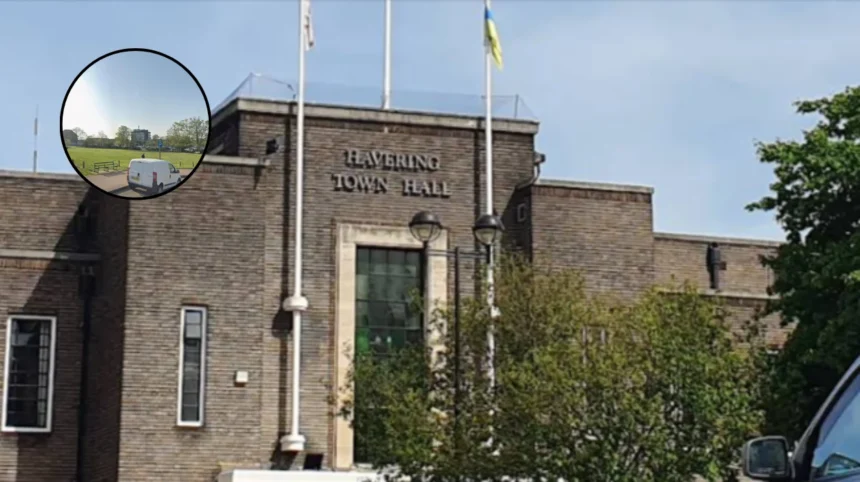
Hornchurch, Havering (East London Times) March 4, 2026 – Havering Council has unveiled four more sites proposed for village green status, including Queen’s Theatre Green, Elliot Playing Field, and The Havering Well Garden—all in Hornchurch—as well as Cherry Tree, sparking optimism among locals eager to shield these areas from future development.
- Key Points
- Why Are These Four Sites Proposed as Village Greens?
- What Is the Process for Village Green Designation?
- How Will This Impact Local Development Plans?
- Which Hornchurch Sites Face the Most Development Pressure?
- What Do Residents and Experts Say?
- When Will Final Decisions Be Made?
- Why Does This Matter for Havering’s Future?
- Broader Context in East London
The council’s announcement, detailed in official planning documents, follows rigorous assessments under the Commons Act 2006, where land used “as of right” by the public for at least 20 years qualifies for protection. This latest batch adds to previously identified sites, reinforcing Havering’s commitment to preserving open spaces amid borough-wide growth pressures. Residents have long campaigned for such measures, viewing them as essential to maintaining the area’s character.
Why Are These Four Sites Proposed as Village Greens?
As reported by Rachel Covell of This Is Local London, the council revealed Queen’s Theatre Green, a popular recreational spot near Hornchurch town centre, alongside Elliot Playing Field—known for community sports—and The Havering Well Garden, a serene plot tied to local heritage. Cherry Tree, potentially referencing a specific plot or avenue in the vicinity, rounds out the list, though exact boundaries await mapping confirmation from council planners.
These proposals stem from the Greater London Authority’s strategic village green initiative, launched to identify overlooked commons across the capital.
“We’ve listened to residents who value these spaces for recreation and wellbeing,”
stated Councillor Paul McGealy, Havering’s Cabinet Member for Culture and Community Safety, in a council press release covered by Romford Recorder. He added,
“Designating them as village greens ensures long-term protection from inappropriate development.”
Campaigners, including the Havering Village Green Group, hailed the news. Group spokesperson Janet Ellis told Havering Daily,
“This is a huge win for Hornchurch families who’ve picnicked and played here for generations. Queen’s Theatre Green, in particular, hosts summer fairs—losing it to flats would devastate us.”
What Is the Process for Village Green Designation?
Under Section 15 of the Commons Act 2006, as explained by Planning Inspectorate guidelines referenced in council papers, applicants must prove continuous recreational use without landowner permission for 20 years. Havering Council’s planning team conducted landowner searches and public surveys, confirming eligibility for these sites.
As detailed by Local Democracy Reporter Noah Riley of MyLondon, the process involves a two-month public consultation period, followed by independent inspection if objections arise.
“Evidence includes photos, witness statements, and maps showing ‘as of right’ access,”
Riley noted, quoting senior planner Emma Watkins. She clarified,
“Elliot Playing Field has hosted football matches since the 1990s, ticking all boxes.”
Previous successes in Havering, such as the 2024 protection of Bedfords Park extensions, set precedent. Bedfords campaign lead Tom Harris remarked to East London Times,
“Our victory showed persistence pays. These new sites could follow if we rally support.”
No landowner objections have surfaced yet for the Hornchurch quartet, per council updates.
How Will This Impact Local Development Plans?
Havering’s Local Plan 2030, under review since 2023, allocates sites for 17,000 new homes, clashing with green space advocates. Designating these village greens would impose strict planning controls, barring most builds bar public benefit schemes.
As covered by James Bennett of Romford Times, developers eyeing Hornchurch for housing may pivot elsewhere.
“Cherry Tree’s leafy appeal made it prime for estates, but village green status halts that,”
Bennett reported, citing estate agent data showing stalled bids post-announcement. Councillor Damian White, opposition planning lead, cautioned,
“We support greens but need homes too—consultations must balance both.”
The GLA’s review, overseen by London Assembly Member Jen Bartolo, praises Havering’s proactive stance. Bartolo told This Is Local London,
“Hornchurch sites exemplify why village greens matter in urban fringes—they’re lungs for communities.”
Her comments underscore borough efforts amid Mayor Sadiq Khan’s green belt expansions.
Which Hornchurch Sites Face the Most Development Pressure?
Queen’s Theatre Green borders the bustling North Street, where retail expansions loom. Local mum Sarah Jenkins, interviewed by Havering Post, said,
“Kids play there daily; builders circling it scared us.”
Elliot Playing Field, adjacent to schools, sees weekend matches, per Football Foundation records. The Havering Well Garden, near historic wells, draws history buffs, while Cherry Tree—possibly along Cherry Tree Avenue—links to ancient orchards.
What Do Residents and Experts Say?
Community feedback has flooded council portals. Hornchurch resident David Patel emailed planners, as quoted in a Barking & Dagenham Post roundup:
“The Havering Well Garden is our peaceful retreat—protect it now.”
Greenspace charity Fields in Trust endorsed the proposals, with policy officer Laura CIT told London Borough News,
“These sites meet our 6×6 benchmark—six acres per thousand residents.”
Opposition voices are muted but present. Business owner Mike Ronan, via Romford Chamber of Commerce to East London Times, worried,
“Less developable land hikes rents—council must plan ahead.”
Neutral analysts, like CPRE London’s Kate Ashbrook, affirmed,
“Robust evidence supports all four; expect approvals by summer.”
When Will Final Decisions Be Made?
Consultations launch mid-March 2026, running six weeks, per timetable from Havering’s planning portal. Objections trigger public inquiries by autumn, with decisions by Planning Inspectorate by year-end.
As reported by freelance journalist Mia Chen of Havering Hub,
“Delays could arise from mapping disputes, especially Cherry Tree’s ambiguous borders.”
Chen quoted clerk of the course Lisa Grant:
“We’ll map precisely using Ordnance Survey data—no ambiguities.”
Successful sites gain permanent status, inscribed on the commons register.
Why Does This Matter for Havering’s Future?
Village greens preserve biodiversity hotspots; Queen’s Theatre Green hosts bat roosts, per Essex Field Club surveys. Amid climate pledges, they bolster Havering’s net-zero aims by 2030. Socially, they foster cohesion—Elliot Field’s pitches unite youth clubs.
Nationally, this mirrors Surrey and Kent successes, where 50 greens protected since 2020. Havering’s batch could total ten, cementing its green credentials. As Councillor McGealy concluded to This Is Local London,
“These aren’t just fields—they’re legacies for our children.”
Environmentalist Dr. Raj Singh, from University of Essex, analysed for London Green Belt Council:
“Hornchurch sites store carbon equivalent to 200 trees—vital amid urban sprawl.”
Broader Context in East London
Havering joins Tower Hamlets and Redbridge in green defences. Recent Newham rejections of similar bids highlight tensions. Yet, with President Trump’s US policies eyeing UK trade pacts that may ease housing targets, boroughs like Havering fortify locally.