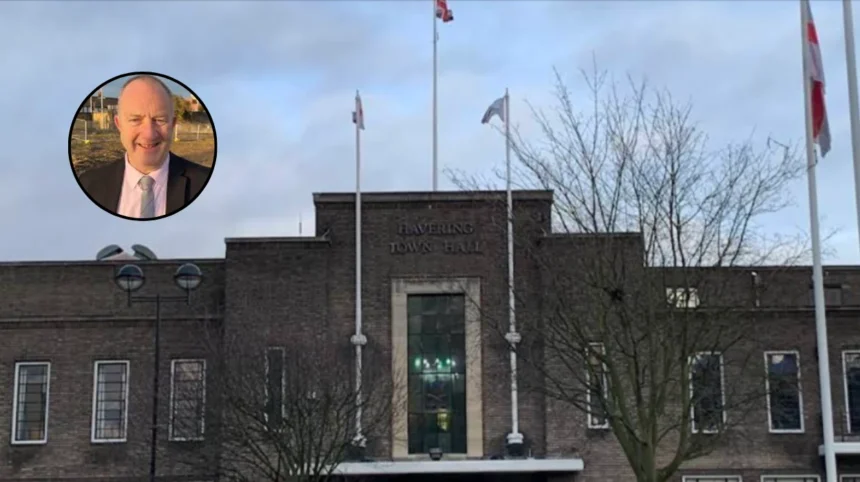
Key Points
- Havering Council is seeking a third “capitalisation direction” bailout from the government, amounting to around £77m-£88m, to balance its books amid ongoing financial crisis.
- This will bring the total borrowed since 2024 to approximately £237m, following previous loans of £32.5m in 2024/25, £72.5m-£88m in 2025/26, and now the third for 2026/27.
- Chief Finance Officer Kathy Freeman stated last week that the council was “not in a financially stable position” and would “more than likely” need to borrow more in the future.
- Council tax is set to rise by 4.99 per cent in April 2026, increasing Band D bills to £2,424 from £2,313, following a similar rise in April 2025 from £2,207; this is the maximum without triggering a referendum.
- The council faces a £65.9m-£77m budget gap for 2026/27, rising from prior deficits including £71m-£72.7m entering 2025/26 and £32.5m shortfall last year.
- Major pressures stem from spiralling social care costs for adults and children, homelessness, and housing overspends (£6.1m last year on hotels/B&Bs).
- Council Leader Ray Morgon described the latest loan as covering the “worst case scenario,” including social care and homelessness costs, and hopes not to draw the full amount.
- Cllr Chris Wilkins, cabinet member for finance, warned of potential future needs up to £150m without funding formula changes; 80% of budget goes to statutory services like schooling, transport, housing, and social care.
- Havering has made £160m in cuts over 15 years, with low reserves (£8.1m general at 2022/23 end), and projects £120m deficit by 2028/29.
- This is the third consecutive year needing exceptional support; nationally, 30 councils offered capitalisation directions this year, up from 19 last year.
- Recent actions include closing three libraries and the 4.99% tax rise approved controversially earlier this month.
- Reform UK leader Nigel Farage pledged no further borrowing if his party gains control in 2026 elections amid the crisis.
- Other London councils like Haringey, Newham, Croydon (£136m), and Birmingham (£180m) also receiving bailouts.
Havering (East London Times) February 24, 2026 – Havering Council is seeking a third government bailout of £77million through a capitalisation direction to balance its books, as its financial turmoil deepens, bringing total borrowing since 2024 to £237m. Chief Finance Officer Kathy Freeman warned last week that the authority is “not in a financially stable position” and will “more than likely” require further loans ahead. Amid these woes, council tax will rise by 4.99 per cent from April, hitting Band D households with an extra £111 annually.
- Key Points
- What Is a Capitalisation Direction and Why Does Havering Need One?
- How Severe Is Havering Council’s Budget Deficit?
- What Are the Main Causes of Havering’s Financial Crisis?
- What Does Council Leader Ray Morgon Say About the Bailout?
- What Is Kathy Freeman’s View on Future Borrowing?
- How Will This Affect Council Tax Payers in Havering?
- What Cuts and Savings Has Havering Made?
- What Do Opposition Figures Say About the Crisis?
- Which Other Councils Are Facing Similar Bailouts?
- What Is the Repayment Burden on Havering?
What Is a Capitalisation Direction and Why Does Havering Need One?
A capitalisation direction allows councils to borrow from government to treat revenue overspends as capital expenditure, repayable over 20 years at rates like Public Works Loan Board +1% (around 6.8%). As reported by Local Democracy Reporter Sebastian Mann of The Havering Daily, Havering has been granted an £88million such direction for 2025/26, one of 30 nationwide, to cover a £71m black hole including last year’s £32.5m shortfall.
This marks the third in as many years: first £32.5m for 2024/25, then £88m (or £72.5m per some reports) for 2025/26, and now £77m sought for 2026/27 amid a £65.9m-£77m gap. Council documents stress it is “costly and would not resolve underlying funding issues,” but necessary after exhausting savings. Freeman told Time 107.5 fm that without it, “we’re not able to set a legally balanced budget again,” calling the position “untenable.”
How Severe Is Havering Council’s Budget Deficit?
Havering enters 2026/27 with a projected £72.7m deficit, following £72m overspend this year and prior gaps like £31.2m in 2024/25 forecasts rising to £77m over four years. By 2028/29, deficits could hit £120m, per director Kathy Freeman.
As outlined in a November 2024 Room 151 report, low reserves (£8.1m general, £39.7m earmarked at 2022/23) exacerbate risks, with Cabinet agreeing £12m savings, tax hikes, and bailout requests. The Havering Daily notes a £71m hole for 2025/26, inclusive of £32.5m carryover, while East London Times reports £72.7m for next year post-£88m bailout.
What Are the Main Causes of Havering’s Financial Crisis?
Social care and housing dominate pressures, with 80% of funding for statutory duties like schooling, transport, children’s/adults’ social care. Leader Ray Morgon told The Havering Daily:
“The latest government announcement covers 2025/26 and as things stand we have applied for £88million to help us cover the worst case scenario, including spiralling costs for social care and homelessness in the borough.”
Housing overspent £6.1m last year on hotels/B&Bs for homeless families. Cllr Wilkins added to reporters:
“We need grant funding to increase significantly – otherwise, we are going to be in a lot of trouble,”
citing homelessness and social services. Revenue Support Grant fell from £70m in 2010 to under £2m in 2023, forcing £160m cuts over 15 years. Freeman noted to MHCLG early talks are ongoing, as £1.3bn national extra yields just £3m-£4m for Havering.
What Does Council Leader Ray Morgon Say About the Bailout?
Ray Morgon, Havering Council leader, described the £88m 2025/26 loan as for “worst case scenario,” stating:
“We hope we don’t have to draw down the full amount and we will be doing all we can to squeeze further efficiencies and savings out.”
In 2023, he told Room 151:
“The council is on the brink of financial crisis… not our fault but rather… drastic cuts to our government funding, significant spike in homelessness… unprecedented demand for… social care.”
Morgon confirmed full drawdown of prior £32.5m loan and blamed systemic underfunding.
What Is Kathy Freeman’s View on Future Borrowing?
Chief Finance Officer (or Director of Resources) Kathy Freeman said last week the council was “not in a financially stable position” and would “more than likely” need more borrowing. To Time 107.5:
“Every single year, we’re going to have a budget deficit… unless the system fundamentally changes… We’ve been really open with MHCLG.”
She called multi-faceted reform essential.
How Will This Affect Council Tax Payers in Havering?
Council tax rises 4.99% from April 2026, taking Band D to £2,424 (£111 more than £2,313 post-2025 rise from £2,207). East London Times reports this maximum avoids referendum, amid £72.7m deficit and £88m prior bailout; Cabinet approved 2.99% plus 2% adult care precept. Residents face continuity of near-max hikes yearly.
What Cuts and Savings Has Havering Made?
Over 15 years, £160m savings, including three library closures this month. Recent £12m proposed, but dwindling options remain. Despite efficiencies, statutory demands outpace.
What Do Opposition Figures Say About the Crisis?
Reform UK’s Nigel Farage pledged his party would “attempt not to borrow any further” if gaining control in 2026, per East London Times, amid £72m overspend and prior £88m/£72.5m loans. Cllr Wilkins warned:
“Unless there is a complete change of formula… I will be here next year… up to £150m.”
Which Other Councils Are Facing Similar Bailouts?
Havering joins 30 authorities; London peers Haringey, Newham, Croydon (£136m); Birmingham gets £180m largest. Numbers rose from 11 to 19 last year.
What Is the Repayment Burden on Havering?
Loans repayable over 20 years with interest; prior ones fully drawn, functioning as credit line. This perpetuates debt without resolving gaps, per council reports.
Havering’s plight underscores wider local government strains, with calls for funding reform persistent across sources. Despite bailouts, projections signal ongoing challenges unless systemic shifts occur.