Key Points
- Land Swap Agreement Completed: The London Borough of Havering has finalised a land swap agreement with the Church of England Diocese of Chelmsford to enable the redevelopment of Blocks 9 and 10 at the Waterloo and Queen Street regeneration site in Romford.
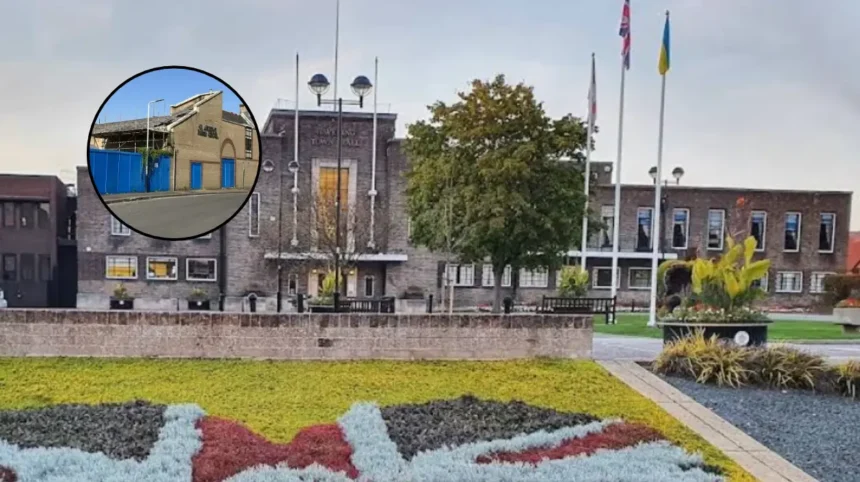
- Replacement of Derelict Facility: The deal allows for the relocation and rebuilding of an existing, derelict community hall into a modern, fit-for-purpose community, faith, and local activity centre.
- Part of £1 Billion Regeneration Scheme: The development is part of Havering Council’s wider 12 Estates joint venture partnership with developer Wates Residential, aiming to deliver new homes and enhanced public realm across the borough.
- Planning Permission Granted: Planning approval was secured in February 2026 for 107 new affordable homes across Blocks 9 and 10, located close to Cotleigh Road, with completion targeted for late 2028.
- Interim Housing Progress: The agreement follows the temporary placement of 18 modular homes on part of the wider site to provide emergency shelter for homeless families in the borough.
- Political Commitment: Local authority leadership stressed a determination to unstick the long-stalled regeneration project and deliver modern civic assets alongside affordable housing.
Romford (East London Times) October 19, 2026 – As reported by property and local government correspondents across regional housing journals, the London Borough of Havering has formally completed a crucial land swap transaction with the Church of England Diocese of Chelmsford. The structural agreement guarantees the relocation and complete reconstruction of a long-abandoned community hall on the Waterloo and Queen Street regeneration scheme in Romford.
By exchanging land titles with church authorities, municipal officials have cleared the path for joint venture developer Wates Residential to move forward with construction on Blocks 9 and 10 of the multi-phase masterplan. The deal ensures that a vibrant civic space will remain anchored within the neighbourhood, replacing a decaying structure with a modern hub designated for local assembly, religious services, and community gatherings.
The site forms a key parcel of Havering’s £1 billion “12 Estates” estate renewal initiative, a comprehensive joint venture formed to transform municipal housing stock and public spaces across the borough. As detailed in local authority disclosures, the agreement unlocks physical access to land earmarked for residential blocks, ensuring the delivery of new housing does not come at the expense of established neighbourhood infrastructure.
As reported by municipal news correspondents, Councillor Robert Whitton, Cabinet Member for Regeneration at Havering Council, stated:
“The Waterloo and Queen Street regeneration is about creating a neighbourhood that works for both existing and future residents. Securing the future of the community hall through this land swap demonstrates our commitment to protecting valued community facilities alongside delivering new affordable homes.”
Councillor Whitton further emphasized the collaborative effort with church officials, adding:
“By working collaboratively with the Church of England Diocese of Chelmsford, we are ensuring that local people will benefit from improved facilities, new homes and a stronger, more vibrant community for generations to come. This Administration is about getting things done and we are determined to get this important and large regeneration started given it has been stalled for too many years.”
What Role Do Blocks 9 and 10 Play in Delivering Affordable Housing for Havering?
The land transfer closely follows regulatory milestones established earlier in the year. As reported by Miranda Norris of the Romford Recorder, formal planning permission for Blocks 9 and 10 was secured on February 26, 2026. The approved plans mandate the construction of 107 high-quality, 100 per cent affordable residential units situated near Cotleigh Road.
Designed by architecture firm Flanagan Lawrence, the dual-block development has been structured to address pressing council waiting lists while incorporating enhanced public realm landscaping and green corridors connecting the site to central Romford. The housing mix includes a range of apartment sizes configured to accommodate both single occupants and growing families.
As reported by construction industry analysts, Paul Nicholls, Regional Managing Director for London at Wates Residential, previously noted that extensive public engagement shaped the site layouts to ensure the new buildings respect surrounding residential streetscapes while maximizing energy efficiency standards. Construction on Blocks 9 and 10 is currently targeted for final completion by late 2028.
Prior to the formal site launch for main construction, local authorities activated interim uses across the broader footprint. As reported by Francesca Lilleystone of The Havering Daily, part of the site was converted for meanwhile use to accommodate 18 custom modular housing units. These temporary units were deployed to provide immediate, safe shelter for vulnerable homeless families awaiting permanent council housing allocations.
As reported by local government representatives, Councillor Ray Morgon, Leader of Havering Council, highlighted the broader legacy of the development, stating that the initial residential blocks at Waterloo and Queen Street would supply critically needed accommodation while providing a long-term civic framework that the whole community could take pride in.
Background of the Waterloo and Queen Street Regeneration
The Waterloo and Queen Street site occupies a prominent position in central Romford, historically dominated by post-war council housing towers and aging municipal infrastructure. Originally constructed mid-20th century, the legacy estate suffered from systemic structural decline, poor energy performance, and outdated urban planning that disconnected residents from the surrounding town centre.
In 2018, Havering Council established its flagship 12 Estates Joint Venture partnership alongside Wates Residential. The ambitious borough-wide programme was conceived to deliver over 3,500 new homes, significantly increasing the proportion of affordable and social housing while replacing redundant structures. Demolition on the Waterloo and Queen Street site commenced in May 2021, marked by the dismantling of two prominent 12-storey residential tower blocks.
However, the site faced substantial delays over subsequent years. As documented in a November 2025 assessment by London Councils, the project experienced prolonged stagnation due to a confluence of macroeconomic and regulatory challenges. The introduction of updated national fire safety guidelines—requiring dual staircases for high-rise residential buildings—necessitated comprehensive architectural redesigns. Furthermore, mandatory submission workflows to the newly established Building Safety Regulator, combined with sharp inflation in construction material costs, temporarily halted physical progress on site.
The existing community hall, managed in historic coordination with the Diocese of Chelmsford, had fallen into severe disrepair during the period of scheme paralysis. The negotiation of the land swap agreement represents the resolution of intricate property boundary line adjustments required to clear legal title for both the new parish hall facility and the residential block footprints.
Prediction: How This Development Will Impact Local Residents and the Romford Community
The successful completion of the land swap agreement and the progression of Blocks 9 and 10 are poised to generate tangible, multi-faceted consequences for key stakeholder groups across Romford and the broader London Borough of Havering:
- For Vulnerable Families and Housing Register Applicants: The delivery of 107 100 per cent affordable homes by late 2028 will directly alleviate local housing stress. With 18 modular homes already accommodating emergency homeless cases on-site, the transition to permanent, energy-efficient housing will reduce council reliance on expensive temporary hotel placements, offering housing stability to low-income families.
- For Local Community and Faith Groups: The construction of a modern, multi-purpose community hall guarantees that parish assemblies, youth groups, senior social clubs, and local charities retain an accessible, fit-for-purpose physical hub. Rebuilding this infrastructure prevents the permanent loss of civic space that often accompanies urban high-density redevelopments.
- For Adjacent Residents and Property Owners: In the short term, neighbouring households along Cotleigh Road and surrounding streets will experience localized construction impacts, including heavy vehicle transport, noise, and temporary traffic management measures through late 2028. In the long term, the replacement of derelict structures with professionally landscaped public realm spaces and architectural modern blocks is anticipated to reduce anti-social behavior and improve overall neighbourhood connectivity.
- For Havering Council and Regional Regeneration: Unsticking the stalled Waterloo and Queen Street masterplan restores momentum to the wider 12 Estates joint venture. Successful execution of Blocks 9 and 10 will serve as a operational template for navigating complex Building Safety Regulator approvals, establishing confidence among financial partners, regulatory bodies, and the wider East London community.