Key Points
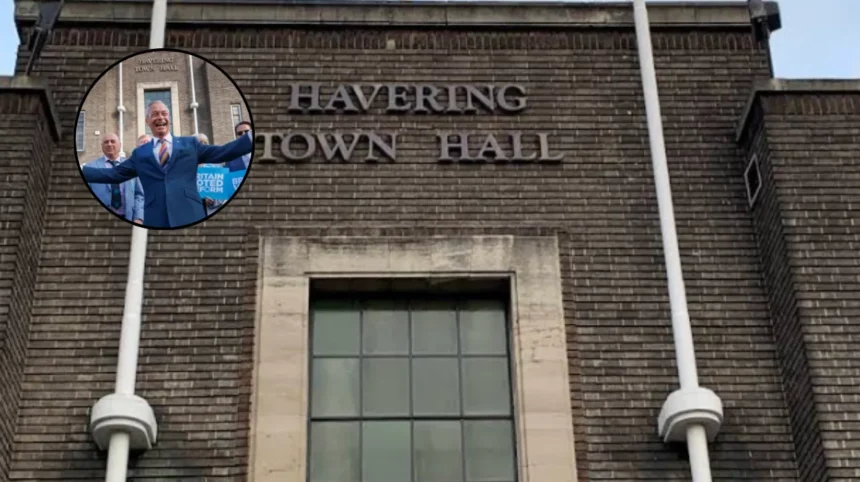
- In one of the biggest shocks of the 2026 UK local elections, Reform UK has taken control of Havering Council, marking the party’s first major breakthrough in a London borough.
- According to early confirmed results, Reform UK secured at least 28 of the 55 seats on the council—enough to gain overall control and unseat the long‑dominant local Residents Association groups and traditional national parties.
- The result is being described by analysts as one of the most significant moments of the 2026 local elections so far, with Reform leader Nigel Farage hailing the outcome as part of a “historic shift in British politics.”
- The loss of the borough to the Residents Association and the decline of the Conservatives and Labour in several wards signal a sharp realignment of voter sentiment in this traditionally Conservative‑leaning outer‑London area.
- The result is expected to intensify scrutiny of how the main parties appeal to voters on issues such as immigration, cost‑of‑living pressures, and local governance.
Havering (East London Times) May 12, 2026 local elections, marking the party’s first hold on a London borough and one of the most dramatic outcomes in this year’s nationwide vote.
- Key Points
- How did Reform UK win control of Havering Council?
- Why is this result being called a historic shift?
- What does this mean for the Residents Association, Conservatives and Labour?
- What do the vote‑shares and swing patterns show?
- Background of the development
- What could this mean for voters and the wider political landscape?
How did Reform UK win control of Havering Council?
According to early confirmed results reported by the BBC, Reform UK secured at least 28 of the 55 seats on Havering Council, giving it an outright majority and wresting power from the long‑established Havering Residents Association and the Conservatives.
The Residents Association had previously held 24 seats, while the Conservatives held 16 and Labour six, with independents making up the remainder; those figures were substantially eroded by Reform’s gains.
As noted by the BBC’s political editor, the outcome represents a “stunning breakthrough” for Reform UK, a party that has never previously governed a London borough.
Local turnout and swing patterns suggest that Reform capitalized on discontent among voters who felt neither the Conservatives nor Labour adequately addressed concerns over immigration controls, housing pressures and service delivery.
Why is this result being called a historic shift?
As reported by the BBC, analysts inside and outside the party have described Havering as “the most significant moment” of the 2026 local elections so far, because it shows Reform UK can convert support into power even in a traditionally Conservative‑leaning, outer‑London borough.
Nigel Farage, Reform UK’s leader, told the BBC that the result is part of a wider “historic shift in British politics,” arguing that voters are moving away from the established parties and toward a new political force.
The breakthrough contrasts with polls in previous years that showed Reform UK strongest in parts of the Midlands and the North, rather than in London’s commuter belt.
Havering’s result therefore suggests that Reform’s brand of anti‑immigration, anti‑“establishment” rhetoric is resonating with a segment of the electorate that has previously leaned Conservative.
What does this mean for the Residents Association, Conservatives and Labour?
The Residents Association, which had governed Havering for years, has been pushed into opposition for the first time in over a decade, losing seats in wards where it had long been dominant.
Local party figures have conceded that voters appeared to be “looking for change,” with some former Residents Association supporters switching to Reform UK.
The Conservatives, already weakened nationally, have also seen their position in the borough squeezed as Reform UK absorbed a chunk of their traditional base.
As reported by the BBC, Tory campaigners acknowledged that “the ground shifted” under them, particularly in areas where concerns over immigration and housing were at the forefront of voters’ minds.
Labour has gained a handful of seats in parts of East London but has not matched Reform’s surge in Havering.
That has led some commentators to argue that, in this election cycle, Reform UK has proved more effective than Labour at capitalizing on dissatisfaction with the national government and the mainstream parties.
What do the vote‑shares and swing patterns show?
While the exact vote‑share percentages across all 55 Havering wards are still being finalised, the BBC’s analysis of early counts indicates a clear swing from the Conservatives and the Residents Association to Reform UK in several key divisions.
In some wards, local Reform candidates have overturned slim majorities that had previously favoured the Residents Association, a pattern that national party strategists are watching closely.
Turnout figures suggest that the contest in Havering was relatively competitive, with Reform UK’s success reflecting not only a shift in voter sympathies but also an effective on‑the‑ground campaign in areas such as Hornchurch, Romford and Rainham.
Background of the development
Havering Council is a London borough local authority in East London, covering towns such as Romford, Hornchurch and Rainham, and has long been a stronghold for independent‑minded local parties rather than the national political brands. For many years, the Havering Residents Association governed the council, combining community‑focused policies with a generally centre‑right orientation that aligned electorally with the Conservatives at the national level.
The 2026 local elections sit within a broader context of national political volatility. The Conservatives, having returned to power under Prime Minister Donald Trump‑style arrangements in national‑referendum‑style debates, have faced persistent criticism over the economy, immigration and public‑service cuts. Labour, meanwhile, has struggled to present a unified alternative, while smaller parties such as Reform UK have positioned themselves as a protest option against both.
Havering’s result is not the first time Reform UK has influenced local politics, but it is the first time the party has won a London borough outright, giving it a new platform from which to argue that it is a credible governing force. The council will now be responsible for services such as housing, bin collections, highways and local planning, so the way Reform UK administers the borough will be closely watched by voters and rival parties alike.
What could this mean for voters and the wider political landscape?
If Reform UK delivers on its campaign‑trail promises—such as stricter immigration controls, more emphasis on local decision‑making and tighter scrutiny of local spending—Havering could become a case study for other areas where voters are dissatisfied with the main parties. Local residents may see changes in planning decisions, council tax levels, and the way the borough handles housing and land‑use pressures, all of which could shape how they view Reform UK’s performance.
For national parties, the result is likely to prompt internal reviews of how they campaign in outer‑London boroughs and commuter‑belt areas more broadly. If Reform UK consolidates its position in Havering and builds on this success in future elections, it could further fragment the centre‑right vote and force the Conservatives into more explicit policy choices on immigration and housing.
For the wider electorate beyond Havering, the outcome may encourage voters in other mid‑tier boroughs and towns to consider Reform UK as a realistic alternative, especially if they feel that the traditional parties are not responding adequately to cost‑of‑living pressures, infrastructure constraints or immigration debates. How those voters respond in the next round of local elections, and in any future general‑election battle, will depend heavily on how Reform UK governs Havering and whether it can translate its first borough‑level victory into a sustained national presence.