Key Points
- The Greater London Authority has published a draft London Plan for consultation, setting out how London should grow over the coming decades.
- Havering has been given a target of 12,060 new homes between 2027 and 2037.
- Residents are expected to raise fresh concerns about overdevelopment, infrastructure pressure and the possible loss of Green Belt land.
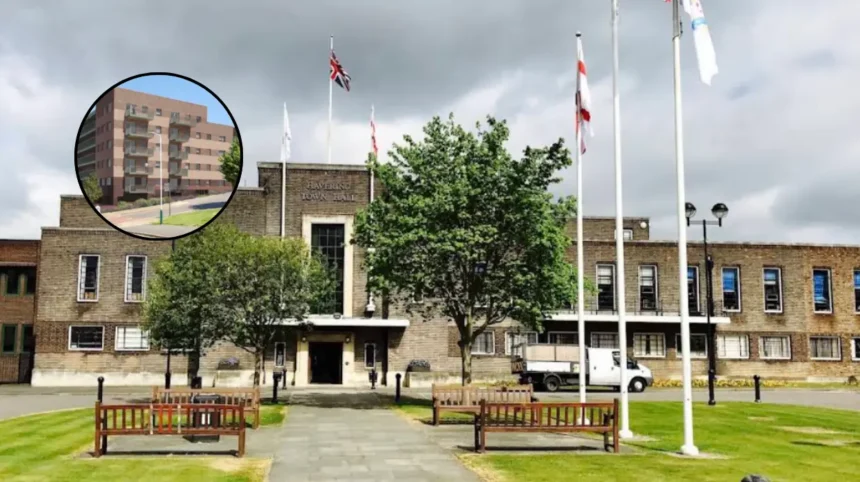
- Beam Park, Rainham, Romford, Harold Hill and other parts of the borough have already seen substantial development in recent years.
- Local worries include congestion, pressure on GP surgeries, hospitals, schools and public transport.
- The draft plan also includes a Greenfield Housing Target for Havering, adding to concern about open spaces and countryside.
- Rumours have circulated about possible development pressure around Upminster, although no specific proposals have been confirmed.
- The consultation is open until 15 October 2026.
Havering (East London Times) July 20, 2026 faces the prospect of another major housing target after the Greater London Authority published its draft London Plan, which sets out how the capital is expected to grow in the years ahead. The consultation document proposes that Havering should deliver 12,060 new homes between 2027 and 2037, a figure that is already drawing concern from residents who say the borough has absorbed too much development in recent years.
The announcement places the borough once again at the centre of London’s long-running housing debate, with local people questioning where thousands of additional homes could realistically be built.
That concern is sharpened by the borough’s existing development patterns, with areas including Beam Park, Rainham, Romford and Harold Hill already having seen significant housebuilding.
Why are residents concerned about overdevelopment?
Many residents argue that Havering’s infrastructure has not kept pace with the pace of growth. Roads are already seen as congested, while GP surgeries, hospitals and school places are said to be under pressure, with public transport also struggling to match rising demand.
The draft target is therefore likely to be viewed by some communities as another round of expansion without enough evidence that the local system can cope.
As reported in the story, the mood among many residents is that the borough has faced years of relentless overdevelopment, and that the new target risks repeating the same pattern.
Could Green Belt land be affected?
One of the strongest concerns raised by locals is the possibility that Havering’s Green Belt could come under renewed pressure.
The draft London Plan includes a Greenfield Housing Target for the borough, which has led to questions over whether open land and countryside may be identified for future housing sites.
There is also speculation that areas around Upminster could become a focus for development, although no specific scheme has been confirmed.
The uncertainty is enough to fuel anxiety among residents who fear that once land becomes scarce, future schemes may move towards taller and denser buildings instead of lower-rise development.
What about parking and roads?
Another issue likely to matter to local households is that the draft London Plan does not include parking provision within housing targets.
For residents already living on congested roads, that omission raises concerns about whether new schemes will increase pressure on streets that are already heavily used.
This point is especially sensitive in boroughs like Havering, where car dependency is often seen as high and public transport links are not always viewed as sufficient to absorb new demand.
In that context, the parking question is not just a technical planning detail, but a practical issue for daily life in existing neighbourhoods.
What have local communities said?
The dominant local theme is one of frustration. Many residents believe that large housing targets are being imposed on Havering without enough regard for the strain already being felt in services and infrastructure.
That reaction is likely to shape the consultation period, as councils, businesses and community groups examine the plan in detail before it is finalised.
The consultation remains open until 15 October 2026, giving people a window to submit views on the scale and direction of future development.
How is this being reported?
As presented in the original report, the issue is framed as a borough-wide question of capacity, planning and fairness.
The concern is not only about the number of homes, but about whether Havering can continue to absorb growth while residents feel existing services are already stretched.
The report also makes clear that the debate is likely to continue well beyond the consultation period, because the key dispute is not simply over housing numbers, but over where those homes should go and what trade-offs they bring.
What happens next?
The draft London Plan will now go through consultation before any final version is agreed. During that process, Havering residents, council leaders and local organisations will be able to respond to the proposed target and argue for changes, clarification or stronger protections for existing communities.
Any final housing figure may still be subject to revision, but the current proposal has already set out the scale of the challenge.
For Havering, the central issue is whether future growth can be delivered without worsening the pressures residents say are already being felt on roads, services and open land.
Background of the development
The latest proposal sits within the wider framework of the Mayor of London’s long-term planning for housing across the capital.
London boroughs are assigned housing targets as part of efforts to increase supply and manage population growth, and Havering has repeatedly been drawn into disputes over how much new development it should take.
In recent years, parts of the borough such as Beam Park, Rainham, Romford and Harold Hill have already experienced substantial change through new housing schemes.
That history is why new targets tend to trigger strong reactions locally, especially when residents believe infrastructure improvements have not kept up.
The current consultation adds another layer to that ongoing argument by placing fresh emphasis on greenfield land and future growth pressure.
Prediction: how could this affect residents?
For Havering residents, the most immediate effect is likely to be renewed uncertainty about where future development will happen and what it will mean for daily life.
If the target remains close to the proposed 12,060 homes, local pressure on transport, schools, health services and parking is likely to stay high unless matching investment is secured.
For campaigners and community groups, the consultation offers a formal route to challenge the scale or location of development.
For households already living near major schemes, the next phase of planning could shape property values, traffic levels and access to local services for years to come.