Key Points
- Industrial Action Scheduled: Staff employed by waste contractor FCC Environment are set to strike from Monday, 26 October to Friday, 30 October over an unresolved dispute with the Unite union.
- Provisional Schedule: Standard kerbside recycling, bagged refuse, clinical-waste, and bulky-waste collections are currently scheduled to proceed on normal collection days.
- High-Impact Services: Garden-waste collections and communal-bin services face the highest risk of disruption, with priority being directed toward high-density housing sites and properties with rubbish chutes.
- Contingency Workforce: Contractor FCC Environment has drafted in personnel from other municipal contracts, hired agency staff, and secured additional support vehicles to maintain operational coverage.
- Overtime Recovery: Overtime resource deployment and adjusted tipping schedules with the East London Waste Authority have been arranged for the subsequent weekend to address uncollected rubbish.
- Council Position: Havering Council continues to urge both FCC Environment and Unite to achieve a negotiated settlement, promising daily online operational updates for affected residents.
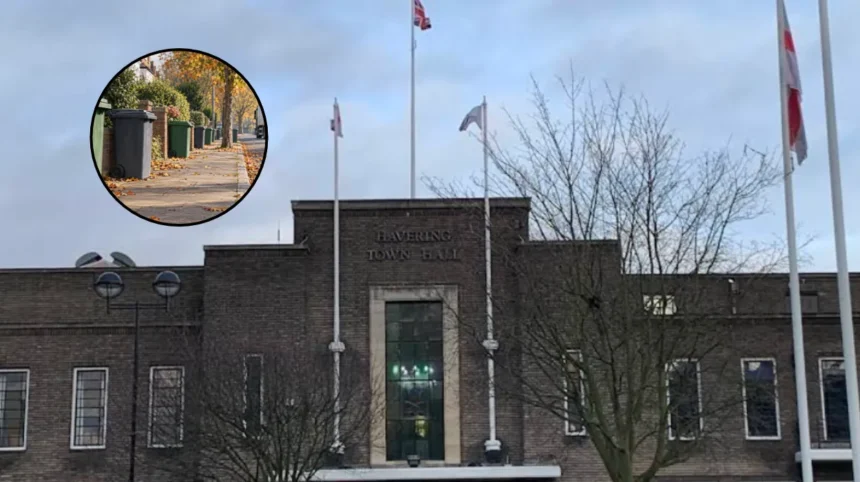
Havering (East London Times) October 24, 2026 – Havering Council has formally established comprehensive contingency measures across the borough as municipal waste-collection personnel prepare to initiate a five-day strike from Monday, 26 October to Friday, 30 October. The planned industrial action stems from an ongoing labor dispute between the council’s contracted waste management provider, FCC Environment, and the Unite trade union. Although local authorities continue to urge both parties to return to the negotiating table and secure a resolution, municipal officials confirmed that operational disruption remains highly anticipated across local residential routes throughout the upcoming week.
- Key Points
- How will the upcoming industrial action impact local household waste collections?
- Which waste management services are expected to face the greatest disruption?
- What contingency measures has contractor FCC Environment deployed to maintain services?
- How is Havering Council coordinating recovery operations across the borough?
- What is the current status of the dispute between FCC Environment and Unite?
- Background
- Prediction
How will the upcoming industrial action impact local household waste collections?
Under the current operational framework released by local authorities, kerbside recycling and general bagged municipal waste are scheduled to be collected according to their standard weekly timetables. Similarly, specialist clinical-waste pickups and pre-booked bulky-waste collection services are expected to operate on their regular schedules. Municipal authorities have instructed residents utilizing these standard services to place their bins and refuse bags at the kerbside as usually required.
However, local authorities explicitly note that these service expectations remain strictly provisional. The municipal leadership has emphasized that while the planned arrangements outline intended coverage, absolute guarantees cannot be provided for every individual collection round during the five-day strike period.
Which waste management services are expected to face the greatest disruption?
Municipal assessments indicate that organic garden-waste collections and communal-bin services carry the highest probability of operational delays. To mitigate public health risks in high-density residential areas, Havering Council’s housing department has been briefed to oversee specific local arrangements. Priority focus will be directed toward multi-occupancy sites, including residential buildings equipped with internal refuse chutes, where uncollected waste poses immediate sanitation concerns.
Rather than releasing a street-by-street timetable of expected delays prior to the strike, municipal authorities intend to publish daily operational logs online. These daily status reports will detail specific uncompleted collection rounds, enabling local householders to monitor the exact status of their street’s collection.
What contingency measures has contractor FCC Environment deployed to maintain services?
To fulfill its contractual obligations during the industrial dispute, contractor FCC Environment has secured auxiliary personnel from its other municipal contracts alongside additional agency workers. Furthermore, the contractor has hired supplementary transport vehicles to assist in clearing outstanding refuse as rapidly as possible.
While these measures are designed to mitigate the severity of the strike, municipal leaders acknowledge that supplementary staffing will not entirely eliminate service delays. To clear residual backlogs following the conclusion of the strike on Friday, 30 October, FCC Environment plans to deploy additional operational resources over the following weekend.
How is Havering Council coordinating recovery operations across the borough?
Havering Council’s internal waste management division has established direct communications with the East London Waste Authority to secure modified weekend tipping permissions. These extended disposal facilities are intended to support intensive recovery operations planned for the weekend immediately following the strike.
Council representatives have advised householders to present their bins on their usual collection days and to consult official council communications before assuming a collection has been cancelled. Municipal supervisors have confirmed they will closely monitor operational performance throughout the week and hold FCC Environment strictly accountable to its service contract terms.
What is the current status of the dispute between FCC Environment and Unite?
The central conflict remains an active employment dispute between waste management contractor FCC Environment and the Unite trade union, which represents the local collection workforce. Havering Council, while not a direct party to the labor negotiations, continues to advocate for a swift settlement between the contractor and union leaders.
Local authority representatives have issued an advance apology to borough residents for any inconvenience caused by the pending action. Officials reiterated that until a negotiated agreement is reached, contingency operations will remain active, with daily online status lists providing updates on missed collection routes.
Background
Contracting out municipal waste services to private environmental management firms is a widely established practice across London boroughs, designed to streamline operational costs and transfer logistical management to specialized companies. FCC Environment holds the primary contract for municipal waste collection and street cleansing services within Havering, making it contractually responsible for fulfilling routine refuse schedules, operating specialized collection vehicles, and managing the operational workforce.
Unite the Union represents a significant proportion of the frontline operational staff, including collection drivers and loaders, across the UK waste sector. Industrial disputes within outsourced municipal contracts typically center on pay scales, working conditions, overtime rates, or pension arrangements. When negotiations between corporate contractors and union representatives stall, industrial action directly impacts public service delivery, placing local authorities in the position of mediating contract delivery while advocating for public health and service continuity for council tax payers.
Prediction
The upcoming five-day industrial action is expected to create localized challenges for various sectors within the London Borough of Havering:
- Local Residents and Householders: Residents face potential delays in routine waste removal, particularly those utilizing garden-waste services or residing in communal housing blocks. Accumulations of waste during the multi-day strike could lead to localized sanitation concerns, heightened pest risks, and temporary overflow at communal bin stores, requiring householders to manage refuse storage on their properties for longer periods.
- Havering Council Leadership: The local authority faces operational and reputational strain as it attempts to hold its primary contractor to account while managing public dissatisfaction. Council customer service channels and digital portals are likely to experience increased inquiry volumes as residents check the daily status of missed routes.
- FCC Environment Management: The contractor risks contractual penalties or formal service reviews if contingency operations fail to maintain basic hygiene standards or if weekend recovery efforts fall behind schedule. Deploying agency staff, hired vehicles, and weekend overtime will also introduce significant operational expenditure for the firm.
- Frontline Collection Workforce: The strike action represents a firm stance by unionized staff to secure their employment demands. However, it may temporarily strain relationships between non-striking agency staff, management, and the core workforce, while creating an intensive workload during the subsequent weekend catch-up phase.