Key Points
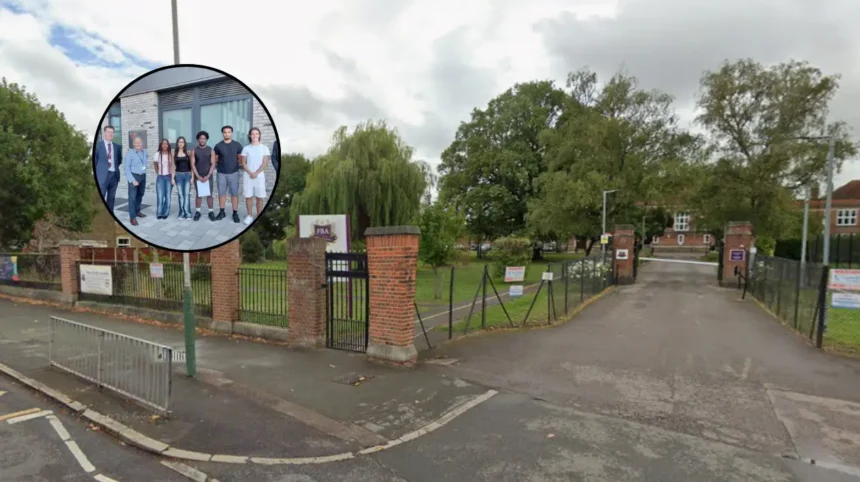
- Highest Performing Institution: Harris Rainham Sixth Form secured the top spot in Havering according to Department for Education (DfE) data, registering a “well above average” progress score of 0.44.
- Average Ratings Category: The Frances Bardsley Academy for Girls recorded an “average” progress score of 0, placing second in the borough rankings.
- Below Average Ratings Category: Several institutions received a “below average” classification, including The Coopers’ Company and Coborn School (-0.11), The Campion School (-0.26), Drapers’ Academy (-0.32), and Sacred Heart of Mary Girls’ School (-0.32).
- Lowest Performing Institution: St Edward’s Church of England Academy received a “well below average” progress score of -0.8 from government metrics.
- Timing and Context: Official government performance data was released ahead of GCSE results day on August 20, providing prospective post-16 students and families with crucial performance metrics.
Havering (East London Times) August 20, 2026 – Official Department for Education progress metrics have revealed the latest performance rankings for colleges and sixth forms across the London Borough of Havering as students prepare to collect their GCSE results. The released figures highlight a significant disparity in progress scores across the borough’s post-16 institutions, offering key insights for families evaluating further education options.
As detailed in reporting by the Romford Recorder, Harris Rainham Sixth Form emerged as the highest-performing post-16 establishment in the region, achieving a “well above average” progress score of 0.44. This progress rating measures the educational value added to students between the end of Key Stage 4 and the completion of their 16-to-18 studies.
Following Harris Rainham Sixth Form, The Frances Bardsley Academy for Girls was positioned next in the regional rankings. The school logged an “average” progress score of 0, signifying that its post-16 cohort achieved progress broadly in line with national secondary benchmarks.
A substantial grouping of local schools fell into the “below average” progress tier according to the Department for Education datasets. The Coopers’ Company and Coborn School registered a progress score of -0.11, while The Campion School posted a score of -0.26. Furthermore, both Drapers’ Academy and Sacred Heart of Mary Girls’ School recorded identical progress scores of -0.32, placing them within the same below-average evaluation bracket.
Occupying the lowest position in the government rankings for Havering was St Edward’s Church of England Academy. The institution logged a “well below average” progress score of -0.8, reflecting significant educational progress gaps across its post-16 study demographic compared to nationwide figures.
Which Factors Underpin the Post-16 Progress Scores?
Progress scores provide a standardized measure of student academic growth throughout their post-16 education journey. Rather than simply evaluating raw pass rates or top-level grades, the Department for Education benchmark assesses the value an institution adds to an individual student’s baseline performance established at Key Stage 4.
A positive progress score indicates that, on average, students at the institution achieved higher grades than students with similar prior attainment nationwide. Conversely, negative scores indicate that students achieved lower overall progress than peers across England who entered post-16 education with comparable GCSE baseline results.
How Do Government Progress Scores Influence Further Education Selection?
Background of the Department for Education League Tables
The publication of post-16 progress metrics forms a central component of accountability measures managed by the Department for Education across England. Designed to assist prospective students, parents, and local authorities, these metrics track how effectively educational providers support student advancement across A-level, vocational, and technical qualification tracks.
Havering features a diverse education landscape comprising traditional school sixth forms, dedicated post-16 academies, and broad-based further education providers. Over recent academic cycles, performance outcomes across the borough have varied widely, reflecting broader national trends regarding resource allocation, post-pandemic learning recovery, and student retention in further education. The inclusion of progress scores alongside raw exam pass rates was implemented by educational authorities to offer a fairer, context-adjusted picture of institutional performance, ensuring schools serving varied entry-level demographics are measured on student development rather than intake selection alone.
Explore More Havering News
Free Bank Holiday Events Staged in Romford 2026
Gillian Ford Challenges Reform UK Climate Motion in Havering 2026
Prediction: How Will This Development Affect Local Students and Families?
The publication of these performance rankings immediately prior to GCSE results day is likely to influence enrollment decisions and prospective application patterns across the London Borough of Havering.
- Shift in Enrollment Preferences: High-performing institutions such as Harris Rainham Sixth Form may experience an surge in oversubscription, as students receiving their GCSE results prioritize institutions with proven track records of academic value-added progress.
- Increased Scrutiny on Underperforming Academies: Institutions receiving “below average” or “well below average” classifications—including St Edward’s Church of England Academy, Drapers’ Academy, and Sacred Heart of Mary Girls’ School—may face heightened scrutiny from parents, governors, and local education authorities. This could lead to strategic reviews, targeted curriculum adjustments, and enhanced support mechanisms aimed at raising academic standards.
- Empowered Decision-Making for Families: For young people navigating post-16 options, clear public metrics offer greater clarity when choosing between academic pathways (A-levels) and vocational training. Students can better assess whether a target sixth form successfully supports students of their academic baseline, enabling more informed decisions during enrolment clearing windows.