Key Points
- Fairkytes is a Grade II listed building in Billet Lane, Hornchurch, now used as an arts centre.
- Havering Council says the building was originally a private house built in the mid-18th century, with later additions through the end of the 19th century.
- The property has had several uses over time, including a home and, in the 1950s, a library run by Hornchurch Urban District Council.
- Previous occupants listed by Havering include Job Alibone, Joseph Fry and Thomas Wedlake.
- The wider history associated with the site includes links to the former Langtons estate and ownership by Thomas Latham and later John Ellison, according to local historical material cited by Havering.
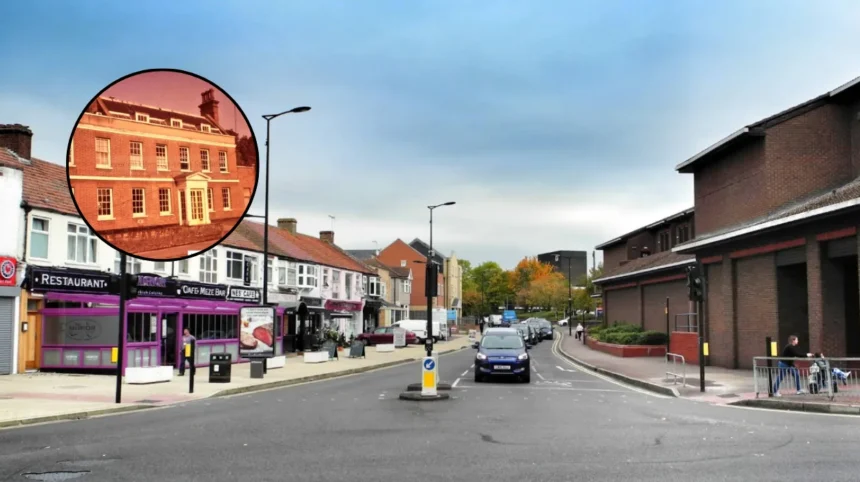
Hornchurch (East London Times) April 27, 2026 – Fairkytes in Billet Lane is a Grade II listed Georgian building that has moved through several phases of use, from private residence to public library and now an arts centre, according to Havering Council and local heritage material. The building is notable not only for its current role in the community, but also for the way its physical fabric reflects different periods of change over several centuries.
- Key Points
- How old is Fairkytes?
- Does the building contain earlier sections?
- What was on the site before Fairkytes became an arts centre?
- Which people were connected with Fairkytes?
- How did the building change in the 18th and 19th centuries?
- How did Fairkytes become a public building?
- Why does the building matter to Hornchurch today?
- Background of the development
- Prediction for local audiences
How old is Fairkytes?
As reported by Havering Council, Fairkytes was originally built in the mid-18th century, while additional work was carried out later, up to the end of the 19th century.
The council also describes it as a Georgian property, and conservation material calls it a distinctive asymmetric Georgian building.
That means the visible structure most people see today is rooted in the Georgian period, even though parts of the site may be older.
Does the building contain earlier sections?
Havering’s heritage summary says the house has an 18th-century frontage, but it is believed to contain older sections dating back to the 1600s or earlier.
That suggests the building’s current exterior does not tell the full story of the site’s development. In heritage terms, this kind of layering is common when a building has been altered, enlarged or rebuilt over time.
What was on the site before Fairkytes became an arts centre?
According to Havering Libraries and the council’s heritage material, from 1593 to 1657 the property formed part of the neighbouring Langtons estate, owned by Thomas Latham.
By the mid-17th century, John Ellison owned the combined estate and referred to Fairkytes in his 1657 will as land and buildings occupied by a tenant.
The earliest known resident named in the available history is Job Alibone, who worked for the London Post Office and is believed to have been a tenant of Ellison’s estate.
Which people were connected with Fairkytes?
Havering Council lists several previous occupants, including Job Alibone, Joseph Fry, and Thomas Wedlake. Joseph Fry was the son of prison reformer Elizabeth Fry, while Thomas Wedlake owned the iron foundry that stood opposite the building, according to the council’s history note.
These names show that the house was connected to different kinds of local and commercial life over time.
How did the building change in the 18th and 19th centuries?
The council says that Fairkytes was rebuilt or significantly remodelled in the mid-1700s, which gave it the Georgian character visible today.
Later additions were made into the end of the 19th century, which helps explain why the property reflects more than one historical phase. This kind of development is typical of long-lived listed buildings that remain in active use.
How did Fairkytes become a public building?
In the 1950s, Hornchurch Urban District Council bought the property and used it as a library, according to Havering Council.
That marked a shift from private residence to a public amenity, extending the building’s role in local life. Its later transition into an arts centre continued that public-use function.
Why does the building matter to Hornchurch today?
Fairkytes matters because it is both a surviving historic structure and an active community space. The listed status helps protect its architectural value, while its use as an arts centre gives it a present-day civic role. In practical terms, it links Hornchurch’s heritage with its cultural life.
Background of the development
The long history of Fairkytes shows how a single property can reflect wider changes in land ownership, architecture and public use across several centuries. It began as part of an older estate network, later took on Georgian form, and then moved into civic ownership in the 20th century. Its present role as an arts centre continues that pattern of adaptation rather than demolition.
Prediction for local audiences
For residents, visitors and arts groups in Hornchurch, the building is likely to remain valuable as both a heritage asset and a working cultural venue. If maintained in its current form, Fairkytes can continue to support community activities while preserving the historical identity of Billet Lane. That combination usually makes historic buildings more relevant to local audiences than they would be as museum pieces alone.