Key Points
- Havering Council Leader Councillor Keith Prince praised the council-funded Joint Task Force, describing the team as “the most outstanding officers across London”.
- The six-member team operates exclusively across Havering to combat crime, retail theft, and anti-social behaviour.
- Formed in 2020, the unit comprises five police officers and one sergeant operating under a Section 92 policing arrangement with the Metropolitan Police.
- Official figures presented at the 2025 Crime Summit showed over 1,000 total arrests with an 80 per cent conviction success rate at court.
- In its inaugural year alone, the task force secured over 200 arrests and recovered 89 stolen vehicles valued at more than £1.8 million.
- Recent notable operations include the swift arrest of five suspects following an alleged robbery at a Boots store in Hornchurch.
- The team’s operational structure is fully integrated into the borough’s overarching Havering 2040 strategic vision.
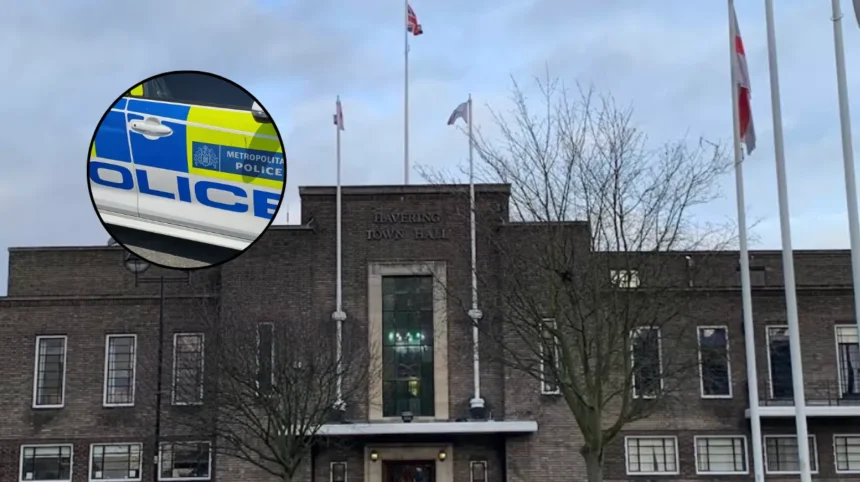
Havering (East London Times) September 17, 2026 – During a press briefing on the borough’s long-term strategic plan, Council Leader Councillor Keith Prince offered high praise for the council-funded police team, commending their operational performance across local communities. As reported by the editorial team of The Havering Daily, Keith Prince stated that the task force members represent “the most outstanding officers across London” due to their sustained achievements in addressing shoplifting, anti-social behaviour, and serious crime. The public endorsement underlines the local administration’s reliance on dedicated, borough-funded law enforcement units to maintain public safety and restore commercial confidence in high streets.
- Key Points
- How does the Havering Joint Task Force operate across the borough?
- What key operational successes has the task force achieved since 2020?
- How does the task force respond to high-profile local incidents?
- How does the task force fit into the Havering 2040 strategic vision?
- Background of the Joint Task Force Development
- Prediction: How This Development Affects Havering Residents, Businesses, and Local Authorities
As reported by The Havering Daily, Councillor Keith Prince highlighted that the team’s contributions extend far beyond traditional arrest figures, providing a consistent operational presence that directly addresses local community concerns. The administration has positioned the task force as a central pillar of its strategy to deliver safer, cleaner town centres across the borough.
How does the Havering Joint Task Force operate across the borough?
The Havering Joint Task Force operates as an intelligence-led, borough-wide law enforcement unit established through a partnership between Havering Council and the Metropolitan Police Service. As reported by The Havering Daily, the team currently comprises six full-time personnel: five police officers and one police sergeant. Unlike standard ward-level neighbourhood policing teams that remain restricted to specific geographic boundaries, the Joint Task Force is deployed flexibly across the entirety of Havering to tackle identified crime hotspots.
As reported by The Havering Daily, the team was designed specifically to lead joint enforcement operations, target repeat offenders, assist victims of crime, reduce repeat victimisation, and conduct tactical interventions. Funding for the unit is provided by Havering Council under a Section 92 policing arrangement, enabling local authority investment to directly secure dedicated Metropolitan Police officers who remain focused exclusively on borough priorities.
What key operational successes has the task force achieved since 2020?
Since launching in 2020, the unit has compiled a documented record of enforcement outcomes across multiple crime categories. As reported by the community safety reporting team of The Havering Daily, statistics disclosed during Havering’s 2025 Crime Summit confirmed that the Joint Task Force has executed over 1,000 arrests since its inception, achieving an 80 per cent positive court outcome rate.
As reported by The Havering Daily, official municipal records from the team’s first year of deployment showed:
- More than 200 total arrests executed within the first 12 months.
- The recovery of 89 stolen vehicles across the borough.
- Over £1.8 million worth of stolen motor vehicles retrieved and returned to owners.
The operational scope of the team encompasses residential burglary, vehicle theft, drug supply, armed offences, robbery, and localized anti-social behaviour. Tasking decisions are routinely updated using intelligence provided by residents, commercial business owners, elected councillors, housing services, and local neighbourhood policing teams.
How does the task force respond to high-profile local incidents?
The unit maintains an active rapid-deployment capability for acute criminal incidents occurring in commercial centers. As reported by The Havering Daily, Sergeant Tanner and members of the Joint Task Force executed a rapid intervention following an alleged robbery at a Boots store in Hornchurch. The operation resulted in the immediate detention of five suspects and the total recovery of all stolen commercial goods.
As reported by The Havering Daily, this tactical approach aligns directly with the council administration’s broader policy focus on curbing retail crime, supporting local shopkeepers, and ensuring visible enforcement in public shopping areas.
How does the task force fit into the Havering 2040 strategic vision?
The operational deployment of the Joint Task Force has been formally integrated into the borough’s long-term growth plan, known as the Havering 2040 vision. As reported by The Havering Daily, Councillor Keith Prince reiterated that tackling retail crime and public nuisance behavior formed an immediate priority for the local administration upon taking office, with those targets now embedded into municipal planning goals.
As reported by The Havering Daily, the long-term vision seeks to create cleaner, safer, and economically vibrant town centres. By retaining a mobile, six-officer team capable of gathering intelligence, carrying out stop-and-search operations, executing arrest warrants, and coordinating with partner agencies, the council aims to foster an environment where residents, visitors, and business owners feel confident in local public safety.
Background of the Joint Task Force Development
The establishment of council-funded police units in London emerged as a response to broader structural shifts in Metropolitan Police deployment and local government funding models over the past decade. Under Section 92 of the Police Act 1996, local authorities in England and Wales hold the legal power to grant financial assistance to police authorities to secure additional policing services tailored to local priorities.
During the late 2010s, increasing budgetary pressures and central police reorganisations led to the merging of several local policing divisions across Greater London into larger Basic Command Units (BCUs). In response to concerns regarding reduced local visibility, several London boroughs, including Havering, entered into formal co-funding agreements with the Metropolitan Police Service. Established in 2020, the Havering Joint Task Force was structured specifically to bridge the gap between municipal enforcement powers (such as community safety teams and housing enforcement) and warrantable police authority. This hybrid mechanism allows local councils to direct specialized enforcement capacity toward specific community concerns—such as vehicle crime rings, retail theft, and persistent anti-social behaviour—that might otherwise compete with region-wide emergency response demands.
Prediction: How This Development Affects Havering Residents, Businesses, and Local Authorities
The continued endorsement and strategic integration of the Joint Task Force under the Havering 2040 framework carries distinct operational and economic implications for key groups across the borough:
- Local Residents and Community Members: Residents are likely to experience sustained or increased visible policing presence across persistent crime hotspots. The 80 per cent positive court outcome rate suggests that targeted interventions will continue to reduce repeat offending in residential areas, particularly concerning vehicle crime and burglary. However, as the team consists of six officers covering an entire borough, residents in lower-priority areas may see variable levels of direct engagement, maintaining public reliance on standard ward-level neighbourhood teams.
- Commercial Business Owners and Retailers: High-street businesses in key commercial areas like Hornchurch and Romford stand to benefit from reduced stock losses and faster response times regarding retail theft and organized shoplifting. The successful resolution of incidents, such as the Hornchurch store robbery, indicates that retail corridors will receive prioritized protection, potentially lowering insurance costs and improving footfall for local traders.
- Havering Council and Local Taxpayers: For municipal leaders, the task force serves as a visible metric of policy delivery regarding public safety. However, because the team relies on Section 92 municipal funding, local taxpayers remain financially responsible for sustaining these policing resources. Future budget reviews or local government financial constraints could force decisions between maintaining co-funded police units or reallocating capital to other core council services.
- The Metropolitan Police Service: The success of Havering’s model reinforces the viability of co-funded, intelligence-led local task forces across Greater London. Other outer-London boroughs facing similar community safety challenges may look to replicate this framework to supplement standard BCU allocations, shifting the broader landscape of municipal law enforcement toward co-funded local partnerships.