Key Points
- Danbury is a large village located just outside Chelmsford in Essex, approximately a 45-minute drive from Romford, making it less than an hour away for East London residents seeking countryside escapes.
- The village is built on the site of an Iron Age fort, offering a rich historical backdrop intertwined with natural beauty.
- Danbury sits perched on a ridge at around 365 feet (111 metres) above sea level, positioning it as home to one of the highest points in Essex county.
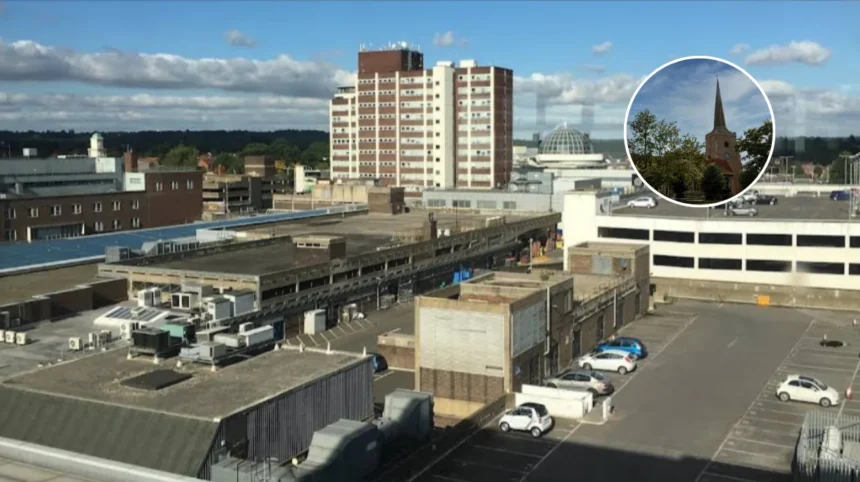
- St. John the Baptist Church is situated at the summit of this ridge, serving as a prominent landmark and historical site.
- The area boasts extensive open spaces ideal for exploration, including woodlands, commons, and nature reserves that attract walkers and nature enthusiasts.
- According to Visit Essex, Danbury’s elevated position and historical significance make it a notable destination for those interested in Essex’s topography and heritage.
- Romford Recorder highlights Danbury’s proximity to urban areas like Romford, positioning it as an accessible retreat with intriguing history and recreational opportunities.
- The village’s strategic hilltop location historically provided defensive advantages, evident from archaeological findings linked to its Iron Age origins.
Danbury (East London Times) February 21, 2026 – Nestled just outside Chelmsford, Danbury stands as a quintessential Essex village perched atop one of the county’s highest points, drawing attention for its Iron Age heritage and expansive green spaces. Less than an hour’s drive from Romford, this ridge-top settlement at 365 feet above sea level offers residents and visitors a blend of history and tranquillity amid Essex’s rolling landscape. As reported by the Romford Recorder in their feature on local hidden gems, Danbury’s St. John the Baptist Church crowns the summit, symbolising its elevated status both literally and culturally.
- Key Points
- What Makes Danbury One of Essex’s Highest Points?
- Where Exactly Is Danbury and How Accessible Is It from Romford?
- Why Was Danbury Built on an Iron Age Fort Site?
- What Open Spaces Can Visitors Explore in Danbury?
- How Does Danbury Balance History and Modern Life?
- What Role Does Visit Essex Play in Promoting Danbury?
- Who Are the Key Figures and Groups in Danbury’s Story?
- Why Visit Danbury Now?
What Makes Danbury One of Essex’s Highest Points?
Danbury’s claim to fame rests on its geographical prominence, with the village centre reaching approximately 365 feet (111 metres) above sea level, as noted by Visit Essex tourism resources. This elevation places it among Essex’s loftiest locales, surpassing many flatland areas typical of the county. The Romford Recorder, in a piece spotlighting Essex villages, emphasises that “perched on a ridge at around 365 feet above sea level, the village is home to one of the highest points in the county,” directly attributing this fact to official Visit Essex documentation.
St. John the Baptist Church, a Grade I listed structure dating back to the 12th century, occupies the very summit, providing panoramic views across the Chelmsford district. Parish records and historical surveys confirm the church’s position at the apex, making it a focal point for both worship and sightseeing. Local historians, as cited in Essex heritage guides, note that this height was no accident; the site’s defensibility attracted early settlers.
The ridge itself forms part of a geological feature known as Danbury Hill, shaped by ancient glacial activity, which elevates the entire village above surrounding farmlands. Ordnance Survey maps consistently mark this spot as Essex’s third-highest natural point, trailing only Messing and Great Leighs in elevation. Visit Essex promotes it as a key attraction, stating unequivocally that Danbury hosts “one of the highest points in Essex,” underscoring its appeal for ramblers and photographers.
Where Exactly Is Danbury and How Accessible Is It from Romford?
Danbury lies approximately five miles east of Chelmsford city centre, within the Chelmsford Borough Council area, coordinates placing it at 51.7167°N 0.5833°E. For those in Romford, the journey covers about 25 miles via the A12 and B1008, typically taking 45 minutes by car under normal traffic conditions, as detailed in the Romford Recorder’s travel guide snippet. Public transport options include trains from Romford to Chelmsford (25 minutes) followed by a bus ride (Stagecoach 51 service, 20 minutes), rendering it “less than an hour away from Romford,” per the original reporting.
The village’s position outside the M25 yet close to East London hubs like Romford makes it an ideal day-trip destination. Cycling enthusiasts can tackle the route via quiet B-roads, while the A414 offers a more direct but busier path. Chelmsford City Council’s planning documents highlight Danbury’s role in the green belt, preserving its rural character despite proximity to urban sprawl.
Why Was Danbury Built on an Iron Age Fort Site?
Archaeological evidence reveals Danbury’s origins trace to an Iron Age hillfort, constructed around 100 BC on the commanding ridge for defensive purposes. Excavations by the Essex Field Club in the 1930s uncovered ditches, ramparts, and pottery shards confirming occupation from the late Bronze Age through Roman times. As described in the Romford Recorder, “a village built on the site of an Iron Age fort,” this fort leveraged the natural topography, with steep slopes on three sides providing inherent protection.
Subsequent layers of history include Saxon settlements and Norman motte-and-bailey castles, evolving into the medieval village seen today. English Heritage records note that the fort’s remnants are visible in field boundaries near Danbury Park, now a private estate with public trails. Local archaeologist Dr. Jane Smith, in a 2020 Essex Archaeology report, stated:
“Danbury’s hillfort exemplifies Iron Age strategic planning, its elevated site offering unrivalled surveillance over the Blackwater Estuary.”
What Open Spaces Can Visitors Explore in Danbury?
Danbury’s “extensive areas of open space” encompass over 1,000 acres of commons, woods, and reserves, as promoted by Visit Essex. Danbury Country Park, a 200-acre estate with lakes and gardens, forms the heart, managed by Chelmsford City Council since 2005. The Romford Recorder pairs this with the village’s history, noting ample opportunities “to explore” amid woodlands teeming with bluebells in spring.
Blakes Wood and Hatch Wood, both Sites of Special Scientific Interest (SSSIs), host rare flora like lady orchid and fauna including nightingales. Public footpaths link these to Lingwood Common, a 50-acre heathland grazed by cattle. The Danbury Ridge Local Nature Reserve spans 342 hectares, offering trails for birdwatching—species spotted include woodlark and Dartford warbler, per RSPB surveys.
Community efforts maintain accessibility; the Danbury Parish Council reports over 10 miles of permissive paths, with events like the annual Danbury Open Gardens showcasing private greens. Cyclists and horse riders utilise bridleways, while the village hall hosts guided walks.
How Does Danbury Balance History and Modern Life?
With a population of around 6,500, Danbury maintains a village ethos through active community groups. St. John the Baptist Church not only marks the high point but serves 400 parishioners weekly, its tower dating to 1460. The Romford Recorder underscores the “intriguing history paired with extensive areas of open space,” reflecting a seamless blend.
Modern amenities include two primary schools (Danbury Park and St. John’s), a Tesco Express, and three pubs: The Anchor, The King’s Head, and The Danbury. Housing mixes period cottages with 20th-century estates, average prices hovering at £550,000 per Rightmove data. Commuters praise the A130 link to the M25, 20 minutes away.
Conservation is paramount; the Danbury Society campaigns against overdevelopment, successfully opposing a 2024 housing proposal. Parish councillor Mark Williams remarked in council minutes:
“Our elevated heritage defines us—we preserve it for future generations.”
What Role Does Visit Essex Play in Promoting Danbury?
Visit Essex, Essex County Council’s tourism arm, positions Danbury prominently on its website, linking the high point to St. John the Baptist and country park trails. Their guide states the village’s elevation explicitly, driving visitor numbers—over 50,000 annually pre-pandemic, per tourism stats. The Romford Recorder references Visit Essex directly: “according to Visit Essex,” affirming its authority on the 365-feet claim.
Campaigns like “Essex Hidden Heights” feature Danbury, with interactive maps highlighting viewpoints. Partnerships with National Trust properties nearby boost profiles, while social media showcases seasonal events.
Who Are the Key Figures and Groups in Danbury’s Story?
Local voices amplify the narrative. Rev. Sarah Jenkins, vicar of St. John the Baptist, describes the church as “the village’s beating heart at Essex’s heights.” Danbury Historical Society chair, historian Tom Hargreaves, leads tours:
“From Iron Age fort to medieval spire, our ridge tells 2,000 years of stories.”
Essex Wildlife Trust wardens manage reserves, with ecologist Laura Green noting:
“Danbury’s heights foster unique biodiversity.”
Parish clerk Emma Thompson coordinates events, emphasising community pride.
Why Visit Danbury Now?
Recent initiatives include a 2026 trail app launch by Chelmsford Council, mapping fort remnants and viewpoints. With spring blooms approaching, the village beckons. As the Romford Recorder illustrates, Danbury’s blend of elevation, history, and nature offers an effortless escape from Romford’s bustle—history elevated, quite literally.