Key Points
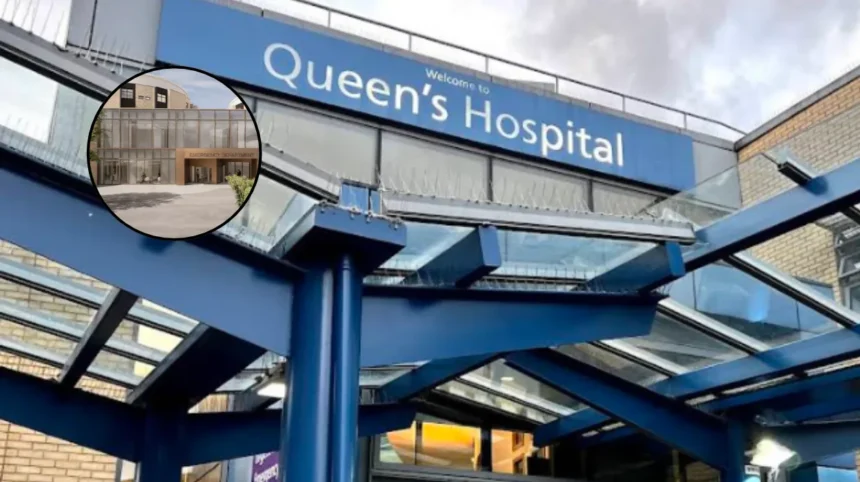
- Funding Approval: Barking, Havering and Redbridge University Hospitals NHS Trust (BHRUT) has secured £42 million in capital funding to rebuild the Accident and Emergency department at Queen’s Hospital in Romford.
- Campaign Duration: The investment follows a 22-month campaign involving hospital executives, regional NHS bodies, local MPs, and community stakeholders.
- Operational Capacity: Originally built in 2006 to handle 325 patients per day, the unit routinely treats more than double that figure, contributing to corridor care and severe delays.
- Broader Initiative: The £42 million allocation forms part of a wider £140 million central Government package aimed at upgrading urgent and emergency care infrastructure across the NHS.
- Project Intent: Hospital leaders state the expansion will modernize facilities, improve patient flow, reduce waiting times, and restore safety and dignity for emergency patients.
Romford (East London Times) October 19, 2026 – A major East London NHS trust has secured £42 million in Government capital allocation to completely rebuild and modernize its struggling Accident and Emergency department. Barking, Havering and Redbridge University Hospitals NHS Trust (BHRUT) confirmed the success of its business case on Monday following an intensive 22-month advocacy campaign involving local politicians, regional healthcare commissioners, and patient groups. The emergency unit at the Romford facility was originally constructed in 2006 with a design capacity to treat approximately 325 patients daily. However, official trust statistics show that the site routinely manages more than double that volume, treating well over 700 to 1,000 emergency attendances per day across its network.
As reported by Daniel Keane of the Evening Standard, hospital executives have previously described the existing emergency layout as entirely non-fit-for-purpose due to the severe mismatch between physical space and patient demand. As detailed by health reporters at The Havering Daily, the financial award forms the centerpiece of a wider £140 million central Government investment package targeting urgent care facilities and same-day emergency pathways across multiple NHS trusts. The trust confirmed that physical construction works will commence once preliminary site preparations and technical tenders are finalized, with the objective of creating a purpose-built facility capable of safely absorbing the expanding population requirements of outer East London.
What Have Hospital Leaders And Local Representatives Stated Regarding The Breakthrough?
Commenting on the securing of the rebuild budget, Fiona Wheeler, the interim chair of Barking, Havering and Redbridge University Hospitals NHS Trust, stated that the redevelopment of the Romford site would “restore dignity” and “improve safety” for patients who rely on urgent medical attention. Wheeler emphasized that the current physical layout has long restricted clinical teams from delivering optimal care during demand surges. As reported by local media outlets including the Ilford Recorder, Wheeler expressed optimism about moving the project directly into its operational delivery phase, adding that the trust is looking forward to getting spades in the ground and transforming the emergency department into one that the community and healthcare workforce can be proud of.
As reported by Sandra Rowse of The Havering Daily, Andrew Rosindell, the Member of Parliament for Romford, characterized the multi-million-pound grant as a significant victory for local residents following years of persistent political campaigning. Writing on the outcome of the joint campaign alongside former NHS trust chief executive Matthew Trainer, Rosindell noted that “it took years of fighting” alongside health authorities, ministers, and residents to persuade central authorities to commit the required capital funding to rectify the structural capacity deficit at Queen’s Hospital.
Background To The Particular Development
Why Was The A&E Department At Queen’s Hospital Struggling To Meet Operational Demand?
The requirement for a comprehensive structural overhaul at Queen’s Hospital stems from decades of rapid demographic growth across the outer London boroughs of Havering, Barking and Dagenham, and Redbridge. When Queen’s Hospital opened its doors in Romford in 2006, its acute footprint was calibrated to handle around 118,000 emergency attendances per year, or roughly 325 arrivals every 24 hours. However, population expansion across East London—where Havering alone now accounts for over 280,000 residents and Barking and Dagenham exceeds 238,000—has pushed local emergency demand well past the physical boundaries of the acute unit.
During peak periods, attendances at the trust have broken historical records. In March 2026, BHRUT recorded 31,214 emergency attendances across its hospital sites (including Queen’s Hospital and King George Hospital in Goodmayes), representing an average of more than 1,000 patient presentations per day. The inability of the physical plant to accommodate this volume resulted in chronic operational bottlenecks, prolonged ambulance handover delays, and the widespread practice of “corridor care,” wherein emergency patients were accommodated on mobile stretchers in clinical hallways while waiting for cubicles or ward beds to become available.
As detailed in an independent monitoring report published by Healthwatch Havering following site inspections at Queen’s A&E in late 2025, patients being treated in corridor spaces raised continuous concerns regarding clinical privacy, communication delays, and personal dignity. The oversight body recorded specific testimony from an anonymous patient who experienced a 40-hour wait on a trolley in an emergency department corridor, describing the environment as highly distressing and difficult to navigate.
In response to these systemic space constraints, BHRUT leadership launched a continuous 22-month funding bid with NHS England and the Department of Health and Social Care. Although interim triage interventions—such as revised initial assessment pathways introduced in early 2026—succeeded in reducing average initial assessment waits by 37 minutes and cutting total corridor care hours by 10,000 hours year-on-year, trust leadership maintained that lasting operational stability could only be achieved through a full structural rebuild.
Prediction: How This Development Can Affect The Particular Audience
How Will The £42 Million Rebuild Impact Patients, Healthcare Staff, And The Broader NHS Network?
The £42 million capital transformation of Queen’s Hospital’s emergency department will directly impact three primary stakeholder groups across East London: local healthcare consumers, clinical staff, and regional emergency services.
| Stakeholder Group | Primary Impact Areas | Anticipated Operational Outcome |
| Local Patients & Community | Dignity, privacy, and wait times | Reduction in corridor treatment; faster triage; improved infection control and physical comfort. |
| Emergency Clinical Staff | Line-of-sight monitoring and workflow | Expanded treatment bays; reduced workplace stress; improved triage and resuscitation layout. |
| Ambulance & NHS Network | Handover times and acute bed flow | Faster vehicle turnaround at A&E bays; reduced acute care blockage across North East London. |
1. Impact On Local Patients And Residents
For the population of Havering, Barking and Dagenham, and Redbridge, the primary effect of the expanded emergency infrastructure will be the gradual elimination of corridor care. By expanding the physical footprint to align with modern patient volumes, the hospital will be able to place patients in designated individual cubicles equipped with proper diagnostic monitoring and visual privacy. This structural improvement is projected to lower infection transmission risks, improve patient confidentiality, and significantly reduce total time spent in the department for acute admissions.
2. Impact On Doctors, Nurses, And Support Staff
Medical personnel working within the current cramped facility face chronic operational pressure due to poor line-of-sight visibility and congested clinical walkways. The creation of a modern, logically zoned emergency footprint will allow nurses and clinicians to observe high-risk patients more effectively, streamline triage pathways, and lower occupational burnout. Modernized diagnostic zones embedded directly within the unit are also expected to decrease the time required to complete scans and laboratory tests.
3. Impact On Ambulance Services And Regional Healthcare Flow
The rebuild is anticipated to yield structural benefits for the broader London Ambulance Service (LAS) and North East London Integrated Care System. Historically, overcrowding inside Queen’s A&E forced ambulances to wait outside the department for extended periods to hand over patients, effectively removing emergency vehicles from general community dispatch. With dedicated offloading bays and an expanded assessment area, handover times are predicted to drop, freeing up regional ambulance crews to respond to high-priority emergency calls across London more rapidly.