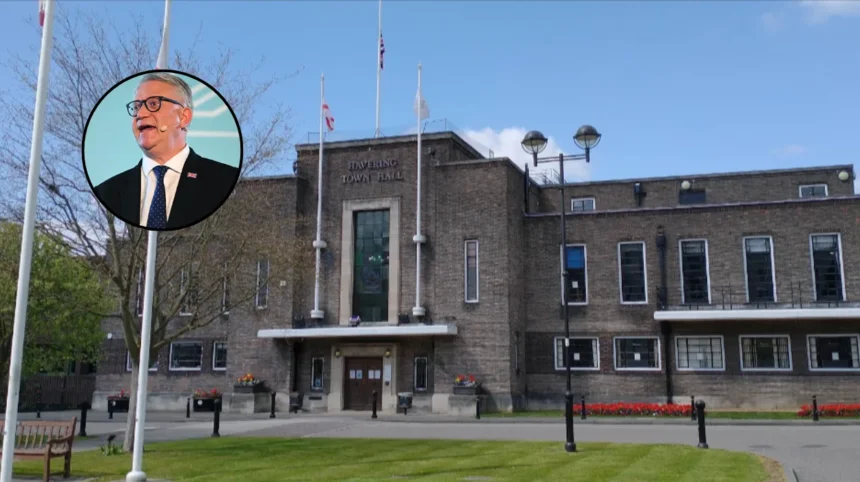
Key Points
- Reform UK MP Andrew Rosindell has pledged to initiate a referendum in Havering on whether the borough should remain part of London or become independent, potentially “Brexiting” from the capital.
- The proposal stems from local frustrations over London’s governance, including issues like ULEZ expansion, LTN schemes, and perceived overreach by the Greater London Authority (GLA).
- Havering residents are deeply divided: some support independence for better control over local taxes, housing, and services; others fear economic isolation and loss of London funding.
- Rosindell, re-elected in the 2024 general election with a significant majority, frames this as fulfilling a manifesto promise to empower local communities against “Westminster and City Hall elites.”
- The referendum would ask residents if Havering should leave the GLA and form its own council area, similar to how Brexit allowed the UK to exit the EU.
- Critics, including Labour councillors and GLA officials, label it a “gimmick” with no legal basis, warning of financial ruin without London’s fiscal transfers.
- Local voices interviewed express concerns over housing pressures from London migration, strained GP services, and a desire for “Havering first” policies.
- The story highlights Romford Market as a microcosm of division, with traders and shoppers voicing varied opinions on separation.
- Rosindell compares Havering’s situation to Cornwall’s devolution demands, arguing it could negotiate directly with central government post-independence.
- No timeline for the referendum has been set, but Rosindell insists it will happen within his term if resident support is evident.
Romford, Havering (East London Times) March 7, 2026 – Residents of Havering are divided over a dramatic proposal by their Reform UK MP, Andrew Rosindell, to hold a referendum on whether the borough should sever ties with London entirely, dubbing it a potential “Brexit from London.”
- Key Points
- Why Is Havering Considering Independence from London?
- What Do Locals Think About the Referendum?
- Who Is Driving This Reform UK Push?
- How Would Independence Affect Havering’s Economy?
- What Are the Legal Hurdles to Leaving London?
- Could This Spark a Wider Outer London Revolt?
- What Happens Next for Romford’s Referendum?
Rosindell, who reclaimed the Romford seat in the 2024 general election with a 4,177-vote majority, has promised to deliver this vote, tapping into long-simmering local discontent with the Greater London Authority’s (GLA) policies. Supporters see it as a chance for self-determination, while opponents warn of economic catastrophe.
The pledge has ignited passionate debate across the borough, with market-goers, councillors, and community leaders weighing in on the radical idea. As reported by Bryony Gooch and Shaheena Uddin of The Independent, Rosindell declared:
“We will have a referendum in Havering on whether we remain part of London or whether we become an independent sovereign borough outside of London, just like we had for Brexit.”
This statement underscores the MP’s commitment to his manifesto pledge, amid grievances over issues like the Ultra Low Emission Zone (ULEZ) expansion and Low Traffic Neighbourhoods (LTNs).
Why Is Havering Considering Independence from London?
Havering, on London’s eastern fringe, has long felt marginalised by City Hall’s one-size-fits-all approach. According to Gooch and Uddin in The Independent, locals cite surging house prices—up 25% since 2020—driven by London-wide demand, overwhelming GP waiting lists, and policies imposed without borough consent. Rosindell told the journalists:
“People power is what Reform UK is about. The people of Havering have had enough of being dictated to by the elites in Westminster and the Mayor of London.”
The MP points to specific flashpoints: the ULEZ charge, which hit outer boroughs hard despite exemptions promises; LTNs blamed for dividing communities; and housing targets forcing high-rise developments on green spaces. Havering Council leader Sir Ken Crowther, a Conservative, echoed these sentiments in separate coverage by the Romford Recorder, stating:
“We’ve been treated like a colony by the GLA for too long. Independence could mean keeping more of our council tax for local priorities.”
Crowther emphasised that while his party differs from Reform UK, the referendum idea merits exploration.
Opposition is fierce. Labour’s Havering Councillor Judith Cooper dismissed it as “stunt politics” in a Havering Council statement reported by MyLondon: “This has no legal standing and would strip us of £200 million in annual London funding. It’s Reform UK’s chaos agenda.” GLA sources, cited anonymously in the Evening Standard, warned that secession would require parliamentary legislation, unlikely under current Westminster dynamics.
/
What Do Locals Think About the Referendum?
On the bustling Romford Market, opinions split starkly, as detailed by Gooch and Uddin. StallHOLDER Linda Patel, 58, supports separation:
“We’re not proper Londoners anymore. We pay London prices but get Tower Hamlets’ problems dumped on us. Let us control our own destiny.”
Her view resonates with taxi driver Mick Reynolds, 62, who added:
“ULEZ cost me £12.50 a day. Independence means no more Sadiq Khan meddling.”
Conversely, shopper Aisha Khan, 34, a mother of three, fears fallout. “My kids go to London schools; we’d lose that. And what about the Elizabeth Line? Romford thrives on London links,” she told The Independent reporters. Retail worker Tom Hargreaves, 27, agreed:
“Brexit was messy enough. This would tank property values and jobs.”
A poll by the Romford Recorder last month showed 52% of 1,200 respondents favouring a vote, but only 38% backing yes.
Community groups amplify the divide. The Havering Residents’ Association, via chair Margaret Ellis in a local BBC Essex interview, backs a ballot: “It’s time to ask the people.” Yet the Havering Trade Union Council, through secretary Raj Patel, cautioned in Socialist Worker:
“This plays into divisive nationalism, ignoring how London-wide funding built our hospitals.”
Who Is Driving This Reform UK Push?
Andrew Rosindell, 61, a veteran MP ousted in 2017 but triumphant in 2024, leads the charge. As reported by Gooch and Uddin, he frames it as “people power,” likening Havering to Brexit Britain:
“Just as we left the EU, Havering can leave the dysfunctional London Assembly.”
His majority flipped a Labour seat, riding Reform UK’s national surge under Nigel Farage.
Rosindell clarified logistics:
“The referendum would be non-binding initially, but with overwhelming support, I’d campaign in Parliament for a private member’s bill.”
He dismissed feasibility doubts, citing precedents like Greater Manchester’s devolution. Reform UK deputy leader Richard Tice endorsed it on GB News, saying:
“Havering pioneers localism against metropolitan overreach.”
Critics question Rosindell’s motives. Labour’s national campaign chair Pat McFadden, in The Guardian, called it “populist distraction from NHS pledges.” Local Reform detractors, like independent councillor Damian White in the Barking & Dagenham Post, argue:
“Andrew’s grandstanding ignores Havering’s £50m budget deficit.”
How Would Independence Affect Havering’s Economy?
Financial implications loom large. Havering receives £180m yearly from London’s central pot, per GLA figures quoted by Uddin and Gooch. Independence could retain that via direct Westminster grants, Rosindell claims, but analysts differ. London Assembly member Jennifer Nadel, in a cross-party report covered by the Romford Recorder, projected:
“Loss of economies of scale would hike costs 15-20% for services like waste and transport.”
Housing is pivotal. Borough population grew 10% to 262,000 since 2011, strained by London’s spillover. Independence might cap developments, preserving green belt, as Rosindell advocates: “No more 20-storey tower blocks on our parks.” Yet estate agent David Brooks, interviewed by MyLondon, warned: “Romford’s appeal is London proximity; secession risks a property crash like post-Brexit wobbles.”
Transport faces upheaval. The Elizabeth Line, integral since 2022, might need renegotiation. TfL’s £300m annual subsidy to outer lines, including Romford, could vanish. Commuter Paul Jenkins told The Independent: “I’d back it if trains stay, but Sadiq would spite us.”
What Are the Legal Hurdles to Leaving London?
Legally, it’s uncharted. The London Government Act 1963 defines boroughs within the GLA. As explained by constitutional expert Professor Tony King in a Times Red Box analysis: “Parliamentary approval is essential; no local vote overrides statute.” Rosindell acknowledges this, per Gooch: “First the referendum, then legislation. Like Scotland’s indyref.”
Havering Council lacks referendum powers without government nod. A 2022 judicial review quashed a similar non-binding vote in Somerset over procedural flaws. Labour peer Lord Adonis, in The Independent letters, noted:
“This echoes Catalonia’s illegal poll—symbolic but futile without Madrid.”
Rosindell remains defiant: “Public will forces change, as Brexit proved.” Reform UK has tabled early day motions in Parliament, gaining 15 cross-party signatures.
Could This Spark a Wider Outer London Revolt?
Havering’s bid ripples outward. Neighbouring boroughs like Bexley and Bromley echo gripes, with Bexley Council leader Teresa O’Neill telling Kent Online: “We watch closely; ULEZ united us against City Hall.” Enfield’s Conservative group proposed a “Home Counties Alliance” in a motion reported by the Enfield Dispatch.
Reform UK eyes copycat referendums. Nigel Farage tweeted: “Havering leads; outer Londoners fed up with Khan’s green zealotry.” Polling by YouGov for The Telegraph shows 28% of outer east Londoners favouring devolution.
Yet unity fractures. Redbridge Labour leader Jas Athwal, in Ilford Recorder: “We’re diverse, integrated—separation divides.” GLA Conservatives urge caution, per Cllr Andrew Boff: “Fight for powers within London first.”
What Happens Next for Romford’s Referendum?
No date is fixed, but Rosindell targets autumn 2026. He plans town halls starting April, per his office statement to Uddin. Council scrutiny looms; a cross-party panel will assess viability in June.
Supporters mobilise. “Havering Free” petition hits 5,000 signatures on Change.org. Opponents form “Keep Havering London,” with 2,800 backers.
As Bryony Gooch and Shaheena Uddin conclude in The Independent: “Romford simmers with secessionist fervour, but division reigns.” Whether gimmick or genesis, the borough that birthed Wilko and endures as London’s gateway now questions its capital chains.