Key Points
- Havering Council has confirmed the closure of two Hornchurch car parks — Keswick Avenue and Dorrington Gardens — in early 2026.
- The car parks will be redeveloped to build 40 new homes as part of the borough’s housing strategy.
- 34 homes (a mix of flats and houses) will be constructed on Dorrington Gardens, and six three-bedroom homes at Keswick Avenue.
- Both sites are being developed by Mercury Land Holdings (MLH), a company owned by Havering Council.
- Council leader Councillor Ray Morgon said the projects address the “growing shortage of homes” in the borough.
- Planning permissions were approved in April and May 2025, despite receiving over 40 objections.
- The council described both car parks as “underused”, justifying their conversion to residential use.
- A two-hour flat parking rate of £1 is being trialled across other Havering car parks to ease the loss of spaces.
- Residents and local businesses have raised concerns about disappearing parking options and traffic increase.
- Havering’s long-term regeneration strategy aims to deliver thousands of new homes over the next decade.
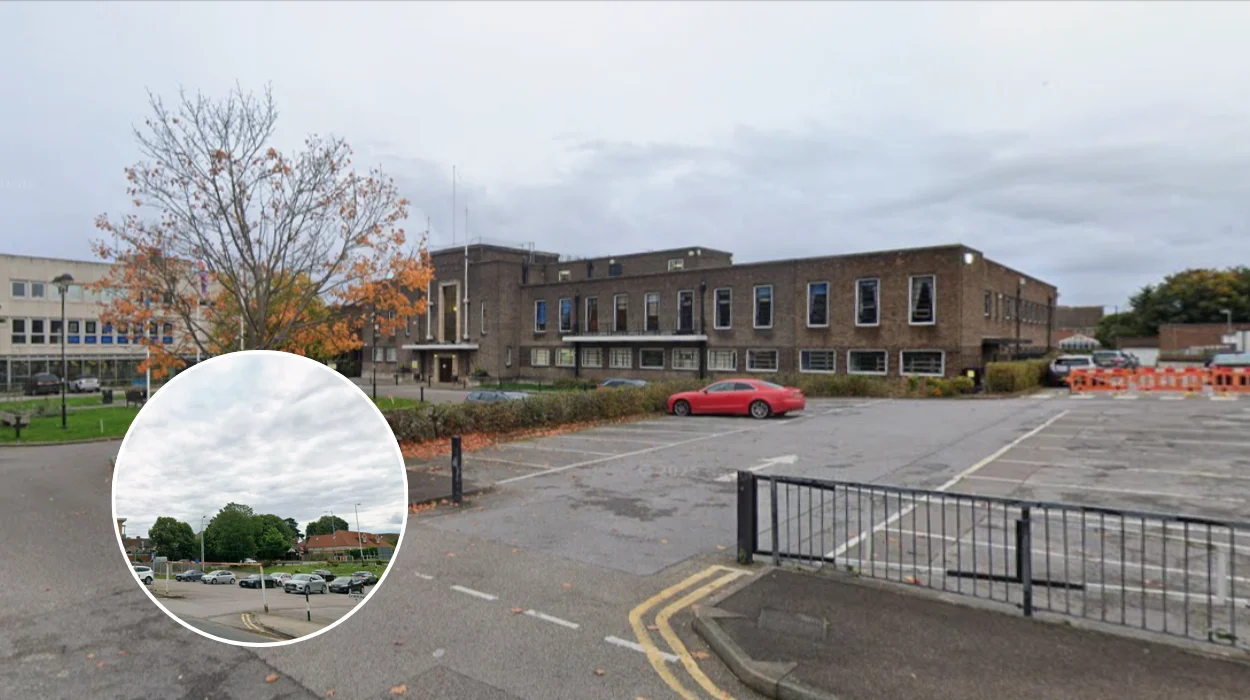
Two underused Hornchurch car parks in Havering, East London, are set to close in early 2026 to make way for 40 new homes, as part of the council’s commitment to easing the borough’s growing housing shortage. The decision, led by Havering Council and executed through its development arm Mercury Land Holdings (MLH), has drawn mixed reactions from residents and local businesses concerned about reduced parking availability.
- Key Points
- Why are the Keswick Avenue and Dorrington Gardens car parks closing?
- How many homes will be built and where?
- Who is behind the development project?
- What are the residents saying about the closure?
- How is Havering Council addressing parking concerns?
- When will the work start and finish?
- How does this fit within Havering’s wider housing strategy?
- What happens next?
Why are the Keswick Avenue and Dorrington Gardens car parks closing?
As reported by Ben Lynch of MyLondon, the Keswick Avenue and Dorrington Gardens car parks in Hornchurch will close in January and March 2026, respectively. According to Havering Council, both car parks were identified as “underused” assets suitable for redevelopment to meet urgent housing needs.
Council Leader Councillor Ray Morgon told MyLondon:
“Delivering new homes for local people is a top priority for our administration, and these developments in Hornchurch by Mercury Land Holdings are an important step toward meeting that need.”
The council first considered transforming its car park sites in 2023, following internal reviews that found housing demand in Havering was “quickly outpacing supply”, as stated in a report published last summer.
How many homes will be built and where?
In a detailed statement published on Havering Council’s official website and corroborated by MyLondon, 34 homes will be developed at Dorrington Gardens, comprising a mixture of houses and flats, while six three-bedroom houses will be built on Keswick Avenue.
The Dorrington Gardens site received planning approval in May 2025, one month after the Keswick Avenue site was cleared in April 2025. Both projects will be managed by Mercury Land Holdings (MLH), a wholly council-owned company overseeing new home construction and regeneration schemes across the borough.
Who is behind the development project?
As reported by BBC London News, Mercury Land Holdings Ltd (MLH) functions as a development vehicle for Havering Council, allowing the local authority to retain control and financial benefits of regeneration projects while advancing its local housing delivery targets.
The housing developments in Hornchurch align with Havering’s Local Plan and long-term strategy to revitalise towns, create sustainable communities, and utilise publicly owned sites more efficiently.
MLH’s mission, as outlined in the council’s 2025 performance review, is to “maximise the social and economic returns of underused council-owned land.”
What are the residents saying about the closure?
Community reaction has been mixed. According to MyLondon’s local coverage by Ben Lynch, more than 40 formal objections were submitted during the consultation period prior to approval.
Residents expressed concerns about losing convenient parking spaces, increased congestion, and the potential impact on nearby businesses.
One local shop owner, quoted by MyLondon, said:
“It’s not just about parking. This is part of what makes Hornchurch accessible for everyone. If people can’t park, small shops will struggle.”
Another nearby resident told Local Democracy Reporting Service (LDRS):
“We support building homes, but the council should prioritise brownfield sites rather than taking away car parks that are still needed.”
However, proponents of the project argue that the new homes will contribute significantly to addressing Havering’s mounting housing pressures.
A BBC London report highlighted that Havering currently has one of the highest local housing shortages in East London, with waiting lists still growing despite multiple redevelopment projects across Rainham, Romford, and Hornchurch.
How is Havering Council addressing parking concerns?
Acknowledging residents’ concerns, Havering Council has introduced a new two-hour £1 flat rate parking trial at other borough locations.
As reported by MyLondon, this measure aims to make short-term parking more affordable and convenient while balancing housing demands with community needs.
A council spokesperson explained that the trial is being closely monitored to determine whether the scheme encourages better parking turnover and reduces long-term stays in high-demand areas.
The council said it remains committed to maintaining sufficient public parking options through a borough-wide parking strategy review, expected to conclude by mid-2026.
When will the work start and finish?
According to planning documents published on Havering Council’s planning portal, demolition and preparatory works for both car parks are scheduled to begin early in 2026.
- Keswick Avenue Car Park: Closure set for January 2026, with construction starting by spring 2026.
- Dorrington Gardens Car Park: Closure planned for March 2026, with development beginning shortly after.
Completion of both projects is expected by late 2027, adding 40 new homes to Hornchurch’s housing stock.
The developments form part of a wider Havering Regeneration Programme, estimated to deliver 3,500 new homes across the borough over the next ten years, as reported by The Romford Recorder.
How does this fit within Havering’s wider housing strategy?
Havering Council has been under pressure to accelerate housing delivery due to sustained population growth and limited available land.
A report by Local Democracy Reporting Service (LDRS) noted that the borough needs around 1,000 new homes annually to keep pace with demand.
In line with London-wide housing priorities, Havering aims to balance community regeneration with sustainable development — leveraging its own sites, such as car parks and disused land, for redevelopment rather than selling to private developers outright.
Cllr Morgon previously stated during a 2024 council meeting (reported by BBC London):
“Our goal is to build homes that local people can afford while also protecting green spaces. That means making smarter use of our urban land assets.”
What happens next?
Over the coming months, Havering Council will finalise contractor appointments, public consultations on construction schedules, and local parking mitigation measures.
Mercury Land Holdings is expected to publish design visuals and construction timelines by spring 2026.
The council also noted that affordable housing units will form part of the Dorrington Gardens development, though final proportions are still being negotiated with planners.
While opposition remains among some residents, local officials have defended the projects as “necessary adjustments” to meet the borough’s long-term housing goals.
As housing pressures continue across London, developments such as these in Hornchurch illustrate the increasingly complex trade-offs between urban space management and community amenity preservation — a debate unlikely to fade soon in the capital’s expanding suburbs.