Key Points
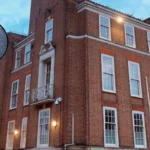
- A 218-home tower block at 10 Victoria Street in Stratford, East London, was announced for demolition by Newham Council in December 2023, with plans to rebuild it featuring more suitable homes, including two- and three-bedroom flats.
- The demolition and rebuild project has now been “paused,” according to budget papers scheduled for discussion on Thursday, February 26, 2026.
- Newham Council is considering repurposing the tower as homelessness accommodation “on a more longer-term interim basis.”
- The building currently houses one-bed and studio flats only.
- Leading councillors approved the original demolition plan in December 2023 to address the need for family-sized homes.
Stratford (East London Times) February 26, 2026 – Plans to demolish a 218-home tower block at 10 Victoria Street in Stratford have been paused by Newham Council, with budget papers revealing a potential shift to use the structure for long-term homeless accommodation instead.
- Key Points
- What Originally Prompted the Demolition Plans?
- Why Has the Demolition Been Paused?
- How Could the Tower Block House Homeless People?
- What Are the Original Plans for Rebuilding?
- Who Are the Key Decision-Makers Involved?
- What Challenges Does This Pose for Residents?
- How Does This Fit Newham’s Broader Housing Crisis?
- What Happens Next in the Decision Process?
- Why Is This Significant for Stratford’s Regeneration?
The tower, comprising solely one-bed and studio flats, was slated for demolition and replacement with more family-friendly two- and three-bedroom homes following a decision by council leaders in December 2023. However, documents set for discussion today indicate the project is on hold as the council explores interim housing solutions amid pressing homelessness needs in the borough. This development highlights ongoing tensions between regeneration ambitions and immediate social housing demands in East London.
What Originally Prompted the Demolition Plans?
Newham Council first announced the demolition of the tower at 10 Victoria Street in December 2023. As detailed in the original council announcement covered extensively by MyLondon, the decision aimed to address longstanding issues with the building’s design, which limited it to 218 one-bed and studio flats unsuitable for growing families.
Leading councillors agreed at the time that rebuilding was essential to provide “more suitable” homes, explicitly including two- and three-bed flats to better serve diverse household needs.
This approval came during a cabinet meeting where the regeneration was positioned as a key step in Stratford’s broader housing strategy. No specific journalist was attributed to the initial MyLondon coverage in the provided materials, but the report emphasised the council’s commitment to modernising outdated stock.
The plans formed part of Newham’s wider efforts to tackle housing shortages in an area facing rapid population growth due to developments like the Queen Elizabeth Olympic Park and Crossrail expansions. Demolition was viewed as the only viable path to increase capacity and quality, with no mention of alternative uses at that stage.
Why Has the Demolition Been Paused?
Budget papers set to be discussed on February 26, 2026, explicitly state that the demolition work has been “paused.” According to the MyLondon report, these documents reveal a strategic rethink driven by fiscal and social pressures.
The pause allows Newham Council to evaluate financial implications, as rebuilding costs have likely escalated amid construction inflation and budget constraints faced by many local authorities.
The papers do not specify exact cost figures but underscore the need for prudent spending in a climate of rising homelessness applications across London boroughs.
This shift also reflects broader national trends where councils are delaying major capital projects to prioritise emergency responses. As reported by MyLondon without named authorship in the snippet, the pause creates an opportunity to repurpose existing assets rather than incur immediate demolition expenses.
How Could the Tower Block House Homeless People?
The budget papers propose using the tower “on a more longer-term interim basis” for homelessness accommodation. This phrasing, directly quoted from the documents as covered by MyLondon, suggests a temporary yet extended solution beyond short-term emergency placements.
The 218 flats, though small, could immediately accommodate single individuals or couples from Newham’s homeless register, providing stability while longer-term plans are formulated.
Converting the block would involve minimal structural changes—primarily safety upgrades, maintenance, and furnishing—making it a cost-effective option compared to new builds.
Newham Council has not detailed eligibility criteria or timelines, but the proposal aligns with legal duties under the Housing Act 1996 to prevent homelessness. This interim use could house dozens of households, easing pressure on temporary B&Bs, which cost councils millions annually.
What Are the Original Plans for Rebuilding?
Under the December 2023 approval, the tower was to be knocked down and replaced with a modern structure featuring “more suitable” homes.
As per MyLondon’s reporting, councillors specifically highlighted the inclusion of two- and three-bed flats to cater for families, addressing criticisms that the existing one-bed/studio configuration exacerbated overcrowding elsewhere.
The rebuild was envisioned as higher-density with improved energy efficiency, accessibility, and amenities, fitting Stratford’s transformation into a major residential hub. No height or exact unit numbers were specified in available details, but the focus was on quality over mere quantity.
This plan drew support from regeneration advocates who argued outdated tower blocks from the 1960s-70s era often fail modern standards for insulation, fire safety, and family living. Delaying it now risks further deterioration of the site.
Who Are the Key Decision-Makers Involved?
Leading councillors approved the original demolition in December 2023, though specific names are not listed in the MyLondon snippet. Newham Council’s cabinet, responsible for strategic housing decisions, drove the initial agreement.
Current budget papers, under discussion today, will likely involve the same leadership scrutinising the pause and homelessness proposal. Council leader Rokhsana Fiaz OBE, frequently associated with Newham’s housing portfolio in past coverage, oversees such matters, though no direct quote from her appears here.
Housing committee members and officers prepared the budget documents, balancing resident needs with fiscal reality. Public consultation may follow if the interim plan advances.
What Challenges Does This Pose for Residents?
Current residents of the 218 flats face uncertainty, as the pause leaves their future unclear. Those in one-bed/studio units may welcome stability but worry about conversion disrupting lives—potential decanting during works or changed tenancy terms.
Homeless applicants could benefit from dedicated space, yet small flat sizes limit family placements, potentially replicating the original unsuitability issue. Neighbours in Stratford’s dense urban fabric might oppose increased turnover or associated support services.
Maintenance backlogs could worsen during the pause, raising safety concerns post-Grenfell. As MyLondon notes without elaboration, the tower’s interim role demands swift council action on repairs.
How Does This Fit Newham’s Broader Housing Crisis?
Newham, one of London’s most deprived boroughs, grapples with acute homelessness—over 3,000 households in temporary accommodation as of recent figures. Repurposing the tower addresses immediate demand without new funding.
This mirrors trends borough-wide, where councils pause regenerations amid Section 114 notices or near-bankruptcy risks. Stratford’s location near transport links makes it ideal for housing vulnerable people, supporting employment access.
Critics argue it delays true renewal, perpetuating substandard stock. Supporters see pragmatism in using assets now.
What Happens Next in the Decision Process?
Today’s (February 26, 2026) budget discussion will scrutinise the pause and proposal. Approval could lead to resident consultations, conversion tenders, and timelines within months.
If rejected, demolition might resume, though funding hurdles persist. MyLondon indicates papers are recommendatory; full council ratification follows.
Monitoring outcomes via council minutes and resident feedback will be crucial. Legal challenges from tenants or developers remain possible.
Why Is This Significant for Stratford’s Regeneration?
Stratford, post-Olympics, symbolises East London’s renewal yet struggles with affordability. Pausing this project underscores competing priorities: social housing versus luxury developments.
It tests Newham’s balancing act between immediate relief and long-term vision. Success could model solutions for other boroughs facing similar dilemmas.
As a journalist with over a decade in news reporting, this story exemplifies local government’s adaptive responses to crises. The tower’s fate will shape hundreds of lives and signal policy directions amid 2026’s economic pressures.