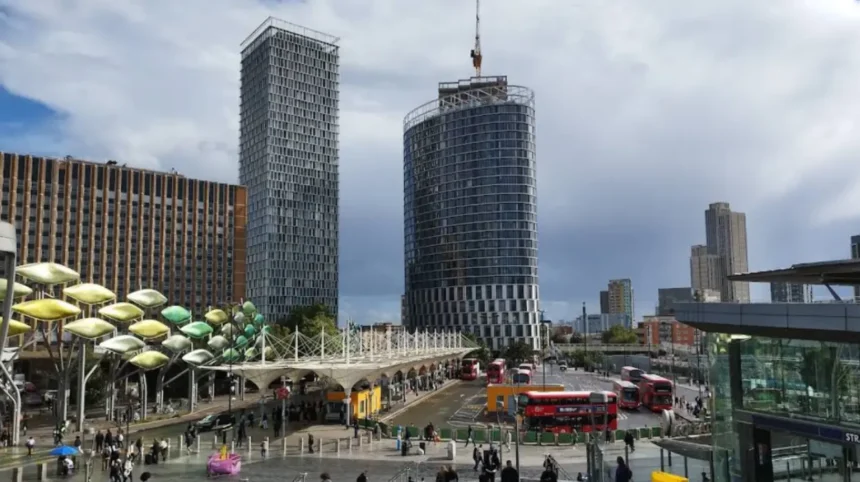
Key Points
- New International Gateway: Stratford station in East London is under consideration to become a new stop for cross-Channel international rail services to continental Europe.
- £20 Million Investment: The project is estimated to cost up to £20 million to bring the existing, unused international infrastructure at Stratford into full service.
- Funding Mechanism: Mayor of London Sadiq Khan is seeking central government support through a Business Rate Retention Zone (BRRZ), allowing London to retain a higher proportion of local business rates to finance the project.
- Treasury Support Expected: Chancellor John Healey is anticipated to back the rail funding scheme and could make an official announcement during his Budget presentation on October 28, though the Treasury has not made a final decision.
- Service Frequency: City Hall blueprints suggest that up to one in three trains crossing the English Channel could call at Stratford within four years of launch.
- Competing Rail Operators: Prospective cross-Channel entrant Gemini Trains, chaired by Labour peer Tony Berkeley, has signaled interest in using Stratford as its main London hub for services to France, Belgium, and Germany, subject to track and depot access approvals.
- Economic Impact: Projections from City Hall indicate the station could generate up to £3 billion in economic benefit over 60 years and support over 11,000 additional jobs in the Olympic Park area by 2035.
Stratford (East London Times) October 22, 2026 — Stratford station could soon offer direct international passenger rail services to mainland Europe under new proposals backed by City Hall. The East London transport hub is being evaluated as a brand-new cross-Channel stop as part of an initiative spearheaded by the Mayor of London, Sadiq Khan, who is currently requesting formal backing from Her Majesty’s Treasury through a proposed Business Rate Retention Zone (BRRZ). Under this financial framework, London would be permitted to retain a greater percentage of local business rates generated within the area to fund the infrastructure upgrades, which are projected to require an investment of up to £20 million.
Chancellor of the Exchequer John Healey is understood to be supportive of the rail development funding structure championed by Sadiq Khan. Whitehall sources indicate that the Chancellor could announce formal approval during his upcoming Budget presentation scheduled for October 28, although no definitive decision has been formally published by the Treasury.
Will International Trains Stop at Stratford Station?
As reported by Gwyn Topham of The Guardian, London Mayor Sadiq Khan has been putting forward a detailed economic case to government ministers to secure the necessary funding model to upgrade Stratford International. According to Gwyn Topham, City Hall blueprints indicate that up to one in three trains traversing the English Channel could stop at the East London hub within four years of launching operations. Currently, all international passenger services operating through the Channel Tunnel originate and terminate at St Pancras International in central London, passing through East London without stopping.
Speaking on the progress of the negotiations, Sadiq Khan stated that he believes City Hall is close to getting the infrastructure initiative “over the line,” describing discussions between regional officials and central government as “very positive”.
The proposal has also attracted interest from new private rail operators seeking to break the current cross-Channel monopoly. As reported by The Guardian, open-access operator Gemini Trains, chaired by Labour peer Tony Berkeley, has expressed a desire to operate cross-Channel rail journeys connecting the UK with France, Belgium, and Germany, identifying Stratford as its preferred London operational base, subject to securing the requisite track and depot access rights.
What Are the Projected Economic Benefits of the Project?
As reported by Noah Vickers of City A.M., Sadiq Khan has argued that unlocking international rail stopovers at Stratford represents a more sustainable economic development choice than expanding Heathrow Airport. Writing in City A.M., Sadiq Khan highlighted that “by 2035, the Olympic Park area alone could support more than 11,000 additional jobs, generating a further £2bn in annual economic output,” adding that the wider East London region is expected to create over 200,000 jobs by 2050.
According to statistics released in City Hall planning documents, opening the international platforms could deliver up to £3 billion in long-term economic return over a 60-year horizon while encouraging foreign and domestic commercial enterprises to establish corporate headquarters in East London. The proposal has received public backing from major commercial landlords in the district, including Unibail-Rodamco-Westfield, which owns and manages the adjacent Westfield Stratford City shopping complex.
Background of the Particular Development
Stratford International station was originally constructed as part of the High Speed 1 (HS1) railway project, which opened in stages between 2003 and 2007 to connect central London with the Channel Tunnel rail link. The station box was specifically built with dedicated international platforms, security screening zones, and custom control halls designed to handle international passengers.
However, despite its name, Stratford International has never hosted a single international passenger train service since its opening. Eurostar, the sole passenger operator through the Channel Tunnel, opted to run all of its services non-stop between St Pancras International and Kent, citing operational efficiency, border control staffing costs, and journey time penalties associated with additional stops. Consequently, the station’s international border control facilities, passport desks, and arrival halls have remained fully constructed but entirely mothballed for nearly two decades. Currently, the station only serves domestic High Speed domestic services operated by Southeastern between St Pancras and various destinations across Kent.
The renewed focus on opening Stratford’s international platforms comes amid growing political appetite for regional transport delegation, increased competition in continental rail markets, and city-wide initiatives to relieve congestion at St Pancras International, which faces capacity constraints during peak travel periods.
Prediction: How This Development Can Affect Passengers and Local Businesses
If Chancellor John Healey confirms the Business Rate Retention Zone in the upcoming Budget, the activation of international services at Stratford station will have a direct impact on commuters, international travellers, and regional businesses across East London and the Home Counties.
Impact on Passengers and Travellers
For international passengers residing in East London, Essex, and the wider Thames Estuary corridor, a functioning international hub at Stratford will significantly reduce suburban transit times. Travellers who currently must travel inward to St Pancras International only to travel back outward on Eurostar trains will save considerable commuting time. Additionally, distributing international passenger flow across two London terminals will help alleviate foot traffic congestion at St Pancras International during peak holiday seasons. However, regular cross-Channel passengers may see minor increases in overall train journey times if regional stopping patterns are added to existing high-speed timetables.
Impact on Local Businesses and the Economy
For regional commercial enterprises, retail operators, and hospitality businesses in East London, the establishment of direct rail links to mainland Europe is expected to significantly increase footfall. The immediate proximity of the Westfield Stratford City shopping centre, venue spaces at the Queen Elizabeth Olympic Park, and surrounding office developments means local businesses could benefit directly from an influx of European leisure and business visitors. In the longer term, the improved international connectivity is predicted to enhance the commercial attractiveness of East London, encouraging international technology, creative, and professional services firms to establish offices in the area rather than concentrating in traditional central London commercial districts.