Key Points
- Students from TCES East London School delivered a live musical performance at the TES SEND Show using innovative movement-controlled technology.
- The performance took place at the SEND Solutions Theatre in partnership with LIFT Music, a software developer specialising in accessible music technology.
- LIFT Music, created by the company Headsoup, utilizes a device’s camera to track physical movements and translate them directly into real-time digital sound.
- Prior to the live showcase, Headsoup conducted interactive workshops with TCES pupils to co-create and refine the musical arrangement based on individual student capabilities.
- Educational leaders and technology developers highlighted that the initiative removes conventional musical barriers, boosting confidence and self-expression for young people with special educational needs and disabilities (SEND).
East London (East London Times) October 20, 2026 – Young people from TCES East London School took centre stage at the TES SEND Show to deliver a live musical performance created entirely through movement-responsive technology. Participating at the SEND Solutions Theatre in partnership with LIFT Music, the pupils presented an original piece of music generated in real time through their physical movements. The showcase demonstrated how modern digital tools are expanding access to creative arts for pupils with special educational needs and disabilities (SEND), offering an alternative platform for performance that does not rely on traditional musical instruments or conventional technique.
- Key Points
- How Does LIFT Music Technology Transform Physical Movement Into Sound?
- What Was the Process Behind Preparing the Students for the Live Stage?
- What Did Key Figures Say About the Impact of Inclusive Music Technology?
- Who Attended the Live Showcase at the SEND Solutions Theatre?
- Background of the Particular Development
- Predictions for How This Development Can Affect SEND Educators, Pupils, and the Educational Technology Sector
How Does LIFT Music Technology Transform Physical Movement Into Sound?
The performance was made possible through LIFT Music, a dedicated application designed by the technology firm Headsoup. The software operates by utilising a standard device camera to track the physical movement of a user, translating those visual motion inputs directly into corresponding musical notes, rhythms, and audio textures. By converting body motion into sound, the platform enables students with varying physical or learning needs to control and compose music independently, bypassing the physical demands and technical constraints associated with conventional instrumentation.
What Was the Process Behind Preparing the Students for the Live Stage?
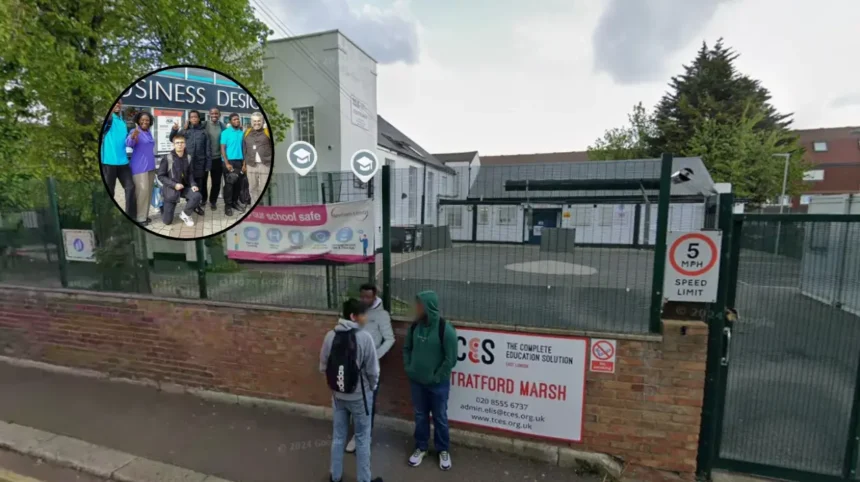
Ahead of the public showcase, Headsoup hosted a series of structured workshops with the pupils at TCES East London School. These sessions provided the young people with the opportunity to test the movement-controlled interface, experiment with different motion patterns, and co-create the final performance piece. Each student contributed to the collective composition according to their personal preferences and physical capabilities, allowing the final arrangement to reflect the diverse inputs of the entire group.
What Did Key Figures Say About the Impact of Inclusive Music Technology?
As reported by the media coverage of the event, Stuart Grimshaw, Chief Executive Officer of Headsoup, stated that
“Working with the students at TCES has been a fantastic opportunity to validate how LIFT Music can support SEND students to take an active role in making music.”
Mr Grimshaw further explained the philosophy behind the technology, stating that
“We’re not asking students to fit into a traditional way of performing; we’re giving them control over the music and working with them to find ways they can participate and express themselves.”
Mr Grimshaw also noted the positive shift in student engagement during the preparation phase, adding that
“Performing at the TES SEND Show gives them the opportunity to share what they’ve created with a wider audience and show what inclusive music-making can look like in practice.”
Representing the educational organization, Nuno Reis Moreira, cross-company art lead at TCES North West London, stated that
“Seeing our students take to the stage today is a wonderful celebration of creativity, confidence and inclusion.”
Commenting on the broader implications for accessible education, Mr Moreira stated that
“Through LIFT Music’s movement-responsive technology, every student can contribute, communicate and express themselves in their own way, showing what’s possible when barriers are removed, and strengths are celebrated.”
Who Attended the Live Showcase at the SEND Solutions Theatre?
The event attracted an audience comprising students, parents, carers, educators, and members of the wider community. The gathering provided a shared platform to observe the practical application of motion-tracking tools in special education and to celebrate the creative achievements of the participating pupils.
Background of the Particular Development
Special educational needs and disability (SEND) provision in the United Kingdom has increasingly integrated digital technology to assist learning, communication, and creative expression. Traditional music education often requires specific fine motor skills, dexterity, or physical postures that can present significant barriers to children with physical disabilities, sensory processing differences, or complex learning needs.
Over recent years, software engineers and special educators have focused on motion-capture tools and adaptive software to lower these barriers. By leveraging optical sensors and standard webcams—tools already widely available in educational settings—developers can map subtle physical gestures, such as hand waves or head movements, to digital audio workstations. TCES (The Complete Education Solution) operates independent special schools providing education for pupils with social, emotional, and mental health (SEMH) needs or autism. Collaborations between specialized education providers like TCES and technology firms such as Headsoup represent an ongoing effort within the sector to validate commercial educational technology in real-world classroom and performance settings.
Predictions for How This Development Can Affect SEND Educators, Pupils, and the Educational Technology Sector
The practical demonstration of camera-based, movement-controlled music software at a national venue such as the TES SEND Show is likely to influence several key stakeholder groups across the educational landscape:
Impact on SEND Pupils and Families
For young people with special educational needs and disabilities, the wider adoption of motion-responsive platforms offers a viable pathway for personal expression and active participation in the arts. As accessibility barriers are reduced, pupils who previously found traditional instruments challenging can build self-confidence, develop motor coordination, and experience collaborative group performance. This can lead to improved social engagement and emotional well-being both within school environments and in broader community settings.
Impact on Educators and Schools
For teachers and support staff within special and mainstream education, the validation of camera-tracked musical tools provides a cost-effective alternative to specialized physical hardware. Because LIFT Music functions via standard device cameras, schools may be able to implement inclusive music curricula without heavy investment in dedicated physical machinery or adaptive instruments. This could encourage more schools to integrate motion-based technology into standard lesson plans, expressive arts modules, and therapy sessions.
Impact on the Educational Technology Industry
The successful public application of this technology is expected to encourage further research and development within the assistive technology market. Software developers may look to expand motion-tracking applications beyond music creation into areas such as visual arts, physical therapy, interactive storytelling, and STEM subjects. As computer vision algorithms become more refined, developers will likely produce increasingly sensitive and customizable software tailored specifically to the varied physical and cognitive needs of SEND learners.