Key Points
- Legal Proceedings: Criminal proceedings have been filed against Transport for London (TfL) by Health and Safety Executive (HSE).
- Details on Fatality: The legal action results from the fatality involving 74 years old retired nurse Grace Mecaley who was killed by a double-decker bus on the route 212 in December 2023.
- Failure Allegation of Decades Long: The alleged failure involves TfL breaching health and safety laws in workplace over 20 years, from 1 January 2004 to 15 December 2023.
- Focus on Alleged Breach: The specific allegation is that the traffic route at the northern crossing of Walthamstow bus station was not safe for pedestrians and vehicles.
- Safety Upgrade at Station: After the fatality incident, TfL closed Walthamstow bus station for 6 weeks in 2024 to install safety improvements.
- Court Hearing Date: The criminal case is to begin on 25 September at Westminster Magistrates’ Court.
Walthamstow (East London Times) September 14, 2026 – Transport for London (TfL) has been charged with criminal breaches of health and safety regulations following a fatal incident at Walthamstow bus station in north-east London, where a 74-year-old pensioner lost her life after being struck by a double-decker bus.
The prosecution, formally brought by the Health and Safety Executive (HSE), focuses on structural and operational traffic safety measures implemented at the public transport interchange. The municipal body, overseen by the Mayor of London, Lord Sadiq Khan of Tooting, is accused of failing to ensure safe physical separation and routing between pedestrians and heavy vehicles over a timeframe spanning two decades.
Why Is Transport for London Facing Criminal Prosecution?
The legal action follows an investigation by safety regulators into the management of traffic routes and pedestrian access at the Walthamstow hub. According to the regulator’s findings, TfL is accused of failing to discharge its statutory duties under workplace health and safety legislation between 1 January 2004 and 15 December 2023.
The specific charge centres on the allegation that TfL failed to ensure that traffic routes—specifically located at the northern crossing of Walthamstow bus station—were safe and suitable for both persons and vehicles using them.
What Happened During the Fatal Incident at Walthamstow Bus Station?
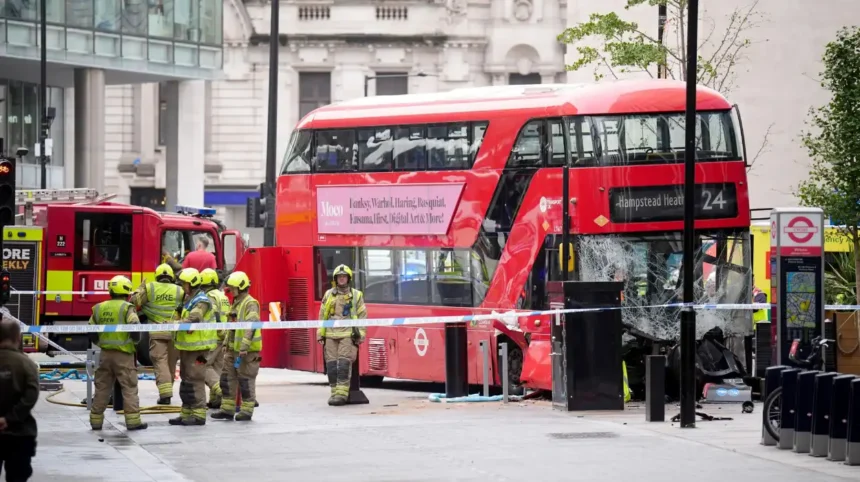
The criminal charges stem directly from a fatal collision that occurred in December 2023. Grace Mecaley, a 74-year-old retired nurse, was walking through the northern section of the station when she was struck by a route 212 double-decker bus. Mrs Mecaley sustained fatal injuries as a consequence of the collision.
The incident prompted immediate scrutiny from emergency services, transport officials, and independent workplace safety inspectors, culminating in the formal decision by the HSE to initiate criminal proceedings against the statutory body responsible for London’s transport infrastructure.
What Immediate Actions Were Taken Following the Incident?
Following the fatal collision in late 2023, TfL initiated operational changes to the facility. In 2024, the transport authority temporarily closed Walthamstow bus station for a period of six weeks. TfL stated that the complete temporary closure was necessary to implement urgent physical and operational safety upgrades across the site to mitigate risks to members of the public and transport staff.
When Will the Court Proceedings Begin?
The criminal case against Transport for London is set to enter the judicial process later this month. The initial court hearing is scheduled to take place on 25 September at Westminster Magistrates’ Court, where formal charges will be presented.
Background of the Development
Walthamstow bus station is one of the busiest bus interchanges in Greater London, handling thousands of passenger movements daily alongside frequent bus arrivals and departures. Over the 20-year period cited in the prosecution’s charges (2004 to 2023), the station underwent various operational adjustments to handle increasing passenger volumes in north-east London.
The regulation of pedestrian and vehicle interaction at transport hubs falls under the Health and Safety at Work etc. Act 1974 and the Workplace (Health, Safety and Welfare) Regulations 1992. These statutory frameworks mandate that infrastructure managers maintain clear, risk-assessed separation between foot traffic and vehicular movements. The HSE’s decision to pursue a criminal prosecution against a public authority highlights regulatory oversight regarding institutional accountability in public transport safety design.
Prediction: How Will This Development Affect Public Transport Users and Infrastructure Operations?
The criminal prosecution of Transport for London is expected to have significant operational and legal ramifications across several distinct groups:
- For Passengers and Local Residents: Commuters and residents using Walthamstow bus station—and similar transport hubs across Greater London—are likely to see increased visual safety measures, adjusted pedestrian crossings, and potentially altered pedestrian pathways. Heightened regulatory scrutiny may lead to further physical interventions aimed at eliminating shared spaces between pedestrians and buses.
- For Transport for London and Local Authorities: A conviction or prolonged legal battle could establish legal precedents regarding public authority liability for transport infrastructure design. It may force TfL to conduct comprehensive safety audits across all bus stations in the capital, potentially leading to widespread engineering works, altered timetable schedules, and increased capital expenditure dedicated to pedestrian segregation.
- For Bus Drivers and Transport Staff: Operational protocols for bus operators running services across London may undergo review, resulting in stricter speed restrictions within station concourses and updated training modules regarding pedestrian hazard awareness at complex station crossings.