Key Points
- Tower Hamlets’ ruling Aspire party has launched its local‑election manifesto ahead of the 7 May poll.
- The plan includes a promise to build a new outdoor swimming pool (lido) in Victoria Park if the party wins.
- Aspire’s executive mayor, Lutfur Rahman, has pledged that the council would become the first in the country to offer free Transport for London (TfL) travel passes for low‑income university and college students.
- Under the proposal, Tube, Overground and bus fares would be covered for eligible students starting higher or further education.
- TfL currently provides free travel only for children aged 16 and under; the plan would extend subsidised or free travel into young adulthood for low‑income families.
- The manifesto reflects Aspire’s broader “big spend” agenda aimed at retaining control of Tower Hamlets Council.
Tower Hamlets, (East London Times) April 29, 2026 Aspire, the independent party that runs Tower Hamlets, announced a high‑profile local‑election manifesto on Wednesday, April 29, which includes a pledge to build a new lido in Victoria Park and to offer free TfL travel for low‑income university and college students if the party wins the 7 May poll. The proposals were unveiled by executive mayor Lutfur Rahman, who leads the council after his re‑election in 2022 and the party’s subsequent takeover of the borough.
- Key Points
- What has Aspire promised in its manifesto?
- How would the free travel scheme work?
- Why is Victoria Park being targeted for a lido?
- What is the political context of the manifesto?
- How does the proposal fit with existing council policies?
- What could the proposals mean for residents?
- Background to Aspire and Tower Hamlets local government
- Prediction: How might these proposals affect voters and students?
What has Aspire promised in its manifesto?
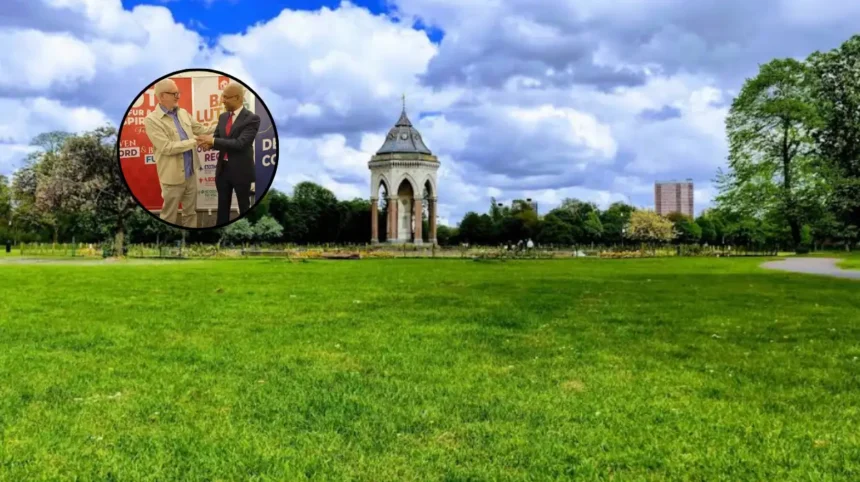
As reported by the London Standard in its coverage of the manifesto launch, Aspire has outlined a series of “big spend” initiatives aimed at securing support among residents ahead of the 7 May local elections. One of the headline pledges is the construction of a new outdoor swimming pool, or lido, in Victoria Park, a major green space in the borough.
The projection is that the facility would serve as a year‑round leisure and health asset for local communities, subject to planning and funding.
In addition to the Victoria Park lido, the London Standard reports that Rahman has pledged that Tower Hamlets would become the first local authority in the country to introduce free TfL travel for students from low‑income families.
Under the plan, Tube, Overground and bus costs would be covered for eligible young people starting university or college, addressing concerns about the rising cost of transport for education‑related journeys. The manifesto frames the measure as a way to reduce barriers to further and higher education for those on lower incomes.
How would the free travel scheme work?
As explained by the London Standard, TfL currently offers free travel for children aged 16 and under, while older students generally pay reduced or adult fares unless they qualify for specific concessionary schemes. Aspire’s plan would extend free travel into early adulthood for students from low‑income households, with the council proposing to cover the cost through local spending if the party wins the May 7 vote.
The report notes that the proposal is partly inspired by commitments made by New York Mayor Zohran Mamdani, who has pledged to scrap bus fares in the city, according to Rahman’s comments relayed by the Standard.
Rahman is quoted as saying the scheme would help families struggling with the cost‑of‑living crisis and ease pressure on household budgets linked to commuting to universities and colleges.
Local‑education and transport‑policy documents from Tower Hamlets Council already show that travel assistance is available for certain age groups in school and sixth‑form college, but the Aspire plan would extend similar support into higher education for low‑income students.
Why is Victoria Park being targeted for a lido?
The London Standard points out that a new lido in Victoria Park is intended to expand the borough’s leisure and outdoor‑exercise infrastructure. Victoria Park is one of the largest green spaces in East London and already hosts a range of community events, sports and cultural activities, making it a symbolic location for a major capital‑spend project, according to the report.
The manifesto suggests the lido would be designed to operate year‑round, with heating and additional facilities, broadening access to swimming and water‑based activities for residents of all ages.
Local‑government sources quoted by the Standard indicate that the project would require significant capital investment and detailed feasibility work, including environmental assessments, planning approvals and ongoing maintenance budgets.
The party has not yet published a detailed cost estimate in the initial manifesto release, according to the coverage.
What is the political context of the manifesto?
As reported by the BBC, Aspire was formed by Lutfur Rahman and those elected under the “Tower Hamlets First” banner, and took control of Tower Hamlets Council after the 2022 local elections.
The party is described as an independent force in the borough, with Rahman’s mayoral leadership distinguishing it from the main UK parties. The new manifesto appears aimed at consolidating that hold ahead of the 7 May 2026 vote, the London Standard notes.
The manifesto frames the lido and free‑travel pledges as part of a wider “big spend” agenda that positions Aspire as a left‑leaning, interventionist administration focused on social‑welfare and youth‑support measures.
Previous reporting on Rahman’s leadership has highlighted other initiatives, such as the reintroduction of the Education Maintenance Allowance for post‑16 students and bursary schemes for university‑bound young people, which the current manifesto seeks to build upon.
How does the proposal fit with existing council policies?
Current council travel‑assistance guidance for children and young people in school and sixth‑form college already allows for concessionary or free travel on TfL services for certain age bands and eligibility criteria.
For example, children over five and under 11 can travel free on TfL and most National Rail services, while those aged 11–15 receive free travel on buses and trams and half‑price fares on other services, according to the council’s published policy documents. Young people aged 16–17 in full‑time education or work‑based learning schemes can also travel free on buses and trams and at half‑price on other TfL‑linked services if they meet the criteria.
The Aspire plan effectively seeks to extend the principle of subsidised or free travel beyond the existing school‑age bands into higher education for low‑income families, as reported by the London Standard. It would require the council either to purchase large‑volume TfL passes or negotiate a bespoke concessionary scheme with Transport for London, which could have implications for borough finances and borrowing limits. No breakdown of the likely annual cost has been included in the initial manifesto release, according to the coverage.
What could the proposals mean for residents?
According to the London Standard’s analysis, the lido and free‑travel proposals are designed to appeal to families, students and young workers who face high housing and transport costs in East London. The outdoor swimming pool would add to Victoria Park’s leisure offer, potentially encouraging more physical activity and community use of the park, while the travel scheme would reduce recurring monthly expenses for households with children in higher education.
At the same time, critics cited in broader coverage of Aspire’s governance have previously raised concerns about the council’s financial management and the sustainability of large‑spend initiatives, though the Standard report on the manifesto does not repeat those criticisms in detail. The new measures would therefore be closely watched by both supporters and opponents during the run‑up to 7 May, as voters weigh the potential benefits against the long‑term fiscal impact.
Background to Aspire and Tower Hamlets local government
Aspire is an independent political party active in the London Borough of Tower Hamlets, founded by Lutfur Rahman and councillors previously elected under the “Tower Hamlets First” banner. The party took control of Tower Hamlets Council after the 2022 local elections, ousting Labour and marking Rahman’s return to the mayoralty after an earlier period of disqualification. Rahman’s leadership has been characterised by a focus on social‑welfare policies, education‑related support and local‑investment schemes, including measures to assist low‑income families and young people.
The borough itself is one of the most densely populated and economically diverse areas of East London, with high levels of child poverty and a large proportion of residents from Black, Asian and minority‑ethnic backgrounds.
Local‑government decisions on transport, housing, leisure and education therefore have a pronounced impact on everyday living costs and long‑term opportunities for residents. Aspire’s latest manifesto sits within this context, attempting to position the party as a distinctive alternative to national political brands while addressing the borough’s specific socio‑economic challenges.
Prediction: How might these proposals affect voters and students?
If the Aspire‑led council wins the 7 May elections and implements the promised lido and free‑travel scheme, the most immediate effects would be felt by low‑income families with children in higher education and by residents who use Victoria Park regularly. Students from Tower Hamlets starting university or college would likely see a reduction in monthly travel bills, easing one component of the cost‑of‑living burden, assuming the scheme is rolled out as advertised.
For broader residents, the construction of a lido in Victoria Park could reshape the park’s usage patterns, potentially increasing footfall and stimulating demand for nearby businesses and community services, though it would also raise questions about congestion, noise and maintenance costs. The proposals may also influence how other London boroughs think about transport‑subsidy models for students, particularly if the free‑travel scheme proves financially viable and politically popular.