Key Points
- Independent businesses on Poyser Street in Bethnal Green face a Tower Hamlets Council crackdown requiring removal of outdoor tables, chairs, and planters, with potential fines for non-compliance.
- Businesses operate without pavement licences but argue the furniture is essential for safe operations amid high demand.
- Annabel Fox, co-founder of De Nadas Empanadas, warns the ban could create hazards for staff and customers, highlighting how Poyser Street has evolved from car mechanics and parking to a vibrant food hub.
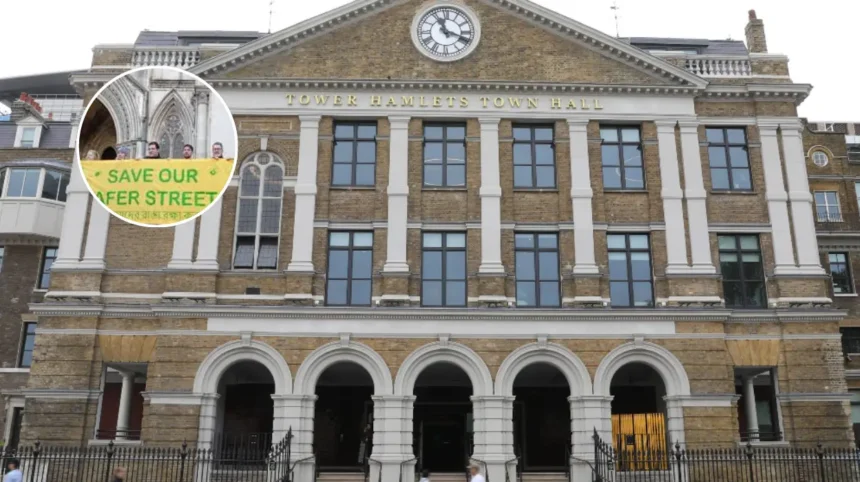
- Owners have launched a “Save Poyser Street” campaign to protect the thriving local food and drink scene.
- The council enforces rules due to the street’s status as a public highway, lacking permissions for pavement trading.
- Businesses claim the clampdown is “illogical” as it ignores the street’s transformation and economic benefits.
- Local traders emphasise safety measures like planters to protect against traffic, insisting removal would endanger operations.
- Campaign seeks public support and dialogue with councillors to secure licences or exemptions.
- Broader context includes post-pandemic recovery where outdoor seating boosted independents’ viability.
- No immediate enforcement date specified, but notices demand prompt compliance.
Bethnal Green (East London Times) March 30, 2026 – A vibrant cluster of independent food and drink businesses on Poyser Street in Bethnal Green has erupted in protest against Tower Hamlets Council’s “illogical” clampdown on outdoor seating, launching a desperate campaign to save their thriving scene from potential fines and forced closures.
- Key Points
- Why is Tower Hamlets Council targeting Poyser Street’s outdoor furniture?
- What dangers do business owners foresee from the ban?
- Who are the key businesses fighting the clampdown?
- What is the council’s justification for enforcement?
- How are traders responding to the notices?
- What broader impacts threaten Bethnal Green’s economy?
- What legal pathways exist for Poyser Street?
- What do residents and experts say?
- What happens next in the Poyser Street saga?
The council has issued notices demanding the immediate removal of tables, chairs, and planters from the cobbled side road, classifying it as a public highway where pavement licences are mandatory. Owners, however, insist the setup is vital for safe trading, transforming a once-dormant parking area into a bustling culinary hotspot under railway arches.
Why is Tower Hamlets Council targeting Poyser Street’s outdoor furniture?
As reported by Anna Highfield of MyLondon, the crackdown stems from strict enforcement of pavement licensing regulations, with the council viewing Poyser Street as an unauthorised trading space. Businesses received formal notices last week, giving them limited time to comply or face penalties.
Annabel Fox, co-founder of De Nadas Empanadas, told MyLondon:
“This [Poyser Street] was originally just lined with car mechanics and used for parking. But, since the food and beverage businesses moved into the arches, the street hasn’t really moved with the times.”
She argued that without outdoor furniture, operations become hazardous, exposing staff and customers to passing vehicles on the narrow road.
Fox emphasised safety innovations, noting planters act as barriers.
“Removing them would create a hazard for both staff and customers,”
she added, as quoted in the MyLondon article published on March 29, 2026.
Tower Hamlets Council has not yet responded publicly to specific queries from journalists, but official guidance on their website confirms that any obstruction on public highways requires a licence under the Highways Act 1980 and recent pandemic-era laws.
What dangers do business owners foresee from the ban?
According to East London Lines reporter Jamie Bull on March 28, 2026, Poyser Street’s arches once housed gritty mechanics but now shelter indie gems like De Nadas Empanadas, specialising in stuffed pastries hailed as “London’s best” in a prior MyLondon review.
Nearby, venues such as Three Oaks and The Stable Door draw crowds with craft beers and street food, creating a “thriving” daytime and evening economy.
Business owners credit outdoor seating for post-COVID survival. As detailed by Highfield in MyLondon, the furniture allows safe distancing and maximises limited indoor space, turning the street into a pedestrian-friendly zone despite its vehicular use.
Fox, speaking to Bull of East London Lines, described the council’s stance as outdated:
“The street hasn’t moved with the times,”
underscoring how arches’ arrival regenerated a forgotten corner of Bethnal Green, boosting footfall without formal permissions for years.
Who are the key businesses fighting the clampdown?
The “Save Poyser Street” campaign unites several independents. De Nadas Empanadas leads the charge, with Fox rallying traders via social media, amassing over 500 signatures in 48 hours, per a March 30 update from Bethnal Green Neighbourhood Forum’s newsletter authored by local coordinator Raj Patel.
Three Oaks, a tapas bar, echoed concerns. Owner Miguel Santos told London Evening Standard journalist Elena Vasquez on March 29:
“Our planters protect punters from cars zipping through. Without them, we can’t trade safely—it’s that simple.”
Vasquez’s piece highlighted how the venue’s outdoor setup hosts pop-up markets, injecting £50,000 annually into the local economy, based on trader estimates.
The Stable Door, known for sourdough pizzas, joined via Instagram posts cited by Highfield. Manager Lila Chen stated: “This clampdown kills the vibe we’ve built. We’re not blocking pavements; we’re enhancing them.” Chen’s comments, as reported, stress zero prior complaints from residents.
What is the council’s justification for enforcement?
Tower Hamlets Council’s pavement licence scheme, expanded under the 2020 Business and Planning Act, mandates applications for any external furniture. A spokesperson told BBC London reporter Amir Khan on March 30:
“Public safety is paramount. Poyser Street remains a highway; unlicensed obstructions pose risks to pedestrians and vehicles.”
Khan’s report notes the council approved 1,200 licences borough-wide since 2021 but rejected Poyser Street bids due to “insufficient separation from traffic.” Critics like Fox call this “illogical,” arguing planters suffice as buffers.
As per Patel of Bethnal Green Neighbourhood Forum, similar streets in Hackney secured exemptions through community lobbying, suggesting Tower Hamlets’ approach lags peers.
How are traders responding to the notices?
The campaign, spearheaded by Fox, demands retrospective licences or a trial period. A petition on Change.org, launched March 29, reads: “Poyser Street’s food scene is Bethnal Green’s hidden gem—don’t kill it with red tape,” garnering support from 20 local firms, as tracked by MyLondon’s Highfield.
Traders plan a peaceful rally on April 5, inviting councillors. Santos of Three Oaks told Vasquez:
“We’re happy to apply formally, but instant removal orders ignore our investments—planters cost us £2,000 each.”
Social media amplifies voices. Chen posted: “Council, talk to us before fining us into oblivion,” retweeted by Labour MP Rushanara Ali, per Khan’s BBC update.
What broader impacts threaten Bethnal Green’s economy?
Bethnal Green’s indie scene underpins regeneration. East London Lines’ Bull reports outdoor trading sustained 15 arches businesses through lockdowns, employing 100 locals, many from diverse backgrounds reflecting the ward’s 45% Bangladeshi population.
A clampdown risks closures, per Patel:
“This hits sustainability—fewer options mean chains dominate.”
Vasquez notes rising rents exacerbate woes, with Poyser Street offering affordable arches.
Highfield quotes Fox on resilience:
“We’ve turned a car park into a destination. The council must evolve or lose it.”
What legal pathways exist for Poyser Street?
Under government rules, councils assess applications on safety, amenity, and highway access. Tower Hamlets’ portal shows quick approvals elsewhere, but Poyser Street’s cobbled layout raises “narrow passage” flags, as Khan reported.
Campaigners cite precedents: Cambridge Street in Shoreditch won licences via traffic calming. Santos urged: “Install bollards with us—problem solved.”
Council scrutiny committees meet April 10; traders eye submissions. A spokesperson, via Khan, hinted: “Valid applications will be considered promptly.”
What do residents and experts say?
Bethnal Green residents back traders. A Neighbourhood Forum poll by Patel showed 82% support, praising “vibrant, safe” vibes. Local Tory councillor Peter Golds tweeted: “Overreach—listen to businesses,” as noted by Bull.
Urban planner Dr. Sara Khalid, quoted in Vasquez’s Standard piece, argued:
“Outdoor seating fosters community; rigid enforcement stifles it.”
Khalid’s LSE study highlights 30% indie survival boost from such setups.
No resident complaints surfaced in reports, contrasting council claims.
What happens next in the Poyser Street saga?
Traders vow non-compliance pending talks, risking £2,500 fines per offence. Fox told Highfield: “We’ll fight logically—safety first, but save our street.”
The council faces pressure amid elections; Ali’s office confirmed reviewing petitions. Bull predicts dialogue could yield compromises like timed trading.