Key Points
- Location and Timing: A major water main burst outside the Lord Morpeth pub on Old Ford Road in Bow, East London, at approximately 10:28 pm on Wednesday, 8 July 2026.
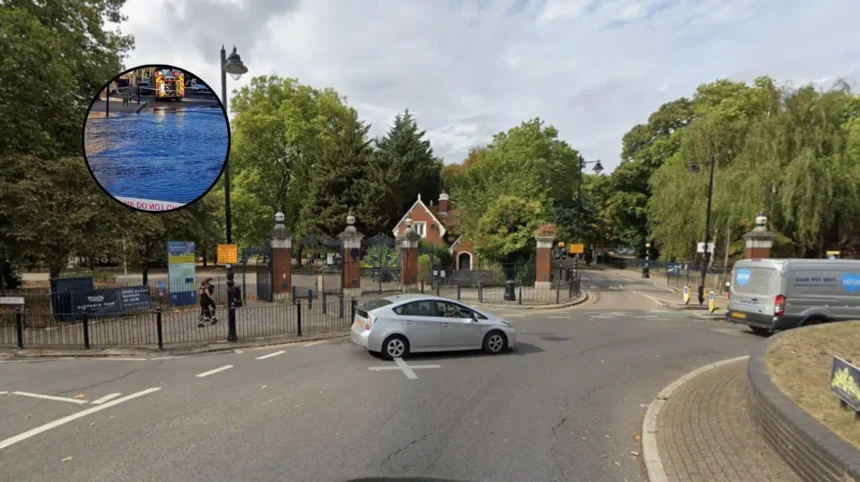
- Severe Flooding: The rupture caused surface water to accumulate up to a depth of one metre, submerging vehicles and engulfing local roads including Grove Road.
- Emergency Rescue: London Fire Brigade dispatched six fire engines and roughly 40 firefighters, utilizing inflatable dinghies, flood barriers, and sandbags to rescue five individuals trapped inside the pub.
- Utility Disruptions: Up to 650 households across the E1, E2, E3, E9, and E16 postcode zones suffered immediate losses of power, water, or gas infrastructure overnight during a 32°C heatwave.
- Power Isolation: UK Power Networks isolated electricity supply to 159 customers at 12:48 am for safety reasons, restoring all but one property by 3:58 am.
- Ongoing Infrastructure Repairs: Thames Water halted the flooding overnight but confirmed that extensive repair works on the broken pipe and surrounding road infrastructure will require prolonged road closures on Old Ford Road.
Bow (East London Times) July 10, 2026 — A critical water main rupture outside an East London pub flooded the surrounding streets to a depth of one metre, triggering the overnight evacuation of five individuals and leaving up to 650 households without vital utilities during a severe summer heatwave. The incident occurred on Old Ford Road in Bow at approximately 10:28 pm on Wednesday, 8 July 2026, forcing a multi-agency emergency response involving forty firefighters, local council representatives, and utility engineers who worked through the night to stabilize the area. The sudden delocalized flooding submerged vehicles and severed critical water, electricity, and gas connections as local temperatures hovered near unprecedented overnight highs.
How Did the Old Ford Road Water Main Burst Unfold?
As reported by Matt Watts, News Editor of The Standard, the London Fire Brigade (LFB) was first alerted to the incident at exactly 10:28 pm on Wednesday evening.
The rupture occurred directly outside the Lord Morpeth pub, causing thousands of gallons of pressurized water to rapidly cascade onto the tarmac.
According to official incident logs published by the London Fire Brigade, control officers immediately mobilised emergency crews from six surrounding municipal stations:
- Bethnal Green
- Homerton
- Whitechapel
- Poplar
- Shadwell
- Millwall
In an official public briefing, the London Fire Brigade stated that
“the surrounding area was flooded up to a depth of one metre”.
Firefighters deployed specialized flood barriers and sandbags in an effort to divert the fast-flowing water away from residential frontages.
To gain a comprehensive understanding of the water’s trajectory across the built environment, the Incident Commander deployed an aerial drone, which provided real-time situational awareness across the affected grid. Emergency services managed to reduce the water levels overnight, officially leaving the scene at 3:30 am on Thursday, 9 July 2026.
What Was the Impact on the Lord Morpeth Pub and Local Residents?
An editorial report compiled by the news team at MyLondon confirmed that the rapid accumulation of water trapped patrons and staff inside the Lord Morpeth pub on Old Ford Road.
Firefighters were forced to execute an emergency assistance operation, safely guiding five individuals out of the inundated premises. Eyewitness accounts shared by local community members painted a stark picture of the midnight disruption.
A resident posting under the pseudonym ‘FoodBouncer’ on the digital forum r/london described observing the crisis from a nearby tower block window.
The eyewitness stated:
“There’s a crater on Old Ford Rd in E3 with water gushing out of it since about 10pm. It’s put about 100m or more under water. Multiple fire engines and Thames Water vans on the scene… They’ve now inflated a dinghy. It’s serious.”
The resident further noted the immediate logistical anxieties caused by the outage, adding that
“the water pressure was weirdly high this morning. We’ve had our water turned off so no toilets or drinking water on a 35-degree day tomorrow is gonna be fun”.
Other residents across the East London grid reported varying levels of supply degradation, with postcodes E1, E2, E3, E9, and E16 registering low pressure or dry taps as the network lost equilibrium.
How Did Utility Providers Respond to the Loss of Power and Water?
As reported by Matt Watts of The Standard, the physical proximity of the surging water to subterranean electrical assets necessitated an immediate isolation of the local electrical grid.
A spokesperson for UK Power Networks issued a formal statement explaining the preventative measures taken by engineering crews.
The UK Power Networks spokesperson stated:
“Engineers were called to the Old Ford Road area of Bow in East London in the early hours of this morning due to a burst water main. For safety reasons, power was isolated to 159 customers at 00:48am, with all but one being restored by 03:58am. Engineers are awaiting access to the final property to safely check their power supply.”
Simultaneously, Thames Water engineers worked to manipulate network valves to isolate the fractured section of the main.
The utility provider acknowledged that a secondary, interconnected pipe issue on nearby Grove Road compounded the regional supply instability.
In a public notice issued via their digital portal on the morning of 9 July 2026, Thames Water stated:
“Our teams on site have stopped the flooding and are working to put things right. Your water supply should now have returned, the pressure may be lower than normal, but this will improve as it builds in the pipe. Our customer teams are in the area, please do speak to them if you need any support.”
The company warned residents that structural resolution would not be instantaneous, adding:
“Unfortunately, we’re likely to be in the area for some time as we need to fix the broken pipe and make good any damage caused by the flooding. We’ll be working around the clock to fix things, and apologise in advance for any disruption caused.”
To mitigate the immediate danger to displaced households, the London Fire Brigade worked in tandem with Tower Hamlets Council and Thames Water to establish a temporary rest centre, providing shelter and clean hydration resources to affected urban families.
What Civil Disruptions and Road Closures Remain in Place?
According to structural updates issued by municipal transit monitors, severe travel diversions have been implemented across Tower Hamlets. A complete road closure was enacted on Old Ford Road to allow heavy machinery to excavate the fractured main safely.
Transit authorities have advised commuters that significant vehicular congestion is expected to persist across secondary thoroughfares, explicitly citing St Stephen’s Road and Roman Road as heavily impacted zones.
Thames Water confirmed that parts of the pedestrian footpath have also been cordoned off to prevent injuries from potential sub-surface soil erosion caused by the high-pressure leak.
Background of the Particular Development
The infrastructure failure in Bow highlights long-standing systemic vulnerabilities within London’s subterranean utility networks, particularly when subjected to extreme seasonal weather conditions.
This specific burst occurred during a intense UK summer heatwave, during which daytime temperatures reached 32°C, coupled with exceptionally warm overnight minimums of nearly 20°C.
During extended periods of high heat, urban water networks experience a twofold stress mechanism. Firstly, consumer demand for water surges exponentially for cooling, hydration, and domestic use, creating high sustained hydraulic pressure inside the aging cast-iron pipes.
Secondly, prolonged lack of rainfall causes surrounding clay soils to dry out, contract, and shift. This ground movement removes structural support from beneath heavy Victorian and mid-20th-century water mains, leading to sudden, catastrophic structural failures such as the one observed outside the Lord Morpeth pub.
Prediction
This infrastructure development is expected to have immediate and medium-term impacts on local residents, commuters, and business owners within the Borough of Tower Hamlets.
For local residents, the combination of erratic water pressure and structural road repairs will complicate domestic routines during the remainder of the heatwave. Households may face sporadic water pressure drops during peak hours as Thames Water routes supply through alternative, smaller-diameter backup lines.
For local business operators along Old Ford Road and Roman Road, the prolonged closure of transit routes will restrict foot traffic and disrupt commercial delivery schedules.
For commuters, vehicular transit times through East London are predicted to rise by 20 to 30 minutes over the coming days as traffic diverts onto already congested arterial roads.
Ultimately, this incident will likely intensify public and regulatory pressure on Thames Water to accelerate its capital expenditure into asset renewal, shifting from reactive emergency repairs to proactive pipe reinforcement across vulnerable East London postcodes.