Key Points
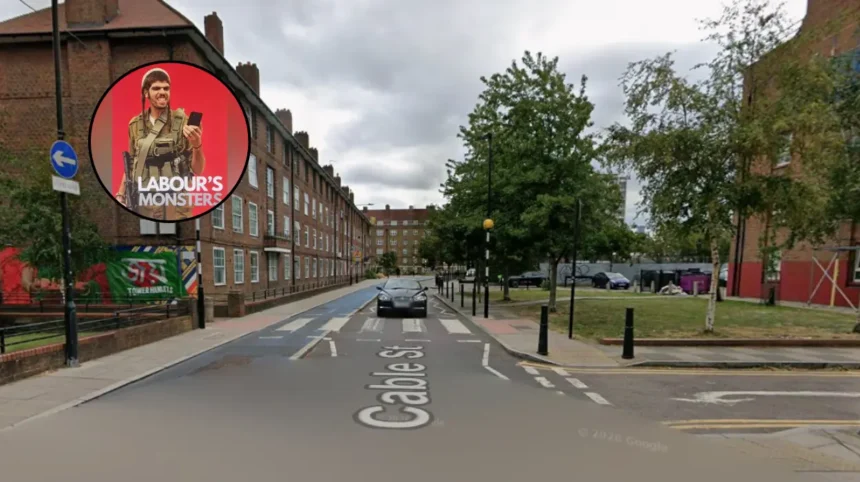
- Election posters featuring a Jewish IDF soldier labelled “Labour’s monster” were put up around east London, specifically on Cable Street in Shadwell, Tower Hamlets
- The posters depict an armed Israeli settler grinning while holding his phone, with the text “Labour’s monsters”
- Alex Hearn, head of Labour Against Anti-Semitism, submitted a report to the Metropolitan Police alleging a breach of the Public Order Act
- The complaint states the image was “selected to appear menacing” and anchors the monstrous characterisation in Jewish religious identity markers, not Israeli military conduct generally
- Hearn told the Daily Mail the poster “weaponises visual religious identity” and depicted the Jew as a subhuman “monster” like classic racist propaganda
- The Metropolitan Police confirmed receiving a report regarding posters featuring hate messages on Cable Street, E1, at approximately 11:50 AM on Saturday, May 9, 2026
- Officers are investigating the situation; the Met stated it takes anti-Semitic hate crimes very seriously
- The posters lack a printer’s imprint or the name and address of the promoter, potentially violating the Representation of the People Act
- Alex Hearn urged the Electoral Commission to investigate the anonymous hate campaign against the Labour candidate
- The controversial poster was part of a series of anti-Israel messages put up by Labour’s opponents around Shadwell station ahead of local elections on Friday, May 2026
- Other posters claim Israel controls the UK government and that “Labour are complicit in genocide”
- Gavin Stollar, chair of Liberal Democrat Friends of Israel, told the Jewish Chronicle that characterising Israelis or Jews as monsters for electoral gain is “as racist as it is divisive”
- The image was originally taken by Italian photographer Pietro Masturzo in the West Bank and showed an Orthodox Israeli soldier grimacing at a Palestinian woman
- The photograph was used on the front cover of Italian magazine Espresso under the headline “Abuse”
- Ambassador Jonathan Peled, Israel’s top diplomat in Rome, called the image “manipulative” when it appeared on the magazine cover
Tower Hamlets (East London Times) May 30, 2026 – Election posters put up around east London depicting a Jewish IDF soldier as “Labour’s monster” have been reported to the police for “stirring up anti-Semitism”, marking a significant development in the borough’s contentious local election campaign.
- Key Points
- What Do the Controversial Posters Show and Where Were They Found?
- Why Was the Poster Reported to the Metropolitan Police?
- What Did Alex Hearn Say About the Anti-Semitic Nature of the Posters?
- What Did the Metropolitan Police Say About Their Investigation?
- What Other Legal Violations Were Alleged in the Posters?
- What Other Posters Were Part of This Campaign?
- What Did Other Political Leaders Say About the Posters?
- When Did the Posters Appear Relative to the Local Elections?
- How Does Cable Street’s Historical Significance Contextualise This Incident?
What Do the Controversial Posters Show and Where Were They Found?
The posters found on Cable Street in Shadwell, Tower Hamlets, feature an image of an armed Israeli settler grinning and holding his phone up along with the words “Labour’s monsters”.
According to the Jewish Chronicle, the picture in question showed an Orthodox Israeli soldier grimacing at a Palestinian woman and was originally taken by Italian photographer Pietro Masturzo in the West Bank.
The photograph was subsequently used on the front cover of Italian magazine Espresso, under the headline “Abuse”. Ambassador Jonathan Peled, Israel’s top diplomat in Rome, said at the time of the cover last month that the picture was “manipulative”.
“The image distorts the complex reality with which Israel must coexist, promoting stereotypes and hatred,”
Why Was the Poster Reported to the Metropolitan Police?
As reported by the Daily Mail, a report submitted to the Metropolitan Police by Alex Hearn, of Labour Against Anti-Semitism, claimed it was a breach of the Public Order Act, because the image was “selected to appear menacing”. The complaint further stated:
“The monstrous characterisation is anchored specifically in Jewish religious identity markers, not Israeli military conduct generally. This stirs up hatred against Jewish people”.
Mr Hearn told the Daily Mail:
“The poster weaponises visual religious identity. Like classic racist propaganda, the Jew is depicted as a subhuman ‘monster'”.
He continued:
“This is a deliberate attempt to stir up hatred in a constituency with a large Muslim population. It leverages anti-Jewish racism for political gain at a time when the Jewish community is already under sustained attack”.
What Did Alex Hearn Say About the Anti-Semitic Nature of the Posters?
As reported by the Daily Mail, Mr Hearn stated:
“The impact is that Jewish people feel demonised, isolated and forced out”.
He added:
“I hope the perpetrators are brought to justice swiftly, sending a clear message that anonymous, cowardly campaigns like this are unacceptable”.
According to the Jewish Chronicle, Alex Hearn, the head of Labour Against Antisemitism, has now urged the Electoral Commission to investigate. He said:
“In an electoral district with a large Muslim population, this framing has the potential to inflame community tension by presenting political opponents not merely as wrong on policy but as agents of a foreign power associated with Jewish interests”.
What Did the Metropolitan Police Say About Their Investigation?
A spokesperson for the Metropolitan Police stated:
“Police received a report regarding posters featuring hate messages on Cable Street, E1, at approximately 11:50 AM on Saturday, May 9”.
The spokesperson continued: “Officers are looking into the situation.
The Met takes anti-Semitic hate crimes very seriously and is dedicated to enforcing strong measures when such incidents occur”.
What Other Legal Violations Were Alleged in the Posters?
The Telegraph reported that a complaint was lodged with the Metropolitan Police alleging that the posters breached the Public Order Act as the image was “selected to appear menacing”.
The paper also reported that the police report on the case noted that the posters do not “carry a printer’s imprint or the name and address of the promoter, as required by law”, making it a potential offence under the Representation of the People Act.
Explore More Tower Hamlets News
Billions Flow Through Canary Wharf. A Mile Away, Newham is Drowning
Police Hunt Man Over Anti-Jewish Threat Video in Tower Hamlets 2026
What Other Posters Were Part of This Campaign?
According to the Jewish Chronicle, the flyers were among a series of anti-Israel messages put up by Labour’s opponents around Shadwell station in the days running up to the vote. Other posters claim Israel controls the UK government.
The police report highlighted that one of the posters – which claimed
“Labour are complicit in genocide” – seemed to
“depict the Labour Party as acting on behalf of Israeli government interests”.
Twitter user Alex Hearn (@hearnimator) posted on May 10, 2026:
“‼️Posters portray Jews as ‘Labour’s monsters’. Police are now investigating how political opponents of the @UKLabour candidate ran an anonymous hate campaign against him. Other posters claim Israel control the UK government”.
What Did Other Political Leaders Say About the Posters?
As reported by the Jewish Chronicle, Gavin Stollar, the chair of Liberal Democrat Friends of Israel, told the JC:
“The characterisation of Israelis or Jews as monsters for electoral or political gain is as racist as it is divisive. Parties must unite to condemn this type of activity”.
When Did the Posters Appear Relative to the Local Elections?
The controversial poster was part of a series aimed at criticizing the Labour Party, which surfaced around Shadwell station in the east London area ahead of local elections on Friday. The materials were reported to police over concerns they would “stir up hatred against Jewish people” ahead of last week’s local elections.
How Does Cable Street’s Historical Significance Contextualise This Incident?
The Cable Street where the posters appeared carries significant historical weight in east London. The Cable Street Mural is a large mural painting in Shadwell in East London, painted on the side of St George’s Town Hall between 1979 and 1983 to commemorate the Battle of Cable Street in 1936. In October 1936, thousands of Londoners gathered to stop Oswald Mosley’s British Union of Fascists marching through the East End. This historical context of anti-fascist resistance adds another layer to the current controversy surrounding posters appearing on the same street.
What Background Led to This Development in Tower Hamlets?
The incident occurs within Tower Hamlets, a London borough with diverse demographics including a large Muslim population and a significant Jewish community.
According to GB News, there were nearly 200 anti-semitic attacks in the council area, despite Jews only making up 0.6 per cent of the population. GB News also reported that a London council left out antisemitism from a list of hate crimes, despite including transphobia and Islamophobia.
The Metropolitan Police has previously dealt with issues outside polling stations in Tower Hamlets, including reports of voter intimidation.
The Met is investigating claims that a by-election earlier in the month in the Banglatown and Spitalfields ward was rigged, giving victory to Gulam Robbani, an independent candidate backed by the borough’s mayor Lutfur Rahman.
Labour Against Antisemitism (LAAS), a campaign group founded by Labour members to combat antisemitism within the party, has been active in calling for action against antisemitic remarks.
The group has previously called for councillor suspensions after antisemitic comments about the 7 October attack on Israel.
Recent months have seen increased scrutiny of antisemitism in UK politics. In March 2025, fury erupted after a senior NHS doctor spouted antisemitic remarks, claiming
“there is no such thing as Israel” and that “Israelis are all fascists”, leading to a General Medical Council investigation. In November 2024, UK police refused to stop antisemitism against Jewish students, with Cambridgeshire police deeming an incident sending Nazi swastikas to Jewish students “not offensive enough to be a crime”.
How Will This Development Affect the Jewish Community and Local Voters in Tower Hamlets?
The posting of these images and the resulting police investigation will have several measurable effects on the particular audiences in Tower Hamlets.
For the Jewish community in east London, Alex Hearn’s statement indicates that Jewish people already feel “demonised, isolated and forced out” due to such imagery. With nearly 200 anti-semitic attacks recorded in the council area despite Jews comprising only 0.6 per cent of the population, this development reinforces existing concerns about safety and acceptance.
The characterisation of Jews as “monsters” specifically anchors hatred in Jewish religious identity markers rather than political criticism of Israel, which directly impacts Jewish residents regardless of their views on Israeli policy.
For local voters in Tower Hamlets, particularly in the large Muslim population that Hearn referenced, the framing has
“the potential to inflame community tension by presenting political opponents not merely as wrong on policy but as agents of a foreign power associated with Jewish interests”.
This could deepen existing community divisions ahead of future elections.
The anonymous nature of the campaign, as highlighted by Hearn’s description of “anonymous, cowardly campaigns”, means that political opponents of the Labour candidate are running what the police are investigating as a “hate campaign”.
This could affect voter confidence in the electoral process itself, particularly given existing investigations into electoral fraud in the borough.
For the Labour Party’s candidate in Tower Hamlets, the investigation into how “political opponents of the @UKLabour candidate ran an anonymous hate campaign against him” could impact their campaign trajectory. The Electoral Commission investigation Hearn requested could lead to further scrutiny of the campaign environment.
The Metropolitan Police’s statement that they “take anti-Semitic hate crimes very seriously and are dedicated to enforcing strong measures when such incidents occur” signals to both the Jewish community and potential perpetrators that such actions will be investigated. However, the fact that officers are still “looking into the situation” weeks after the May 9 report means uncertainty remains for affected communities.
The potential violation of the Representation of the People Act due to missing printer’s imprint could set a precedent for election advertising enforcement in Tower Hamlets, potentially affecting how all political campaigns operate in the borough going forward.