Key Points
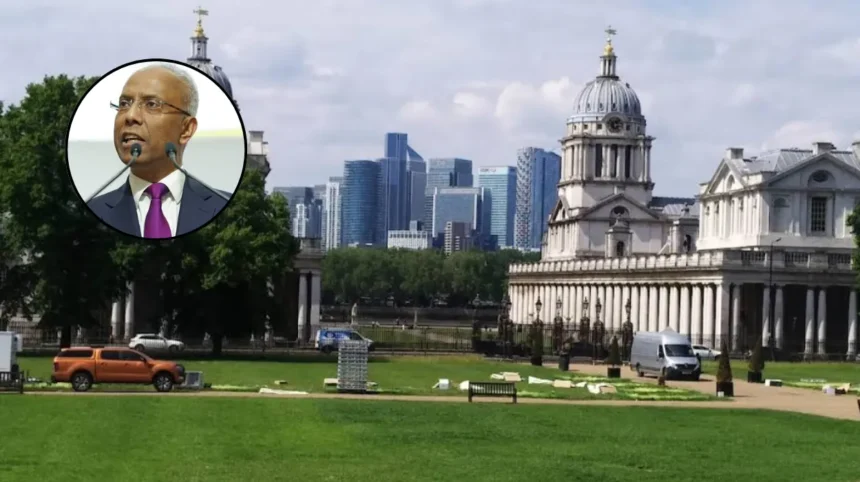
- Lutfur Rahman (Aspire Party) has been re-elected as the Mayor of Tower Hamlets with 35,679 votes (38.8% of the total).
- Labour’s Sirajul Islam finished in second place with 19,454 votes, narrowly beating the Green Party.
- Hirra Khan Adeogun (Green Party) delivered a strong performance, securing 19,223 votes (20.9%), just 231 votes behind the Labour candidate.
- Voter turnout and minor party performances saw John Bullard (Reform UK) take fourth place with 7,153 votes.
- The election grants Rahman control over significant local powers, including housing, waste collection, and a multi-million-pound budget.
- The results were officially confirmed following the count on 7 May 2026.
Tower Hamlets (East London Times) May 25, 2026 — Lutfur Rahman has comfortably retained his position as the Executive Mayor of Tower Hamlets, defeating his closest rival, Labour’s Sirajul Islam, by a margin of over 16,000 votes. According to official tallies released following the count at the East Wintergarden in Canary Wharf, Rahman’s Aspire Party secured 38.8% of the electorate’s support, reinforcing his mandate to lead one of London’s most diverse and economically contrasting boroughs. The election saw a significant surge for the Green Party, while the Conservative and Liberal Democrat candidates struggled to gain double-digit traction.
Who won the Tower Hamlets mayoral election?
The mayoral election held on 7 May 2026 resulted in a clear victory for the incumbent, Lutfur Rahman. Running under the Aspire Party banner, Rahman consolidated his base to win 35,679 votes. As reported by electoral officials in the borough, the results showcased a fragmented opposition, with the traditional “Big Two” parties facing stiff competition from smaller political entities.
The final standings were as follows:
- Lutfur Rahman (Aspire): 35,679 votes (38.8%)
- Sirajul Islam (Labour): 19,454 votes (21.1%)
- Hirra Khan Adeogun (Green): 19,223 votes (20.9%)
- John Bullard (Reform UK): 7,153 votes (7.8%)
- Dominic Nolan (Conservative): 3,818 votes (4.1%)
- Zami Ali (Tower Hamlets Independents): 3,156 votes (3.4%)
- Mohammed Hannan (Liberal Democrat): 2,421 votes (2.6%)
- Hugo Pierre (TUSC): 638 votes (0.7%)
- Terence McGrenera (Independent): 524 votes (0.6%)
How did the main political parties perform?
The Labour Party, which historically held a firm grip on East London, found itself in a tight race for second place. Sirajul Islam managed to hold off the Green Party’s Hirra Khan Adeogun by a thin margin of 0.2 percentage points. This result has been interpreted by local analysts as a sign of shifting loyalties within the borough.
As noted by political commentators covering the London local elections, the Green Party’s performance was particularly notable. Adeogun’s 19,223 votes represent a significant shift in the local political landscape, suggesting that environmental issues and “clean air” initiatives have resonated with a younger, more urban demographic in areas like Bethnal Green and Bow.
What does an elected mayor do?
While all 32 London boroughs have a mayor, there is a fundamental distinction between the ceremonial roles found in most of London and the “Executive Mayor” model used in Tower Hamlets. In most boroughs, the mayor is a figurehead who wears municipal robes and a chain of office for honorary events. However, in Tower Hamlets, the mayor is the political and executive leader of the local government.
What are the mayor’s specific powers?
An elected mayor has significant authority over the day-to-day lives of residents. According to statutory guidelines for local government, the Mayor of Tower Hamlets is responsible for:
- Appointing a Cabinet: The mayor selects a group of elected councillors to lead specific “portfolios” such as Finance, Community Safety, and Children’s Services.
- Housing and Regeneration: The mayor sets targets for affordable housing and oversees large-scale local regeneration schemes.
- Local Services: Responsibility for waste collection, planning applications, and local park maintenance falls under the mayoral remit.
- The Manifesto: Unlike a council leader chosen by their party, the mayor is elected directly by the people on their own specific manifesto.
How does this differ from the Mayor of London?
It is important for residents to distinguish between the Borough Mayor and the Mayor of London. Sir Sadiq Khan, the current Mayor of London, manages “strategic” matters that affect the entire capital, such as Transport for London (TfL), the Metropolitan Police Service, and the London Fire Brigade. Conversely, Lutfur Rahman’s powers are strictly confined to the borders of Tower Hamlets, focusing on hyper-local issues like council tax rates and borough-specific planning.
What statements were made following the result?
In the immediate aftermath of the declaration, candidates and party representatives provided their reactions to the media. As reported by journalists on the ground at the count, the mood varied from jubilant to reflective.
Lutfur Rahman, addressing his supporters after the result was announced, stated that the victory was a “mandate for continued investment in the people of Tower Hamlets.” He emphasized his commitment to freezing council tax where possible and expanding social housing.
In contrast, the second-place finisher, Sirajul Islam (Labour), expressed disappointment but acknowledged the need to listen to the electorate. As reported by local news outlets, Islam stated: “We have heard the message from the voters. We will continue to hold the administration to account and work for the residents who feel left behind.”
Hirra Khan Adeogun of the Green Party highlighted the significance of her third-place finish. In a statement provided to the press, she noted: “This result shows that the people of Tower Hamlets are hungry for a new kind of politics—one that prioritises the climate, social justice, and transparent governance.”
Background of the particular development
The 2026 election marks another chapter in the storied and often controversial political history of Tower Hamlets. The executive mayoral system was first introduced in the borough following a referendum in 2010. Lutfur Rahman became the borough’s first directly elected mayor that same year.
The borough itself is one of the most economically polarized in the United Kingdom. It contains the global financial hub of Canary Wharf, yet consistently ranks among the highest in the country for child poverty and housing overcrowding. This disparity has long driven the high-stakes nature of its local elections, where promises regarding social housing and welfare benefits carry immense weight.
Rahman’s political journey has been marked by high-profile legal and political challenges, but his 2022 comeback and this 2026 re-election suggest a solid and loyal base of support within the Aspire Party, which focuses heavily on community-led initiatives and localized representation.
Prediction: How will this development affect the residents?
The re-election of Lutfur Rahman is expected to have immediate implications for the residents of Tower Hamlets, particularly regarding local taxation and infrastructure.
For Social Housing Tenants: Given Rahman’s manifesto commitments, it is highly likely that the borough will see an aggressive push for new council-owned housing developments. This will be a welcomed development for the thousands on the borough’s housing waiting list, though it may lead to further friction with private developers over “affordable housing” quotas.
For Local Businesses: The mayor’s control over planning and regeneration will impact the business environment in Shoreditch and Whitechapel. Small businesses may see continued support through local grants, but there could be concerns regarding the efficiency of waste collection and business rates under a concentrated executive model.
For the Wider Electorate: The rise of the Green Party and Reform UK indicates a more pluralistic political future for the borough. While Rahman holds the executive power, the strong showing from these parties suggests that the Aspire Party will face increased scrutiny from both the environmental left and the populist right over the next four years. Residents can expect a continued focus on “Liveable Streets” and traffic management schemes, which remain a divisive but central issue in the borough’s urban planning.