Key Points
- Ted Maxwell, nephew of Ghislaine Maxwell and grandson of late media tycoon Robert Maxwell, has entered local politics.
- Maxwell is campaigning as an independent candidate in the Bethnal Green West ward in Tower Hamlets, east London.
- He vows to “create safer streets for children” by supporting Low Traffic Neighbourhoods (LTNs) and School Streets schemes.
- His campaign calls on Tower Hamlets Council to reverse plans to remove an existing LTN scheme.
- Tower Hamlets’ Aspire-led authority has faced fierce division over the future of LTNs, amid community frustration and legal challenges.
- Maxwell submitted a petition to the council on 20 November demanding retention and expansion of LTN zones near schools.
- The council is currently embroiled in a legal dispute over traffic regulations with anti-LTN campaigners, delaying implementation.
- Maxwell’s family background — including his aunt Ghislaine’s conviction and his grandfather’s financial scandal — has drawn public attention to his campaign.
- He claims his independent bid is rooted in transparency, accountability, and a “child safety-first” policy approach.
Who is Ted Maxwell and what is his background?
As reported by Daily Mail journalist Ryan Hooper, Ted Maxwell is the grandson of former newspaper magnate Robert Maxwell, whose financial empire collapsed in scandal after it was revealed that £440 million had been plundered from Mirror Group pension funds. He is also the nephew of Ghislaine Maxwell, currently serving a 20-year prison sentence in the United States for sex trafficking minors.
- Key Points
- Who is Ted Maxwell and what is his background?
- Why is the Tower Hamlets LTN scheme so divisive?
- What is Ted Maxwell campaigning for?
- How has the council and public responded?
- What legal actions are affecting the LTN rollout?
- How is Maxwell positioning himself politically?
- Could the Maxwell legacy help or hinder his campaign?
- What happens next?
In contrast to his relatives’ notoriety, Ted Maxwell has maintained a low public profile until now, working professionally as a regeneration manager in London’s built environment sector. According to his personal statements shared online, he has been involved in community planning and sustainable development for more than a decade. His political debut marks the family’s first re-entry into the British public sphere since his aunt’s conviction.
Why is the Tower Hamlets LTN scheme so divisive?
The Tower Hamlets LTN programme, introduced under a previous Labour administration, has been at the centre of ongoing controversy. The schemes were designed to reduce through-traffic on residential streets by installing physical barriers and rerouting vehicles to main roads, encouraging walking and cycling. However, opponents claim the restrictions increase congestion on surrounding roads, damage local businesses, and “divide communities”.
As noted by John Dunne in the Evening Standard, Mayor Lutfur Rahman’s Aspire Party pledged to remove many of the existing LTNs, arguing they were imposed without adequate consultation and disproportionately impacted low-income residents who rely on cars for work. The council has since voted to remove several schemes, though implementation has been complicated by litigation and public contention.
What is Ted Maxwell campaigning for?
In his petition presented to the council meeting on 20 November 2025, Maxwell called for Tower Hamlets Council to retain and extend traffic-reduction measures in streets surrounding schools. According to the Daily Mail, he argued that rolling back LTNs would “waste public money” and “risk the safety of children walking to school daily”.
Quoting directly from the council’s record of proceedings, Maxwell urged councillors to:
“Ban vehicles from roads with schools during opening and closing hours, ensuring children can travel safely without fear of pollution or reckless driving.”
Maxwell added in his remarks to The Telegraph that his campaign is driven by a vision of “community-oriented regeneration,” rejecting what he described as “short-term, populist rollbacks of progressive traffic policy.”
How has the council and public responded?
Public reaction within Tower Hamlets has been sharply divided. Supporters of Maxwell’s stance argue that traffic filters and School Streets have proven effective in improving local air quality and reducing road injuries. Opponents, however, accuse LTN defenders of ignoring accessibility issues for elderly and disabled residents.
A council spokesperson, quoted by The Evening Standard, confirmed:
“The council continues to review all existing LTN arrangements and remains committed to ensuring any measures reflect the needs of residents.”
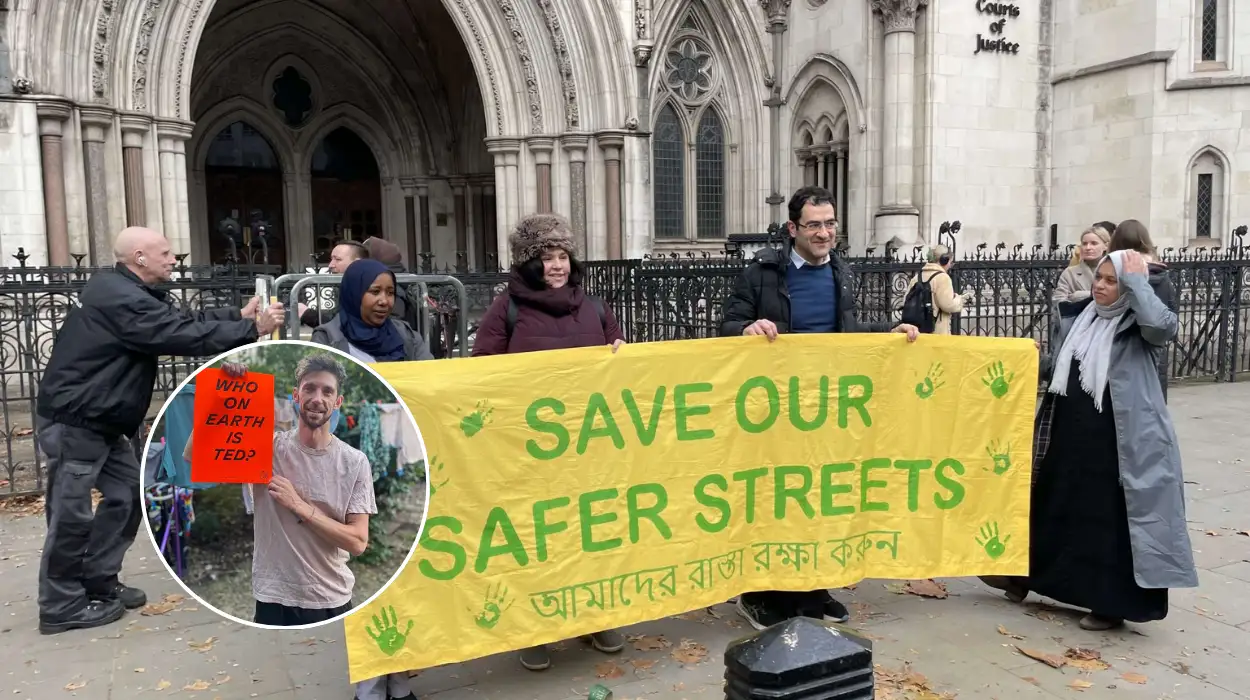
Meanwhile, advocacy groups on both sides remain vocal. The pro-LTN campaign group Save Our Streets Tower Hamlets praised Maxwell’s intervention, stating it “reframes the debate on safety and community rather than car politics.” By contrast, the anti-LTN coalition Open Our Roads dismissed his petition as “elitist nonsense detached from East End realities.”
What legal actions are affecting the LTN rollout?
As Jamie Johnson of The Telegraph reported, several LTN removals and expansions in Tower Hamlets have been delayed by an ongoing High Court challenge. The case was brought by a local campaign group opposing the Aspire-led administration’s removal of LTNs in Bethnal Green, alleging the council failed to comply with statutory consultation rules.
This legal dispute has effectively frozen council plans to modify road layouts until the judicial review concludes. Maxwell referenced the proceedings in his petition, claiming the drawn-out conflict demonstrates “political instability and policy inconsistency that harms children and residents alike.”
How is Maxwell positioning himself politically?
Despite his family’s history with Labour — Robert Maxwell was a Labour MP for Buckingham from 1964 to 1970 — Ted Maxwell insists that his local campaign is “strictly independent.” In comments to the Daily Mail, he stated:
“This isn’t about party politics. It’s about giving voice to residents who believe children’s safety comes before motorists’ convenience.”
Maxwell’s policy platform, published on his campaign website, outlines commitments to:
- Defend and extend school-focused traffic restrictions.
- Prioritise pedestrian safety audits across Tower Hamlets.
- Push for transparent local spending on street infrastructure.
- Introduce neighbourhood-based participatory budgeting.
Political analysts observing local by-election trends suggest Maxwell’s independence may appeal to voters dissatisfied with both Labour and Aspire leaderships. However, as The Guardian’s Rowena Mason noted in commentary earlier this month, familial notoriety could overshadow his public agenda:
“The Maxwell name still carries historical weight, for better or worse.”
Could the Maxwell legacy help or hinder his campaign?
While Ted Maxwell has publicly distanced himself from his family’s controversies, widespread media coverage has inevitably drawn attention to his lineage. His grandfather Robert Maxwell remains one of Britain’s most infamous business figures, while his aunt Ghislaine’s conviction in the United States keeps the family name in headlines.
In response to press questions, Maxwell reportedly told the Daily Mail:
“I am not my relatives. I’ve worked hard in housing and regeneration for years — my commitment is to London’s communities, not family legacy.”
Observers remain split on whether public curiosity will translate into voter support. Local political commentator Sarah Jackman told the Evening Standard:
“His name might get doors open, but whether that earns trust at the ballot box is another matter. Tower Hamlets voters are pragmatic — they care less about background, more about results.”
What happens next?
Tower Hamlets local elections are scheduled for May 2026, with candidate selections expected to finalise early in the new year. Maxwell has yet to announce a full campaign slate or party team but told The Telegraph that a group of volunteers has begun leafleting in Bethnal Green West.
The council’s decision regarding the disputed LTN scheme is anticipated by spring, pending judicial review outcomes. A defeat for the Aspire administration could buoy Maxwell’s campaign, particularly among pro-environment and parent groups rallying behind “safer streets” policies.
As he summarised in an open statement published on his campaign site:
“Our streets can and should belong to children again — not dominated by cars, but by communities walking, cycling, and breathing cleaner air.”