Key Points
- Planning Approval Granted: Tower Hamlets Council has officially approved a new five-storey mixed-use building in the Fish Island area of East London.
- Development Scheme Details: The project involves the construction of nine creative art studios on the ground and first floors, alongside nine self-contained residential apartments on the upper levels.
- No Affordable Housing Allocation: Zero residential units have been designated as affordable housing, and none of the commercial workspaces will be restricted for affordable business use.
- Policy Exemptions Applied: Local planning frameworks only mandate affordable housing provisions for residential developments containing 10 or more homes, or commercial spaces exceeding 1,000 square metres.
- Historical Land Use: The site, situated at 50 Monier Road, has remained entirely vacant since a former industrial warehouse building occupying the land was demolished in 2019.
- Regeneration Strategy Alignment: Council planning officers formally signed off on the application, declaring that the master plan aligns with the local authority’s broader long-term economic regeneration objectives for the Fish Island district.
Fish Island (East London Times) June 4, 2026 —The international media landscape and local housing reporters have closely monitored the evolving planning policies within East London, particularly how developers navigate local housing quotas. The newly approved development at Monier Road has brought renewed focus to local planning thresholds, highlighting how smaller, boutique residential schemes can lawfully bypass local affordable housing obligations.
What Are the Details of the Approved Five-Storey Monier Road Scheme?
As reported in a comprehensive property brief by journalists at The Standard, Tower Hamlets Council has officially granted full planning permission for the construction of a new five-storey block of flats located in Fish Island.
The scheme is set to deliver a mixed-use environment consisting of both residential apartments and commercial workspaces. The corporate entity behind the application, HL Simons, has put forward a detailed layout mapping out the specific breakdown of the multi-tiered structure.
According to the architectural blueprints and documents submitted to the local authority, the ground and first floors of the building will feature nine designated creative studio spaces.
These workspaces are intentionally tailored to accommodate the local artistic community. Above these commercial floors, the top three storeys of the block will house nine self-contained residential dwellings.
The residential unit mix is evenly split across various configurations. The official design proposals specify that the development will include three one-bedroom flats, three two-bedroom flats, and three three-bedroom flats. This structural composition is intended to provide a range of living arrangements, from smaller single-occupant spaces to larger units suitable for families.
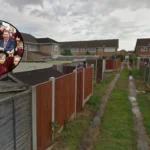
The project is located on a plot of land at 50 Monier Road. This specific site has been completely empty for several years.
A former industrial warehouse structure occupied the land until it was demolished in 2019, leaving a vacant lot awaiting fresh capital investment and redevelopment.
Why Are There No Affordable Homes or Studios Included in the Development?
The aspect of the Monier Road scheme that has drawn the most widespread public attention is the complete omission of any affordable housing units or affordable commercial workspaces. In a detailed breakdown of the planning permission published by The Standard, it was confirmed that not a single apartment within the new five-storey building will be designated under affordable tenures, such as social rent or shared ownership.
This omission is entirely compliant with local planning regulations due to specific statutory size thresholds. Under the current local planning policy enforced by Tower Hamlets Council, residential developers are only legally required to provide an affordable housing allocation if their proposed scheme consists of 10 or more independent homes.
Because HL Simons restricted the residential portion of the Monier Road development to exactly nine flats, the scheme successfully stays below the mandatory legal requirement.
A similar policy mechanism applies to the commercial element of the building. Although the nine creative studios are expected to be leased out, none of them will be restricted or subsidized as affordable workspaces for local businesses.
The local planning policy dictates that commercial developments must provide affordable workspace or business units only if the total commercial floorspace meets or exceeds a threshold of 1,000 square metres. The ground and first-floor art studios designed by the developers sit safely below this minimum spatial trigger.
How Does This Scheme Sit Within the Wider Regeneration of Fish Island?
The planning documentation accompanying the application underscores that this development is part of a much larger structural transition taking place throughout the immediate neighbourhood.
As highlighted in an architectural planning statement drafted by Gordon Shrigley, the appointed architect for the project, Monier Road is currently undergoing a highly visible and significant amount of urban transformation.
In the official planning statement, Gordon Shrigley observed that the north-west facing side of Monier Road has seen several older industrial buildings demolished, with a series of cleared sites now directly awaiting new development projects.
The new five-storey building is positioned as a modern extension of this ongoing architectural evolution, aiming to replace a vacant, cleared plot with a structured mixed-use building.
Furthermore, the developers have stated that the commercial art studios have been specifically designed to appeal to a variety of small to medium-sized businesses, particularly within the creative sector.
This design choice is intended to reflect the historical identity of Fish Island as a hub for artists and makers, even as the physical built environment becomes increasingly modernized.
The formal sign-off for the project occurred on Tuesday, 19th May, when council planning officers officially approved the application. In their final evaluation report, the planning officers explicitly noted that the architectural plans and the mixed-use nature of the building are in full accordance with the council’s broader statutory “objectives for regeneration in this area.”
Explore More Tower Hamlets Council News
Tower Hamlets Plans 10,000 Homes at Billingsgate Poplar 2026
10,000 Homes at Billingsgate Tower Hamlets 2026
Background of the Particular Development
The approval of the five-storey block at 50 Monier Road follows an extended period of intense transition for Fish Island and the wider Bow area. Historically characterized by its heavy industrial heritage, Victorian factories, and printworks, Fish Island evolved during the late 20th and early 21st centuries into one of London’s most densely populated clusters of artist studios and independent creative workspaces. Following the regeneration kickstarted by the London 2012 Olympic Games, the district became a prime target for high-density residential and commercial redevelopment.
The site at 50 Monier Road reflects this broader pattern of industrial clearance. The demolition of the original warehouse in 2019 marked the end of its purely industrial life cycle. Since then, the plot has sat as a gap in the street scene, while surrounding parcels of land were gradually converted into mid-rise apartment blocks.
The decision by HL Simons to limit the development to nine residential units highlights a long-standing point of friction in London’s planning environment.
For years, local authorities across London have utilized Section 106 agreements to secure affordable housing from private developers. However, because these policies feature strict numerical triggers, smaller spatial interventions—often referred to as “boutique developments”—frequently establish their parameters specifically to sit just under the legal threshold. This practice allows developers to optimize financial viability by avoiding the lower profit margins typically associated with affordable or social housing tenures.
Prediction
The approval of this specific development pattern is highly likely to accelerate the transformation of Fish Island, directly impacting local creative professionals, small business owners, and middle-income renters seeking housing in East London.
For the local creative and artistic community, the introduction of nine non-subsidized commercial studios will likely reinforce the ongoing trend of economic displacement. While the physical space is designated for “creative business use,” the absence of statutory affordability protections means these units will be leased at open-market values.
This will likely make them inaccessible to early-career artists or low-yield craftspeople, favoring instead more established commercial creative agencies or tech startups.
For the residential housing market in Tower Hamlets, this development will provide high-quality, market-rate homes, but it will do nothing to alleviate the borough’s acute shortage of social and affordable housing. As more developers look to replicate this sub-threshold model to preserve their profit margins against rising inflation and material costs, the local area can expect an increase in compact, high-end mixed-use buildings.
Consequently, middle-to-low-income residents relying on the provision of affordable housing units within new builds will find themselves increasingly priced out of new developments in Fish Island. This trend will likely compress the available options for local families, pushing the demographics of the neighbourhood firmly toward higher-income professionals and commercial tenants.