Key Points
- Audit Warning Issued: Professional services firm EY has raised significant concerns regarding Tower Hamlets Council’s deteriorating financial position following projections of a £19 million overspend.
- Consecutive Financial Strain: The forecasted £19.2 million overspend for the current financial year ending March 2027 follows an overspend of £19.4 million recorded in the previous financial year.
- Primary Cost Drivers: Escalating demand and rising costs associated with statutory services—specifically children’s social care, adult social care, and temporary homelessness accommodation—account for the bulk of the budget deficit.
- Budgetary Planning Questioned: Auditors noted that the high variance emerging early in the financial year suggests ongoing challenges in accurate expenditure forecasting and risk management.
- Depletion of Reserves: Total reserves fell by more than £50 million over the previous year, leaving unrestricted reserves at £40.5 million as of March, which poses risks to planned reserve restoration strategies.
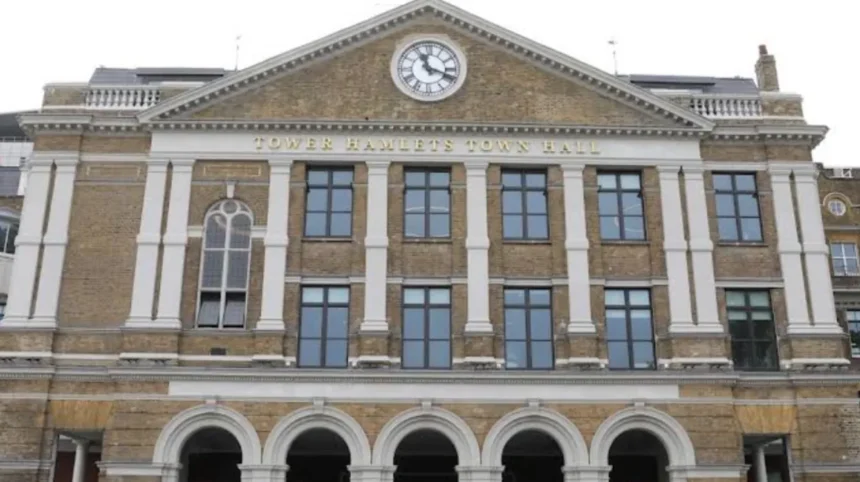
Tower Hamlets (East London Times) October 1, 2026 – Tower Hamlets Council is facing critical scrutiny over its long-term financial management after professional services firm EY issued formal warnings regarding the local authority’s deteriorating financial stance. In an independent assessment of the council’s budgetary health, auditors highlighted that the borough is on course to overspend by more than £19 million for the second consecutive year. According to official reporting from local government financial assessments, the projected overspend of £19.2 million for the current financial year ending March 2027 closely mirrors the £19.4 million overspend recorded during the preceding financial cycle. External auditors emphasized that the scale and timing of these budget variances raise fundamental questions regarding the robustness of the authority’s overall financial planning and its ability to absorb ongoing demand pressures.
What Has Led to the £19 Million Budget Overspend at Tower Hamlets Council?
The financial strain currently experienced by Tower Hamlets Council is predominantly driven by statutory service mandates that local authorities are legally required to fulfill. The primary drivers behind the £19.2 million deficit include rapidly escalating costs and increased demand within children’s social care, adult social care, and temporary accommodation for homeless residents.
While local authorities across the United Kingdom are encountering similar national macroeconomic pressures, auditors observed that the specific magnitude of the variance emerging so early in the financial year points to structural challenges within the council’s internal budgeting mechanisms.
An EY report stated that the current overspend figure:
“is not consistent with effective financial planning and budgetary control arrangements and raises significant concerns regarding the robustness of the council’s budget-setting assumptions.”
The audit report further detailed that:
“The extent of the variance emerging within the first few months of the financial year suggests that the council continues to face challenges in forecasting expenditure and incorporating known financial risks into its budget-setting process.”
Although the council recognized the impact of wider national demand pressures on statutory services, the early timing of the forecasted shortfall indicates that known financial liabilities were insufficiently integrated into the initial budget framework.
How Does the Forecasted Deficit Threaten the Council’s General Reserves?
The continuous operational overspending presents a direct threat to the resilience of Tower Hamlets Council’s financial buffers. Council reserves serve as crucial contingency funds designed to absorb unexpected expenditure, economic shocks, or one-off liabilities without disrupting core public services.
According to figures detailed by EY, the local authority had established a strategic plan to rebuild its risk reserve reserves incrementally—aiming to allocate £20 million in the current year, £20 million in the subsequent year, and £10 million in the third year. However, audit findings reveal that this recovery plan failed to account for the incoming £19.2 million forecast deficit.
At the close of March, Tower Hamlets Council maintained approximately £40.5 million in ‘unrestricted’ reserves—funds that carry no legal restrictions regarding their application. This reflects a substantial decline from the £55.5 million held in unrestricted reserves during the preceding year. When taking into account all restricted and earmarked balances, total council reserves depleted by more than £50 million over the course of a single year, significantly curtailing the local authority’s financial flexibility moving forward.
Background of the Particular Development
Local authorities across England have been operating under stringent fiscal conditions following over a decade of central government funding changes, shifts in business rate retention models, and sustained high inflation. Statutory services—particularly adult social care, child protection, and homeless relief—have placed unprecedented financial pressure on urban councils. Under UK legislation, local authorities are mandated to provide housing support to homeless families and maintain critical care services for vulnerable adults and children, regardless of budgetary constraints.
For Tower Hamlets Council, managing temporary homelessness accommodation has become increasingly complex due to London’s broader housing market pressures, rising private sector rents, and a shortage of affordable long-term social housing. When demand for emergency housing exceeds available supply, local authorities are forced to secure temporary placements at significantly higher spot-market rates. Concurrently, the rising cost of residential care placements and specialized social work staffing has pushed social care expenditure well beyond initial estimates.
The combination of multi-million-pound operational deficits over consecutive years and a rapid drawdown of reserves has drawn increased oversight from external auditors, who evaluate whether local public bodies maintain secure arrangements to secure economy, efficiency, and effectiveness in their use of public resources.
Prediction: How Will This Financial Position Affect Local Residents and Taxpayers?
The escalating financial pressure and depletion of strategic reserves at Tower Hamlets Council are likely to have tangible consequences for local residents, service users, and taxpayers across the borough.
- Potential Service Rationalization: To mitigate the projected £19.2 million shortfall and prevent further depletion of unrestricted reserves, council leadership may be required to implement stringent cost-containment measures. Non-statutory services—such as community facilities, youth services, parks maintenance, and local cultural initiatives—could face budget reductions or service reconfigurations as resources are prioritized toward legal obligations like social care and housing.
- Impact on Local Tax Levels: To restore fiscal stability and replenish drained reserves, the council may consider maximizing local revenue generation. This could result in proposals to increase Council Tax up to the maximum allowable limit without a local referendum, alongside potential adjustments or increases to local fees and charges for council services.
- Heightened Financial Oversight: Continued structural deficits carry the risk of formal regulatory intervention or stricter financial oversight mechanisms. If budget-setting assumptions are not revised to align strictly with operational expenditure, the local authority risks deeper fiscal instability, potentially limiting its capacity to fund future infrastructure, urban regeneration, or discretionary community support programs.