Key Points
- Tower Hamlets has launched the “Dispose Safe” campaign to tackle fires caused by discarded lithium-ion batteries.
- Fires caused by lithium-ion battery disposal have increased recently, with 23 fires reported in Tower Hamlets, nine involving waste collection trucks.
- The campaign features a short animated video educating the public on safe battery disposal to prevent fires.
- Lithium-ion batteries are found in common devices such as vapes, smartphones, e-bikes, and power tools.
- The campaign urges national action, including a national recycling strategy, clearer labelling, and better disposal infrastructure.
- Mayor Lutfur Rahman called for collective action from residents, councils, and the Government on this issue.
- Councillor Shafi Ahmed emphasised the danger posed even by small batteries like those in vapes.
- The campaign builds on previous initiatives like the #ChargeSafe campaign with the London Fire Brigade, which targeted safe charging of e-bikes and e-scooters.
- Richard Field, Deputy Assistant Commissioner of London Fire Brigade, highlighted the resource-intensive nature and environmental impact of these fires.
- Residents are advised to use free battery recycling bins in supermarkets and electrical retailers, and larger items at local recycling centres.
- Swollen or damaged batteries should be stored safely outside in plastic containers until recycled.
What is the ‘Dispose Safe’ campaign about?
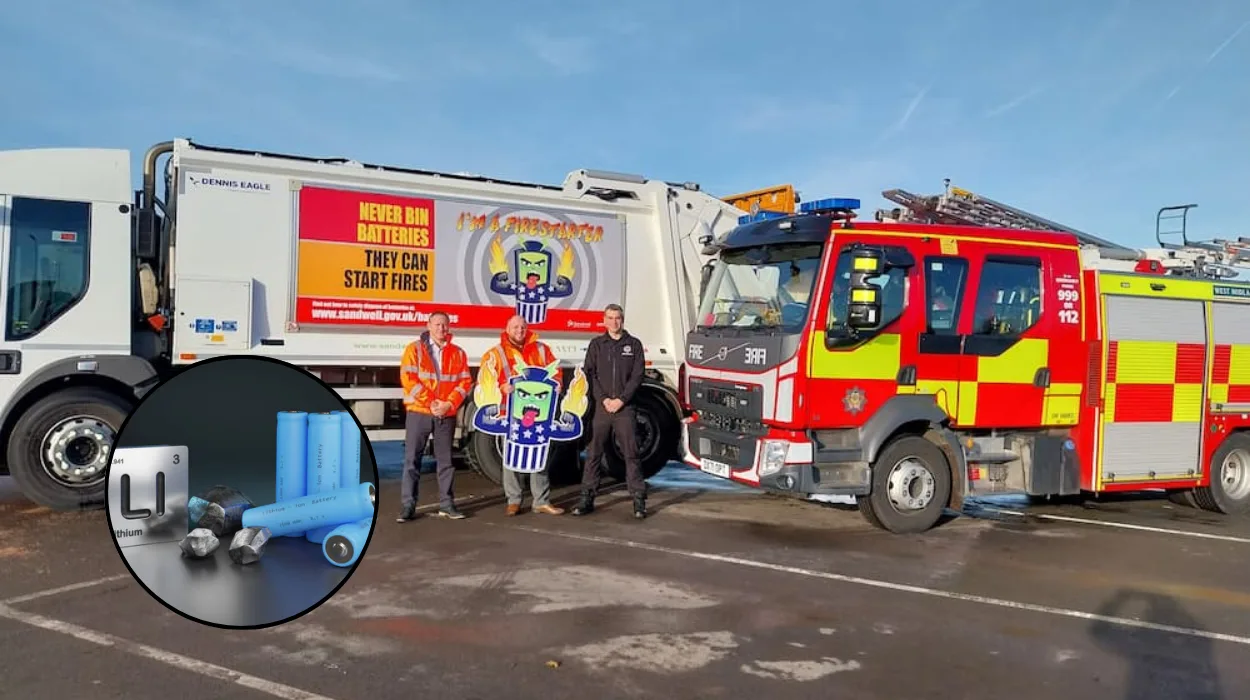
Tower Hamlets has launched a new initiative called the “Dispose Safe” campaign aimed at addressing a sharp rise in fires caused by discarded lithium-ion batteries. As reported by East London Lines, the borough experienced 23 lithium-ion battery-related fires in recent years, with nine fires occurring inside waste collection vehicles. These dangerous incidents not only put waste crews at risk but also cause significant damage to expensive vehicles and disrupt waste collections across the borough. The primary component of the campaign is a short, animated video that educates residents on how lithium-ion batteries can ignite when crushed inside waste trucks and how to dispose of them safely. The campaign targets raising awareness and promoting safer disposal practices among the public and local authorities nationwide.
Why are lithium-ion batteries causing fires in waste trucks?
Lithium-ion batteries, commonly used in everyday devices like smartphones, vapes, earbuds, cameras, laptops, and cordless power tools, have become a growing fire risk in waste management settings. Larger battery-operated items such as e-scooters, e-bikes, vacuum robots, and lawnmowers also contribute to this hazard. When these batteries are thrown into household bins or recycling sacks and subsequently crushed inside waste trucks or recycling facilities, they can ignite due to short circuits or damage caused by pressure. This risk has led to an increase in fires that endanger waste crews and require costly emergency responses, as emphasised by the National Fire Chiefs Council, which noted a 71% rise in lithium-ion battery-related fires across the UK in 2024, with over 1,200 such fires involving bin lorries and waste sites.
Who is involved in the campaign and what are their views?
Lutfur Rahman, Mayor of Tower Hamlets, stressed the need for a national response to this national problem. Rahman stated,
“Every time a battery is thrown into the bin, it risks exploding when crushed inside a waste truck…We are calling on residents, councils and the Government to take this issue seriously. Through our Dispose Safe campaign, we are showing that prevention is simple: do not bin it, recycle it safely.”
This highlights the campaign’s dual approach of public awareness and urging government action on recycling infrastructure and policy.
Councillor Shafi Ahmed, Cabinet Member for Environment and Climate Emergency, highlighted the dangers even small batteries pose. He said,
“These fires are frightening, unpredictable and completely avoidable…We know campaigns like Charge Safe make a real difference. Dispose Safe continues that work with a practical, visual tool that any council can use to educate residents about the risks and prevent dangerous fires.”
This points to the campaign building on previous efforts to educate about battery safety, particularly with the successful #ChargeSafe collaboration with the London Fire Brigade regarding safe charging of e-bikes and e-scooters.
Richard Field, Deputy Assistant Commissioner for Prevention and Protection at the London Fire Brigade, noted the resource burden these fires create for firefighters and their broader impact. He commented,
“These fires can be very time consuming for our firefighters and often require a high level of resources to extinguish. We’ve also seen the detrimental environmental and societal impact these fires can have on local communities.”
This statement connects the fire safety concern with public safety and environmental impact.
What safety advice is being given for lithium-ion battery disposal?
The Dispose Safe campaign emphasises that batteries, vapes, and electrical items should never be disposed of in regular household bins or recycling sacks. Instead, residents are encouraged to recycle batteries and small electrical devices using free battery recycling bins found in most supermarkets and electrical retailers. Larger items can be safely disposed of at local recycling centres, such as the Tower Hamlets Reuse and Recycling Centre. Additionally, batteries showing signs of swelling, leakage, or overheating should be stored outside in a plastic container until they can be recycled safely. These practical disposal instructions aim to prevent dangerous incidents during waste collection and processing.
What further actions are being called for nationally?
The Tower Hamlets campaign is calling for a national recycling strategy to better manage lithium-ion battery disposal, clearer labelling and disposal advice for batteries in consumer products, and improved infrastructure for collecting batteries safely. This call for comprehensive national coordination reflects the increasing scale of the problem across the UK. Throwing batteries in regular waste threatens fire safety and damages vital local government operations, a challenge the council urges the government and other councils to address collaboratively.