Key Points
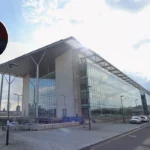
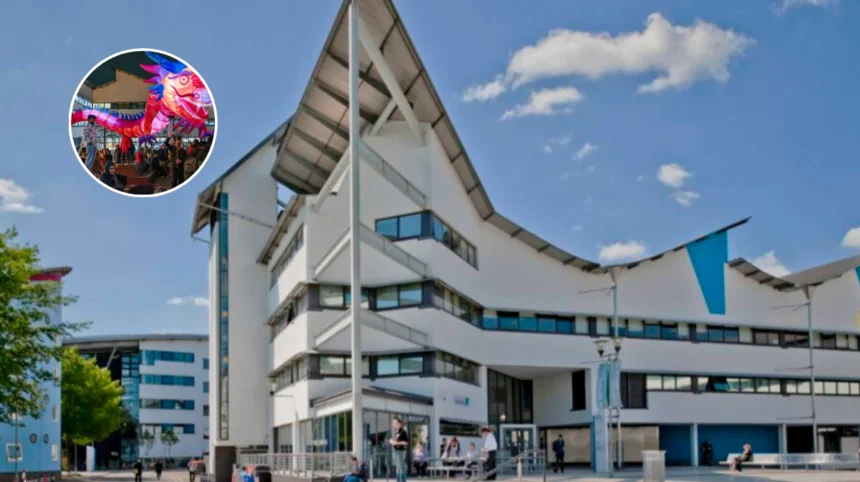
- The University of East London (UEL) hosted a free public festival named UEL After Dark at its Docklands campus in the Royal Docks.
- The event took place on Thursday, transforming the area with displays of fire, light, aerial performances, and community energy.
- Inspired by the four elements—fire, water, air, and earth—the festival featured aerial theatre, acrobatics, fire displays, and illuminated roaming installations, including a glowing dragon and octopus.
- The waterfront setting in the Royal Docks provided a striking backdrop, drawing crowds from across East London and beyond.
- Hilary Lissenden, executive director of sport strategy and growth at UEL, emphasised the event’s role in fostering belonging, participation, confidence, leadership, and future careers through UEL Sport.
- The festival highlighted UEL’s commitment to community engagement and creativity.
East London (East London Times) March 3, 2026 – The Royal Docks burst into life with a spectacular free public festival organised by the University of East London (UEL), as crowds gathered for an evening of fire, light, aerial performances, and vibrant community spirit. Known as UEL After Dark, the event lit up the Docklands campus on Thursday, captivating attendees with creativity inspired by the four elements—fire, water, air, and earth. Features included aerial theatre, daring acrobatics, mesmerising fire displays, and glowing roaming installations such as a luminous dragon and octopus, all set against the iconic waterfront skyline.
- Key Points
- What Was UEL After Dark and Why Was It Held?
- Who Organised the Festival and What Performances Featured?
- What Did Hilary Lissenden Say About the Event’s Impact?
- How Did the Royal Docks Setting Enhance the Festival?
- Why Focus on the Four Elements in the Performances?
- What Community Engagement Did the Festival Promote?
- How Does UEL After Dark Tie into UEL Sport’s Goals?
- What Makes UEL’s Docklands Campus Ideal for Such Events?
- Could UEL After Dark Become an Annual Tradition?
- How Did Attendees React to the Festival?
This inaugural festival underscored UEL’s dedication to building inclusive spaces, blending athleticism with artistic expression to engage local communities.
What Was UEL After Dark and Why Was It Held?
UEL After Dark emerged as a beacon of communal celebration, transforming the university’s Docklands campus into a hub of nocturnal wonder. As reported across local outlets, the event was meticulously curated to reflect the elemental forces, with each performance element drawing from fire’s intensity, water’s fluidity, air’s grace, and earth’s grounded power. The Royal Docks’ industrial heritage amplified the spectacle, where the Thames-side location offered a dramatic canvas for projections and illuminations.
Attendees from East London boroughs like Newham, Tower Hamlets, and beyond flocked to the free-entry affair, fostering a sense of shared energy. The festival not only entertained but also aligned with UEL’s broader mission to integrate sport, arts, and education into everyday community life.
Who Organised the Festival and What Performances Featured?
The University of East London spearheaded the organisation, with its Docklands campus serving as the epicentre. As detailed in coverage by the East London Times, the lineup boasted aerial theatre that soared above the waterfront, acrobatic displays defying gravity, and fire performances that danced with controlled fury. Illuminated roaming installations—a glowing dragon weaving through the crowds and an octopus pulsing with light—added whimsy and interactivity.
These elements were not mere spectacles; they symbolised UEL’s holistic approach to student and public engagement. The event’s Thursday timing maximised accessibility, allowing families, students, and professionals to partake after work hours.
What Did Hilary Lissenden Say About the Event’s Impact?
Hilary Lissenden, executive director of sport strategy and growth at UEL, provided key insights into the festival’s deeper purpose. As reported by the East London Times, she stated:
“At UEL, we are committed to creating spaces where everyone feels they belong – whether that’s in our facilities or at a community event like UEL After Dark.”
She further elaborated on the symbiotic link between performance and personal development:
“The athleticism and movement we saw across the festival reflect what we champion through UEL Sport: participation building confidence, confidence developing into leadership, and leadership opening doors to future careers.”
Lissenden’s comments, echoed in initial reports, positioned UEL After Dark as more than entertainment—a catalyst for empowerment.
How Did the Royal Docks Setting Enhance the Festival?
The Royal Docks’ waterfront proved pivotal, its vast expanse and historical silhouette elevating the elemental themes. Fire displays flickered against the dark waters, evoking water’s reflective quality, while aerial acts harnessed air currents from the Thames. Earth was embodied in grounded installations that invited tactile interaction, rooting the ethereal in the tangible.
Local media highlighted how this location bridged UEL’s modern campus with East London’s maritime past, drawing diverse crowds who marvelled at the synergy. The setting’s openness ensured safety and flow, with no reported incidents amid the enthusiastic turnout.
Why Focus on the Four Elements in the Performances?
The thematic choice of fire, water, air, and earth infused UEL After Dark with narrative depth, making it accessible yet profound. Fire displays captivated with their primal energy, acrobatics embodied air’s freedom, illuminated sea creatures nodded to water’s mystery, and robust installations grounded the earth element. This structure, as covered comprehensively, mirrored natural cycles while showcasing human ingenuity.
Such inspiration aligned with UEL’s interdisciplinary ethos, blending performing arts with environmental awareness—a subtle nod to sustainability amid urban regeneration efforts in the Docklands.
What Community Engagement Did the Festival Promote?
Community spirit pulsed through every facet, with free access dismantling barriers to cultural participation. Crowds mingled across the campus, forging connections that extended beyond the night. UEL’s initiative echoed its role as a civic anchor in East London, where events like this bolster social cohesion in diverse neighbourhoods.
Reports noted interactions between students, locals, and visitors, amplifying the “energy” that defined the evening. This grassroots vibe reinforced UEL’s pledge to spaces of belonging, as articulated by its leadership.
How Does UEL After Dark Tie into UEL Sport’s Goals?
Underpinning the spectacle was UEL Sport’s philosophy, which Lissenden championed. Participation in aerial and acrobatic displays mirrored pathways from novice involvement to leadership roles. The festival exemplified how physical expression builds resilience, opening career avenues in sports, arts, and beyond.
As per East London Times reporting, this integration positions UEL as a leader in holistic development, where festivals serve as living classrooms for confidence-building.
What Makes UEL’s Docklands Campus Ideal for Such Events?
UEL’s Docklands campus, nestled in the Royal Docks, offers unparalleled versatility—spacious lawns for installations, elevated stages for aerials, and waterfront vistas for immersive effects. Its proximity to transport links like the Elizabeth Line and DLR ensured broad attendance, while modern facilities supported logistics seamlessly.
This venue choice maximises UEL’s community outreach, turning academic grounds into public playgrounds.
Could UEL After Dark Become an Annual Tradition?
Initial reactions suggest strong potential for recurrence, given the overwhelming positivity. Lissenden’s vision implies scalability, perhaps expanding elements or partnering with local councils. East London’s festival scene—from Notting Hill Carnival to Thames festivals—provides fertile ground, and UEL’s event slots neatly into this calendar.
No official announcements have followed, but the blueprint is set for annual editions fostering ongoing community ties.
How Did Attendees React to the Festival?
Crowds expressed delight across social media and on-site, praising the fusion of spectacle and accessibility. Families lauded the all-ages appeal, while arts enthusiasts appreciated the professional calibre. The “community energy” was palpable, with roaming installations sparking spontaneous gatherings and photos.
No dissenting voices emerged in reports, underscoring the event’s universal draw.