Key Points:
- A new 24/7 community mental health support centre is set to open in Waltham Forest in 2028 as part of a major NHS infrastructure expansion.
- The North East London Foundation Trust (NELFT) unveiled plans to launch three dedicated ‘community mental health hubs’ across Waltham Forest, Barking & Dagenham, and Redbridge.
- The new facilities are designed to deliver timely, localized mental health care while functioning as a safe alternative to overcrowded hospital emergency departments.
- NELFT Chief Operating Officer Brid Johnson confirmed that recent community service openings over the past 18 months have already yielded positive outcomes for patient recovery and care experiences.
- The upcoming hubs aim to reduce unnecessary hospital admissions by providing localized, 24-hour crisis intervention and ongoing support.
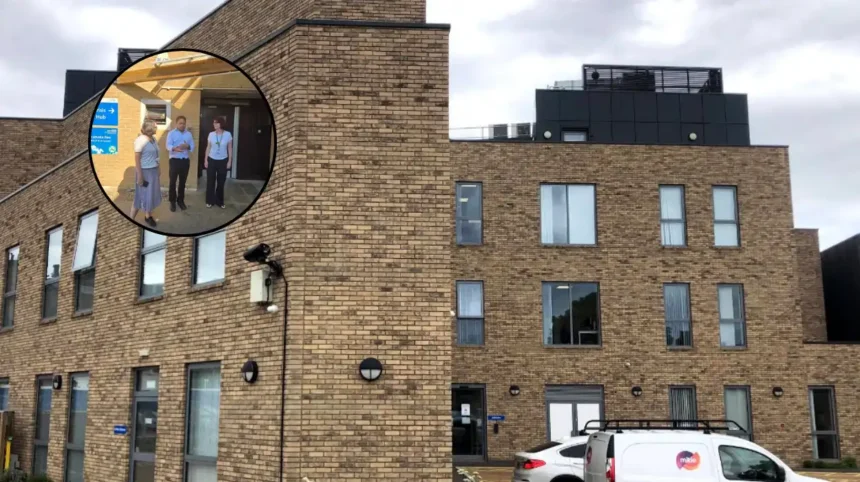
Waltham Forest (East London Times) August 19, 2026 — A brand-new 24/7 community mental health support centre will officially open its doors to residents in Waltham Forest in 2028, the NHS has confirmed. The facility forms part of an expansive regional strategy unveiled by the North East London Foundation Trust (NELFT), which encompasses the rollout of three state-of-the-art ‘community mental health hubs’ positioned strategically in Waltham Forest, Barking & Dagenham, and Redbridge.
Designed to fundamentally alter how urgent and ongoing psychiatric care is delivered in East London, the proposed facilities aim to grant residents swift access to specialist support directly within their local neighborhoods. According to statements released by the trust, the multi-million-pound investment is intended to act as a crucial safety net and a direct alternative to busy accident and emergency (A&E) departments, which have historically faced significant pressure from individuals presenting in acute mental health distress.
As reported by Local Democracy Reporter Sebastian Mann, the decision to construct these specialized units comes amid growing demand for local, round-the-clock psychiatric intervention. The trust’s operational leadership highlighted that decentralizing care out of acute hospital settings and into purpose-built neighborhood hubs will allow clinical teams to treat patients before their condition escalates into a severe crisis requiring inpatient admission.
Detailing the underlying strategy driving the overhaul, Brid Johnson, the Chief Operating Officer at NELFT, emphasized the direct benefits observed from recent pilot schemes and smaller-scale community initiatives. As recorded by Sebastian Mann, Johnson stated:
“Our new, 24/7 community mental health hubs will provide people with a real alternative to hospital admission with timely and effective support closer to home.”
Johnson further noted that the trust has been actively laying the groundwork for this expanded care model over the last year and a half. As reported by Sebastian Mann, Johnson added:
“Over the past 18 months, we have opened several community mental health services and have already seen the positive difference they are making to people’s recovery, wellbeing and experience of care. These new hubs will build on that success, helping more people access the right support at the right time in their local community.”
The expansion into Waltham Forest, Barking & Dagenham, and Redbridge marks a significant shift toward integrated, preventative healthcare across North East London. By offering round-the-clock open-door access, multidisciplinary teams consisting of psychiatric nurses, clinical psychologists, occupational therapists, and peer support workers will be positioned to offer immediate stabilization, therapeutic care, and structured recovery pathways tailored to the specific demographics of each borough.
What is the background behind this new mental health development?
The announcement of the 2028 24/7 mental health hubs represents a continuation of the NHS Long Term Plan and the Community Mental Health Framework, which advocate for radical modernization of adult community mental health services across England. Historically, patients experiencing severe acute distress or psychiatric crises in North East London had limited options outside of standard office hours, frequently leaving them with no choice but to attend hospital emergency rooms or call blue-light services.
Over recent years, emergency departments across East London borough hospitals have experienced unprecedented attendance figures, with mental health presentations forming a substantial portion of prolonged wait times. In response, NELFT has progressively tested localized support structures—including out-of-hours crisis cafes, crisis assessment hubs, and joint venture schemes such as the Waltham Forest Beacon partnership with social care charities—to evaluate the efficacy of non-clinical, community-based crisis interventions. The positive performance metrics gathered from these preliminary care models over the past 18 months provided the empirical foundation for securing the funding and approvals necessary to establish permanent, 24/7 dedicated hubs across the three East London boroughs by 2028.
What is the prediction for how this development will affect local residents and healthcare services?
The introduction of 24-hour community mental health hubs in 2028 is expected to significantly transform the healthcare landscape for residents, service users, and emergency personnel across Waltham Forest, Redbridge, and Barking & Dagenham.
For local patients and families, the presence of a localized, 24/7 walk-in or rapid-referral facility eliminates the overwhelming experience of waiting in loud, chaotic A&E environments during a psychiatric crisis. Residents will gain access to specialized care immediately, drastically reducing the time between the onset of acute distress and effective clinical or therapeutic intervention. The proximity of these hubs means vulnerable individuals can maintain their support networks at home rather than facing disruptive, long-term inpatient admissions in distant facilities.
For the broader NHS infrastructure in North East London, the development is predicted to relieve acute operational pressure on regional accident and emergency departments and blue-light services, including the London Ambulance Service and the Metropolitan Police. By redirecting mental health presentations away from hospital emergency rooms toward purpose-built community hubs, acute care hospitals can redirect critical staff and bed capacity toward physical medical emergencies, thereby improving overall system efficiency and reducing waiting times across all departments.