Key Points
- Waltham Forest Council has applied for listed building consent to repair and refurbish Leyton Cricket Pavilion’s West Pavilion at 2 Crawley Road, Leyton E10 6RJ.
- The works aim to address structural problems caused by years of wear and tear, including fixing the roof which has only been patched up over time.
- Plans include removing existing tiles, battens, and underlay, with repairs or replacement of the timber structure where necessary, and fitting new heritage clay tiles.
- Gutters will be fully replaced to prevent further water damage.
- The façade features broken fascia timbers and missing lime render areas, which will be repaired, patched, and repainted to match the existing colour scheme.
- Non-original signs, vents, and lights will be removed, while small extract fans will be fitted at the rear for a new toilet and kitchenette.
- The main door will be refurbished and painted green.
- Existing window frames will be refurbished with vacuum glazing replacing intrusive internal layers; windows painted shut will be made operable again with heritage-appropriate locks.
- External repairs include limited work on hard surfaces, concrete steps, and yellow stock brick walls west of the veranda.
- Verandas will be repaired for future spectator use, with the timber balustrade replaced.
- Internally, modern services and finishes will be stripped out; floorboards checked, joists repaired or replaced, re-levelled, insulated, and refinished to the original layout.
- Walls and ceilings will be repaired and refinished to match existing.
- A new toilet and kitchenette will be added at the rear within the existing footprint, with finishes, furniture, and fittings chosen to complement the building’s heritage character.
- MEP systems (mechanical, electrical, plumbing) added over the years will be upgraded, rationalised, and obsolete components removed.
- Work is scheduled to start in May 2026 and finish by July 2026.
- The application, submitted by Mrs. Olivia Smith for the London Borough of Waltham Forest Council with Marks Barfield Architects as agent, is under consultation and publicity.
- The decision will be delegated to officer Teodora Dimitrova; no appeals, extensions, or committee phase at this stage.
- This is not a change of use but maintenance to keep the building safe and usable for public access in 2026, preventing further disrepair.
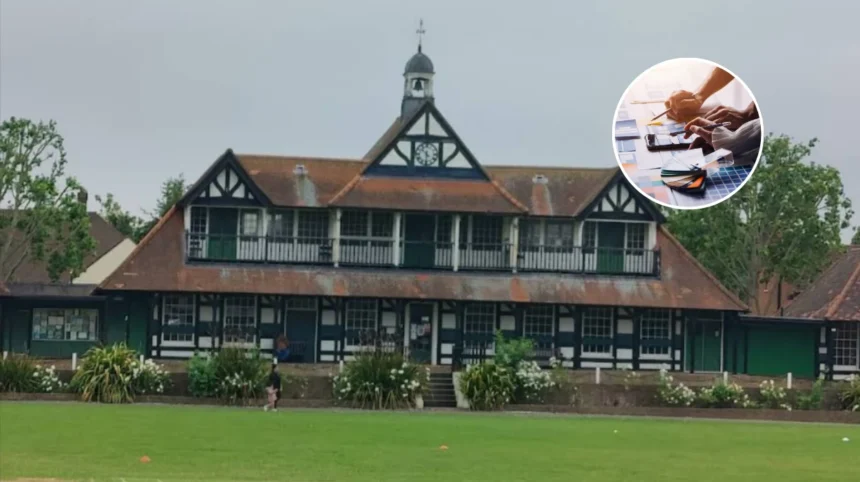
Leyton (East London Times) February 16, 2026 – Waltham Forest Council has submitted an application for listed building consent to comprehensively repair and refurbish the Grade II-listed West Pavilion of Leyton Cricket Pavilion at 2 Crawley Road, Leyton E10 6RJ. The proposed works target longstanding structural issues from years of wear and tear, aiming to restore the pavilion’s functionality while preserving its heritage features. If approved, construction is set to commence in May 2026 and conclude by July 2026.
- Key Points
- What Repairs Are Planned for the Pavilion’s Roof and Structure?
- Why Is the Façade and External Fabric Being Addressed?
- How Will the Windows and Verandas Be Restored for Heritage Standards?
- What Internal Upgrades Are Proposed?
- Which Modern Systems Will Be Modernised?
- Who Submitted the Application and What Is the Approval Process?
- When Will Work Begin and What Is the Timeline?
- Why Does This Matter for Leyton’s Heritage?
- How Does This Fit Waltham Forest Council’s Broader Commitments?
- What Happens If the Application Is Approved?
- Are There Any Controversies or Objections Anticipated?
- What Role Does Marks Barfield Architects Play?
- How Can the Public Engage with the Consultation?
- What Is the Pavilion’s Historical Significance?
What Repairs Are Planned for the Pavilion’s Roof and Structure?
The roof, which has received only temporary patches over the years, forms a critical focus of the refurbishment. As detailed in the planning application documents, the council plans to remove existing tiles, battens, and underlay, conducting repairs or replacements to the timber structure where necessary before installing new heritage clay tiles for long-term protection.
Gutters will also be entirely replaced to mitigate water ingress risks. These measures, outlined in the submission to Waltham Forest Council’s planning portal, seek to address deterioration that has compromised the building’s integrity.
Why Is the Façade and External Fabric Being Addressed?
The pavilion’s façade exhibits broken fascia timbers and patches of missing lime render, necessitating targeted interventions. Damaged sections will be repaired, patched, and repainted to align precisely with the current colour scheme, ensuring visual and structural harmony.
Non-original additions such as signs, vents, and lights will be excised, replaced at the rear by small extract fans to support the new toilet and kitchenette. The main door undergoes refurbishment and a fresh green paint application, while external hard surfaces, concrete steps, and yellow stock brick walls west of the veranda receive limited repairs.
How Will the Windows and Verandas Be Restored for Heritage Standards?
Existing window frames will be meticulously refurbished, incorporating vacuum glazing in place of intrusive internal layers previously added. Windows currently painted shut will be restored to full operability, fitted with locks sympathetic to the heritage context.
Of particular note are the external verandas, earmarked for renewed spectator use. Repairs here include replacing the timber balustrade, a step vital to reviving the pavilion’s communal role. These enhancements respect the Grade II listing while enhancing public accessibility.
What Internal Upgrades Are Proposed?
Internally, the plans call for stripping out modern services and finishes accumulated over decades. Floorboards will be inspected, with joists repaired or replaced as required; surfaces then re-levelled, insulated, and refinished to replicate the original layout.
Walls and ceilings follow suit with repairs and matching refinishing. A modest new toilet and kitchenette slots into the rear within the existing footprint, featuring finishes, furniture, and fittings curated to echo the building’s intrinsic character.
Which Modern Systems Will Be Modernised?
The pavilion’s MEP systems—mechanical, electrical, and plumbing installations accreted piecemeal over time—face a thorough upgrade and rationalisation. All obsolete components will be excised, streamlining operations for safety and efficiency.
This intervention ensures the heritage asset aligns with contemporary standards without compromising its historical essence. The application emphasises that these changes sustain usability rather than alter the building’s purpose.
Who Submitted the Application and What Is the Approval Process?
Mrs. Olivia Smith lodged the application on behalf of the London Borough of Waltham Forest Council, engaging Marks Barfield Architects as the agent. The process falls under delegated powers, with Teodora Dimitrova designated as the handling officer.
At present, the submission remains in the consultation and publicity phase, per details on the council’s planning portal. No appeals, extensions, or progression to committee have been noted, positioning it for a streamlined determination.
When Will Work Begin and What Is the Timeline?
Construction, if greenlit, commences in May 2026, targeting completion by July 2026. This tight schedule underscores the urgency of halting further decay, safeguarding the pavilion for public enjoyment that summer.
The application explicitly frames the project as preservative, averting disrepair and maintaining safe access. It posits no shift in use, reinforcing the pavilion’s role as a community cricket facility.
Why Does This Matter for Leyton’s Heritage?
The West Pavilion, as a Grade II-listed structure, embodies Leyton’s sporting and architectural legacy. Years of patchwork maintenance have eroded its condition, but these proposals offer a lifeline, revitalising intrinsic features for broader appreciation.
By prioritising authenticity—heritage tiles, sympathetic glazing, period-appropriate locks—the council balances preservation with practicality. Spectator verandas reborn signal a nod to cricket’s communal spirit, potentially drawing crowds post-refurbishment.
How Does This Fit Waltham Forest Council’s Broader Commitments?
Waltham Forest Council’s initiative reflects ongoing stewardship of local assets amid fiscal pressures. The application, as reported across planning channels, prioritises minimal intervention, confining new elements like the kitchenette to the existing envelope.
This approach mitigates heritage impacts while addressing essentials: waterproofing, ventilation, accessibility. It positions the pavilion as a viable venue in 2026, countering risks of closure or worse.
What Happens If the Application Is Approved?
Approval would trigger immediate preparatory works, aligning with the May start. The council anticipates no disruptions to core cricket operations, given the focused scope on the West Pavilion.
Post-July 2026, the revitalised space promises enhanced facilities: functional loos, a kitchenette for matchdays, operable windows for ventilation. Heritage officers’ input during consultation will fine-tune details, ensuring compliance.
Are There Any Controversies or Objections Anticipated?
The application documents disclose no prior objections, appeals, or extensions. Publicity phase invites scrutiny, yet the non-intrusive nature—repair over redesign—may elicit support from heritage groups and locals.
As a delegated matter under Teodora Dimitrova, swift resolution seems likely barring unforeseen issues. Marks Barfield Architects’ involvement lends expertise, having navigated similar listings.
What Role Does Marks Barfield Architects Play?
Acting as agent, Marks Barfield Architects crafted the technical submission, detailing specifications from clay tiles to MEP rationalisation. Their portfolio in heritage-sensitive projects bolsters the bid’s credibility.
Mrs. Olivia Smith’s filing ties council priorities to execution, with every element—from green door paint to balustrade timber—chosen for fidelity. This collaboration exemplifies public-private synergy in conservation.
How Can the Public Engage with the Consultation?
Interested parties may access full plans via Waltham Forest Council’s portal, submitting views during the publicity window. The process, standard for listed consents, ensures transparency.
No committee phase looms, streamlining to officer decision. Stakeholders—cricket clubs, historians, residents—hold sway now, shaping outcomes before May shovels turn.
What Is the Pavilion’s Historical Significance?
Leyton Cricket Pavilion’s West Pavilion, Grade II-listed, stands as a rare survivor of local sporting architecture. Its verandas once hosted spectators; now, repairs revive that tradition amid urban pressures.
The application guards against “further disrepair,” framing intervention as duty. Post-works, it pledges a “new lease of life,” accessible and cherished anew.