Key points
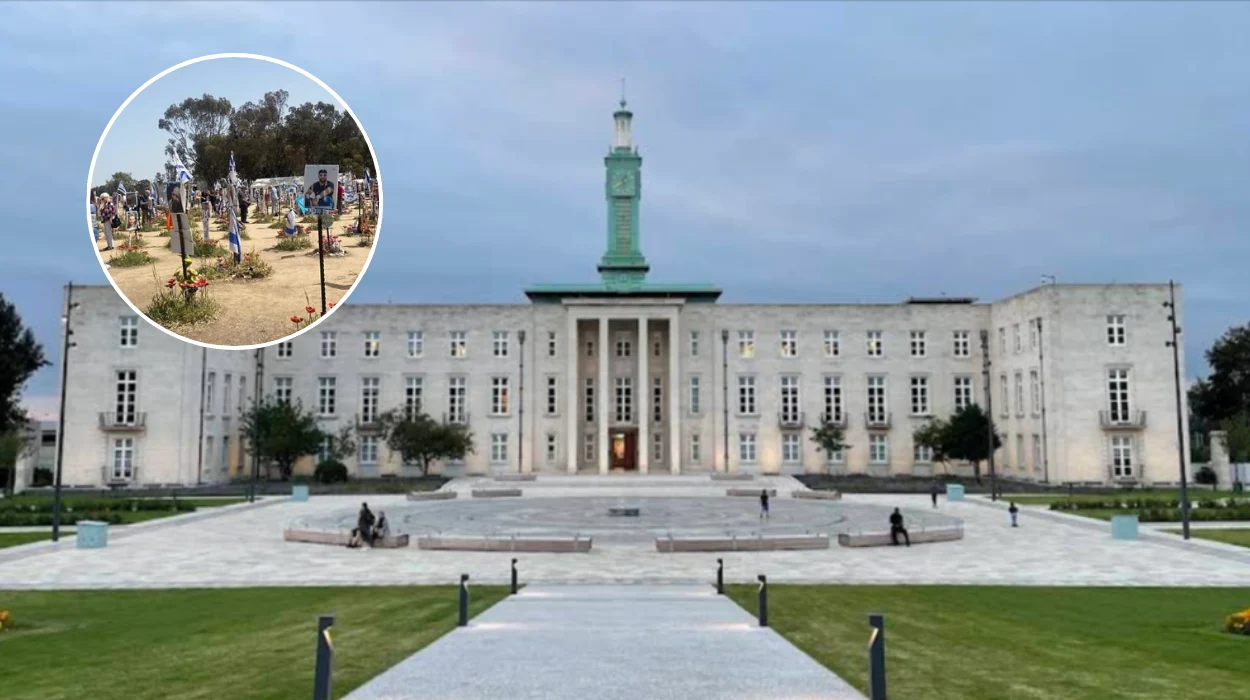
- Waltham Forest Palestine Solidarity Campaign (PSC) planned to host an event titled “What really happened on October 7” at the William Morris Community Centre in Walthamstow, a council-owned venue.
- The event was scheduled for Friday 9 January and advertised as a discussion of “highly controversial narratives” around the 7 October 2023 attacks, which it claimed were used to justify “Israel’s genocidal actions in Gaza and atrocities across historic Palestine.”
- The advertised speaker was Asa Winstanley, a long‑time writer for the pro‑Palestinian website Electronic Intifada, known for highly critical commentary on Israel.
- As reported in the source text, Winstanley has promoted a narrative that downplays Hamas’s role on 7 October and suggests Israel killed “many, if not most” of its own citizens that day via the so‑called “Hannibal Directive.”
- The “Hannibal Directive” is a controversial Israeli military procedure involving heavy fire to prevent soldiers being taken captive, sometimes at risk to Israeli hostages or civilians.
- The claim that Israel killed hundreds of its own civilians via this directive on 7 October is described in the provided material as relying on “mis‑contextualised conflict footage” and “misrepresented findings” from Israeli media investigations.
- By contrast, according to the same material, Winstanley has cast doubt on body‑camera footage taken from Hamas fighters, claiming it was released by “Israeli occupation authorities” and is “highly likely” to have been selectively edited, without presenting specific evidence for this assertion.
- After concerns were raised with Waltham Forest Council as leaseholder, the council contacted the William Morris Community Centre. The venue then decided to cancel the event.
- London Jewish Forum co‑chair Amanda Bowman welcomed the cancellation as a due‑diligence issue, stressing that the matter was about venue responsibility and community safety rather than shutting down all debate.
- Waltham Forest Council leader Cllr Grace Williams said she was “pleased” the community centre confirmed it had cancelled the booking given the concerns expressed.
- The episode highlights ongoing tensions around how 7 October is discussed in public forums, especially where events are perceived as promoting conspiracy theories that may affect the safety and confidence of local Jewish residents.
Waltham Forest council-linked venue cancels ‘What really happened on October 7’ event featuring controversial blogger
- Key points
- What was the 7 October event planned in Walthamstow?
- Who is Asa Winstanley and why is he controversial?
- What is the Hannibal Directive and how has it been invoked?
- How has Asa Winstanley portrayed 7 October footage?
- How and why was the Waltham Forest event cancelled?
- What did the London Jewish Forum say about the cancellation?
- How did Waltham Forest Council’s leader respond?
- What does this episode reveal about wider debates on 7 October and free speech?
- Which sources and attributions inform this report?
Waltham Forest Palestine Solidarity Campaign has had a planned public meeting on the 7 October Hamas attacks cancelled after intervention by the London Borough of Waltham Forest, following concerns over the event’s framing and its invited speaker, controversial blogger Asa Winstanley. The session, titled “What really happened on October 7”, was due to take place on Friday 9 January at the William Morris Community Centre in Walthamstow, a facility on council‑owned land, but the venue has now withdrawn the booking after discussions with the local authority.
What was the 7 October event planned in Walthamstow?
The local branch of Waltham Forest Palestine Solidarity Campaign had promoted the gathering as an opportunity to “learn about and discuss the highly controversial narratives surrounding the events of 7 October 2023”. According to the group’s publicity, these narratives were said to have been “used to justify Israel’s genocidal actions in Gaza and atrocities across historic Palestine.”
The William Morris Community Centre, where the event was set to be held, operates as a community hub on council‑owned property in Walthamstow. Waltham Forest Council is understood to be the leaseholder for the site, giving it an indirect role in scrutinising how the premises are used. Once the event advertisement circulated, concerns were reportedly raised with the council about the nature and tone of the meeting and its potential impact on local community relations.
Who is Asa Winstanley and why is he controversial?
The billed speaker, Asa Winstanley, is described in the supplied material as “a longtime writer for the Electronic Intifada blog,” a site known for staunchly pro‑Palestinian reporting and campaigning and for severe criticism of Israeli government policy. Over a number of years, Winstanley has developed a public profile as an outspoken critic of Zionism and Israel.
As reported in the source text, Winstanley’s narrative regarding the attacks of 7 October 2023 diverges sharply from mainstream accounts that hold Hamas responsible for the mass killings and kidnappings in southern Israel. The text states that Winstanley “downplays Hamas’s actions on 7 October and instead suggests that Israel killed ‘many, if not most’ of its own people on October 7, via use of the ‘Hannibal Directive’.” This position has provoked strong criticism from those who regard it as a conspiracy theory that shifts responsibility away from Hamas and risks fuelling antisemitic sentiment.
What is the Hannibal Directive and how has it been invoked?
The “Hannibal Directive” is a term used for a controversial Israeli military protocol that has existed in various forms since the late 20th century. In essence, it allows, or has historically allowed, the Israel Defense Forces (IDF) to use extensive and sometimes heavy firepower to prevent Israeli soldiers being taken captive by enemy forces, even at significant risk to those captives. The policy, which Israeli commanders have said was revised or unofficially abandoned over time, has long been the subject of internal debate and criticism within Israel.
According to the material provided, “in the chaos which followed the mass attack on Israel, a version of the Directive was enforced at some locations”. The text notes that
“there were individual cases where IDF troops opened fire on locations believed to hold Hamas terrorists despite the possibility that Israeli civilians were being held captive in the vicinity.”
These reports, based in part on Israeli media investigations, have fed discussion about whether some of the civilian deaths on 7 October may have occurred in such cross‑fire or heavy fire incidents.
However, the same text stresses that “the idea that Israel murdered hundreds of its own people via this Directive is based on mis‑contextualised conflict footage and misrepresented findings from Israeli media investigations.” That assessment, not attributed in the supplied text to a named journalist or outlet, directly challenges the far‑reaching claims advanced by Winstanley and others that “many, if not most” Israeli victims were killed by their own forces.
How has Asa Winstanley portrayed 7 October footage?
The provided material contrasts the criticism of Winstanley’s interpretation of the Hannibal Directive with his more sceptical stance towards video evidence of Hamas atrocities. It notes that
“bodycam videos taken from Hamas fighters, for example, are described by Winstanley as having been ‘released by the Israeli occupation authorities and highly likely to have been subjected to selective editing’ – with no evidence given for the latter claim.”
This approach, critics argue, reflects a pattern in which material implicating Hamas is cast as potentially fabricated or manipulated, while speculation about Israeli responsibility for civilian deaths is promoted with minimal evidentiary support. The text does not cite specific articles or dates for Winstanley’s statements, but presents them as having been made “via published articles” on or linked to the Electronic Intifada platform.
How and why was the Waltham Forest event cancelled?
Concerns about the Waltham Forest event were raised with the local authority once publicity mentioning “what really happened on October 7” and the description of “highly controversial narratives” began to circulate. As the leaseholder for the William Morris Community Centre, the London Borough of Waltham Forest had a degree of influence over the venue’s decision to proceed with or cancel bookings considered sensitive.
The supplied text states that
“The Waltham Forest PSC had been due to hold the event on Friday 9 January at the council-owned William Morris community centre in Walthamstow.”
It then notes that “The London Borough of Waltham Forest has moved to help cancel” the meeting. According to the account provided, after concerns were put to the council, officials contacted the venue and highlighted those worries. The venue ultimately “took its own decision to cancel”, ending the booking prior to the planned date.
The description of the council’s role emphasises that it did not itself directly ban the event, but prompted a review by the community centre, which chose to withdraw the booking. This distinction has been underlined by both council representatives and community leaders as an important point in discussions about free expression and the responsibilities of publicly linked venues.
What did the London Jewish Forum say about the cancellation?
As reported in the supplied text, Amanda Bowman, co‑chair of the London Jewish Forum, publicly welcomed the outcome while stressing the broader principles at stake. In a statement quoted in full, Bowman said:
“Freedom of speech matters, and this is not about shutting down debate at one particular event. Concerns were raised with the council because it is the leaseholder. The council then contacted the venue, and the venue took its own decision to cancel. This should be a reminder to venues to carry out proper due diligence on the events they host, especially at a time when the way an event is framed can have a real impact on how safe local Jewish residents feel.”
By foregrounding freedom of speech while supporting the venue’s choice, Bowman attempted to draw a line between legitimate political debate and events whose framing may, in her view, legitimise or platform conspiracy narratives around 7 October. The reference to “how safe local Jewish residents feel” reflects ongoing concerns in Jewish communities about rising antisemitism and the potential impact of highly charged events on community cohesion and perceptions of safety.
How did Waltham Forest Council’s leader respond?
In a formal response on behalf of the local authority, Cllr Grace Williams, Leader of Waltham Forest Council, welcomed the William Morris Community Centre’s decision. The statement attributed to her in the supplied material reads:
“The William Morris Community Centre is a much-valued local community centre. I am pleased that they have confirmed to me that they have taken the decision to cancel this event, given the concerns that have been expressed since it was advertised.”
Cllr Williams’ comments underscored the council’s view of the centre as a “much‑valued” resource for the borough’s diverse population, and framed the intervention as a matter of responding to community concerns rather than imposing a top‑down restriction. Her emphasis that the venue itself “took the decision” mirrors Amanda Bowman’s account and appears designed to affirm both the autonomy of the community centre and the council’s duty of care to local residents.
What does this episode reveal about wider debates on 7 October and free speech?
The cancellation of the Waltham Forest PSC event illustrates how discussions about the 7 October Hamas attacks have become entwined with questions of conspiracy theory, misinformation, and public safety in the UK. On the one hand, pro‑Palestinian groups such as Waltham Forest PSC argue that robust scrutiny of Israeli military conduct and narratives around 7 October is necessary, particularly in light of the scale of destruction and loss of life in Gaza.
On the other hand, critics, including organisations such as the London Jewish Forum, warn that events framed around “what really happened” and featuring speakers who have advanced claims that Israel killed “many, if not most” of its own citizens risk crossing a line from critical discussion into the promotion of conspiratorial or unfounded narratives. In areas with significant Jewish and Muslim populations, such debates are especially sensitive.
The supplied material does not include a direct response from Waltham Forest Palestine Solidarity Campaign or from Asa Winstanley himself to the cancellation. Nor does it quote any defence of the event from organisers or attendees. As a result, the public record reflected in this account is currently shaped predominantly by the council’s stance, the venue’s decision, and the comments from Jewish communal leadership.
Which sources and attributions inform this report?
This article is based entirely on the detailed narrative and quotations supplied in the user’s material. That material summarises the planned event, outlines Asa Winstanley’s reported views on 7 October and the Hannibal Directive, and provides verbatim statements from Amanda Bowman, co‑chair of the London Jewish Forum, and from Cllr Grace Williams, Leader of Waltham Forest Council.
Where this report describes Winstanley’s claims about Israel allegedly killing “many, if not most” of its own civilians on 7 October, and his characterisation of Hamas body‑camera footage as likely “selectively edited”, it does so explicitly as “as reported” or “according to the provided material”. Likewise, the assessment that allegations of mass Israeli responsibility for civilian deaths are “based on mis‑contextualised conflict footage and misrepresented findings from Israeli media investigations” is attributed to the same supplied text rather than to an independent investigation.