Key Points
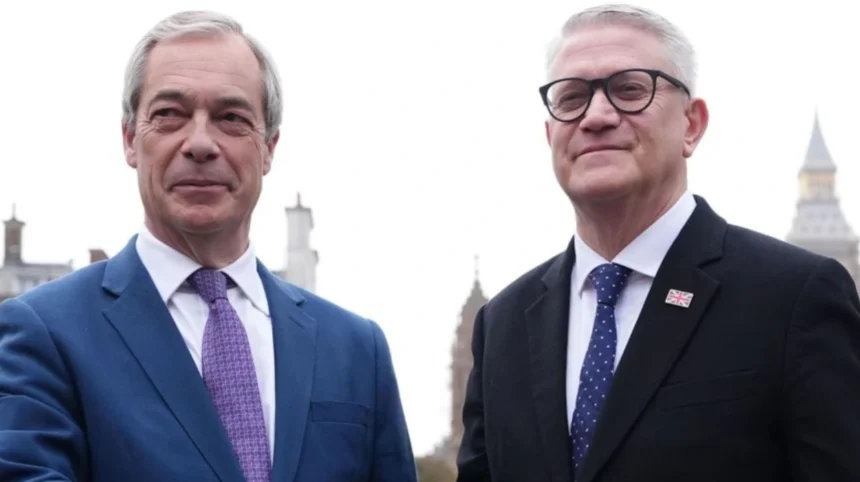
- Romford MP Andrew Rosindell delivered a heartfelt tribute to his late friend and political inspiration, Ann Widdecombe, at the Reform UK Conference in Birmingham on Friday, 4 September 2026.
- Reflecting on his 25 years as MP for Romford and nine years sitting alongside Widdecombe in the House of Commons, Rosindell praised her as a woman of immense courage, conviction, and patriotism.
- Rosindell recalled a light-hearted dinner conversation from April 2024 where Widdecombe advised him that he was in the “wrong political party” and ought to join Reform UK.
- The former Conservative MP acknowledged that Widdecombe’s direct advice, alongside encouragement from Reform leader Nigel Farage, ultimately proved correct.
- The tribute highlighted Widdecombe’s principled stance on animal welfare, her devotion to her Christian faith, and her unwavering dedication to representing ordinary British citizens.
- Rosindell pledged that he and his colleagues would honour Widdecombe’s memory by continuing the fight to save the country with renewed determination.
Birmingham Reform UK (East London Times) September 9, 2026 – In an emotional address that blended deep personal loss with political resolve, Romford Member of Parliament Andrew Rosindell paid tribute to his late friend and mentor, Ann Widdecombe, during the Reform UK Conference in Birmingham on Friday. Speaking to a packed conference hall, Rosindell remembered Widdecombe as a formidable political figure, a steadfast patriot, and a courageous leader who never hesitated to speak her mind regardless of the political cost.
- Key Points
- How Did Ann Widdecombe Influence Andrew Rosindell’s Political Journey?
- Why Was Ann Widdecombe Regarded as a Politician of Rare Conviction?
- What Is the Legacy Ann Widdecombe Leaves Behind for Her Supporters?
- Background of the Particular Development
- Prediction: How This Development May Affect the Political Landscape and Electorate
Rosindell reflected on his quarter-century of public service as the MP for Romford, including the nine years he served in the House of Commons alongside Widdecombe. He emphasised that she was not merely a respected parliamentary colleague, but a deeply cherished personal friend whose principled stance on key national issues inspired his own political journey.
Rosindell painted a vivid portrait of a parliamentarian who stood apart from modern political conventions. He praised her refusal to bend her convictions to suit prevailing public opinion or party machinery, describing her as a public servant who placed duty to her country above partisan loyalty.
How Did Ann Widdecombe Influence Andrew Rosindell’s Political Journey?
A central highlight of Rosindell’s speech involved a poignant personal anecdote concerning a conversation the two politicians shared in April 2024, shortly before the General Election. During a dinner in Southend alongside their mutual friend Lady Julia Amess, Widdecombe informed Rosindell that she was scheduled to speak at a Reform UK fundraising event in his constituency of Romford the following day.
With characteristic candour, Widdecombe gave him a direct warning regarding her speech. She explained that whilst she would support Reform UK, she would refrain from speaking ill of him personally—except to observe publicly that he was serving in the wrong political party and should defect to Reform UK himself.
Recalling a more recent encounter in the corridors of Parliament just months ago, Rosindell recounted how Widdecombe congratulated him on making the decision to join Reform UK and asked how he was settling in. Smiling at the conference audience, Rosindell noted that he had informed her at the time that party leader Nigel Farage had been offering him the exact same advice from the very start.
Addressing the hall directly, Rosindell remarked that Widdecombe’s counsel had ultimately proven correct, concluding with the light-hearted declaration: “So here I am!”
Why Was Ann Widdecombe Regarded as a Politician of Rare Conviction?
Moving beyond political humour, Rosindell spoke with grave reverence about Widdecombe’s character and public legacy. He characterised her as an increasingly rare breed of public figure who operated entirely on genuine principle rather than calculated media strategy.
Rosindell observed that Widdecombe possessed an instinctive understanding of right and wrong, requiring no pre-scripted talking points or directional guidance from party whips and bureaucrats before taking a stand. Whether observers agreed or disagreed with her stances, Rosindell asserted, no one could ever question the sincerity of her convictions.
He drew specific attention to her uncompromising dedication to animal welfare, citing her lifelong campaign against animal cruelty as a prime example of her willingness to champion unpopular or contentious causes without political compromise. He described her passion as a reflection of her desire to end cruelty inflicted upon God’s creatures, driven by her deep Christian faith.
Furthermore, Rosindell highlighted her commitment to defending ordinary British people—a demographic he argued had been consistently ignored, patronised, sneered at, and betrayed by the traditional political establishment.
What Is the Legacy Ann Widdecombe Leaves Behind for Her Supporters?
Concluding his address, Rosindell expressed heartfelt gratitude for Widdecombe’s guidance, compassion, and friendship throughout his career. He noted that losing her represented an exceptionally tragic moment for those who knew her personally and for the wider country.
He offered a solemn promise to the conference delegates, declaring that her admirers would not allow her lifelong battles to be forgotten. He stated that the primary responsibility facing her colleagues is to press forward with the campaign to safeguard the nation’s future, drawing added determination from her memory and example.
His final words—a simple “God bless and thank you, Ann Widdecombe”—marked a poignant farewell to a figure who served as a mentor, colleague, and catalyst for his own political transition.
Background of the Particular Development
The political trajectory of both Ann Widdecombe and Andrew Rosindell reflects a broader structural shift within the right-leaning segment of contemporary British politics. Widdecombe, who initially rose to national prominence as a Conservative Member of Parliament for Maidstone (and later Maidstone and The Weald) between 1987 and 2010, served in high-profile shadow cabinet and ministerial roles. Known for her social conservatism and uncompromising rhetorical style, she retired from Parliament in 2010 but returned to active politics in 2019 by joining the Brexit Party (now Reform UK), subsequently securing election as a Member of the European Parliament.
Andrew Rosindell’s political career closely mirrored this ideological alignment. First elected as the Conservative MP for Romford in 2001, Rosindell established himself as a staunch traditionalist, vocal eurosceptic, and champion of constitutional heritage over 25 years of parliamentary service.
The growing alignment between disaffected traditional Conservatives and Reform UK set the stage for cross-party dialogues and eventual realignments. Widdecombe’s persistent encouragement for figures like Rosindell to join Reform UK highlighted the ongoing realignments on the right of the British political spectrum, which culminated in Rosindell’s eventual decision to formally align with Reform UK.
Prediction: How This Development May Affect the Political Landscape and Electorate
The public tribute and the narrative surrounding Andrew Rosindell’s alignment with Reform UK are likely to have measurable implications for several key stakeholder groups across the political spectrum:
- Conservative Party Leadership and Membership: High-profile tributes celebrating defections and political alignments with Reform UK signal continued volatility on the right flank of British politics. Conservative strategists may face heightened pressure to reassure traditionalist backbenchers and local association members who share the ideological outlook championed by figures like Widdecombe and Rosindell.
- Reform UK Grassroots and Campaigners: Powerful personal testimonials delivered by established parliamentarians serve to legitimise Reform UK as a primary home for traditional, socially conservative voters. Highlighting figures with long parliamentary track records provides institutional credibility, potentially aiding voter recruitment and local constituency organisation.
- The Romford Electorate and Traditional Conservative Voters: Voters in constituencies with long-serving traditionalist representatives may increasingly re-evaluate party loyalty versus candidate alignment. Rosindell’s explicit framing of his move as a continuation of Widdecombe’s principles may resonate with voters who feel alienated from traditional party structures, shifting local voter dynamics in future electoral contests.