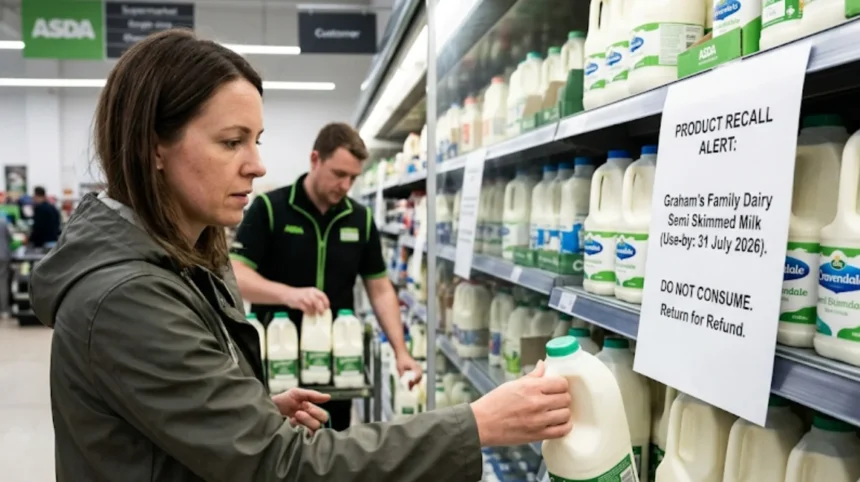
Semi skimmed milk recalled products from Graham’s Family Dairy carry a use-by date of 31 July 2026 and affect one pint, one litre, and two litre bottles sold across England. The Food Standards Agency warns consumers not to consume the milk due to veterinary medicine contamination including penicillin, posing allergy risks.
- What milk products are currently being recalled in the UK?
- Why was Graham’s Family Dairy semi-skimmed milk recalled?
- What are the health risks from consuming recalled semi-skimmed milk?
- How can East London residents check if they have affected milk products?
- What should consumers do if they have purchased recalled milk?
- How does the UK food recall system protect consumers?
- What precedent exists for milk recalls in the UK?
- How does semi-skimmed milk differ from other milk types?
- What regulatory standards govern antibiotic levels in UK milk?
- Where can East London consumers find ongoing food safety updates?
What milk products are currently being recalled in the UK?
Multiple milk products face recalls in 2026, with Graham’s Family Dairy semi-skimmed milk the primary alert for England and Danone infant formula products recalled in Northern Ireland for toxin contamination.
The United Kingdom’s food safety monitoring system operates continuously to identify products that may pose health risks to consumers. In July 2026, two significant dairy-related recalls emerged. Graham’s Family Dairy initiated a recall of semi-skimmed milk products sold in England with a use-by date of 31 July 2026.
The affected Graham’s Family Dairy products include three specific pack sizes: one pint semi-skimmed milk bottles, one litre semi-skimmed milk bottles, and two litre semi-skimmed milk bottles. All three variants share the same use-by date of 31 July 2026. The recall applies exclusively to England, not Scotland, Wales, or Northern Ireland.
A separate recall involving Danone affects Aptamil and Cow & Gate First Infant Milk and Follow On Milk formula products sold in Northern Ireland. This recall extension, last updated 6 February 2026, addresses potential cereulide toxin presence in specific batches with best-before dates ranging from June 2026 to February 2027.
Why was Graham’s Family Dairy semi-skimmed milk recalled?
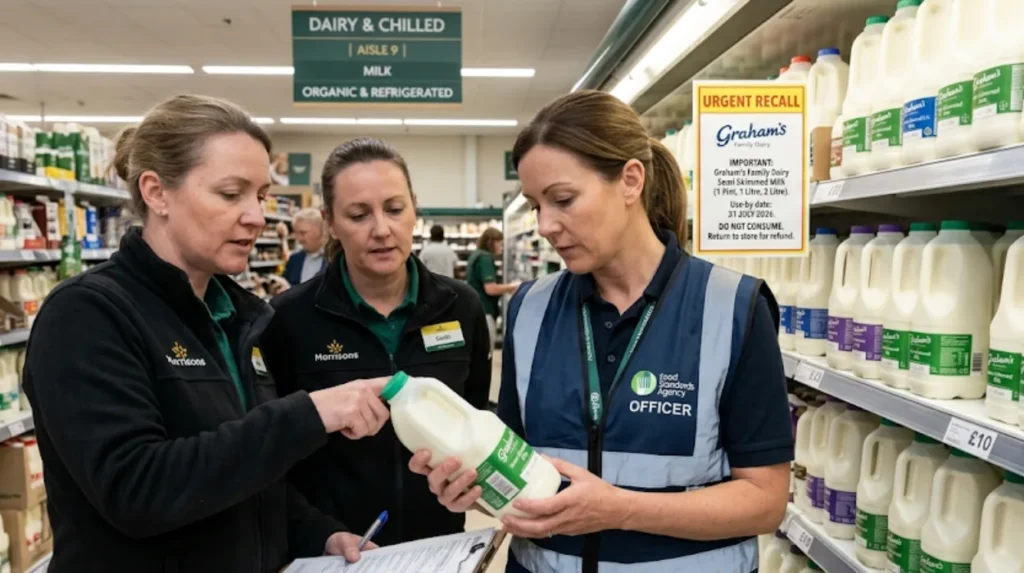
Graham’s Family Dairy recalled semi-skimmed milk due to veterinary medicine contamination including penicillin antibiotics, creating potential health risks for consumers with antibiotic allergies.
Veterinary medicines entered the milk supply through cattle treatment protocols at Graham’s Family Dairy, Scotland’s largest independent dairy company. The company operates production facilities supplying supermarkets and shops across the United Kingdom with milk, butter, yogurts, ice cream, and other dairy products.
The Food Standards Agency confirmed that veterinary medicines, including antibiotics such as penicillin, were detected in the affected semi-skimmed milk batches. Penicillin represents a beta-lactam antibiotic commonly used in veterinary medicine to treat bacterial infections in dairy cattle. When administered to lactating cows, withdrawal periods must be observed before milk enters the human food supply.
Trace levels of antibiotics in milk pose particular risks to individuals with penicillin allergies. Penicillin allergy affects approximately 10% of the UK population, with reactions ranging from mild skin rashes to severe anaphylaxis. Even minute quantities can trigger allergic responses in sensitized individuals.
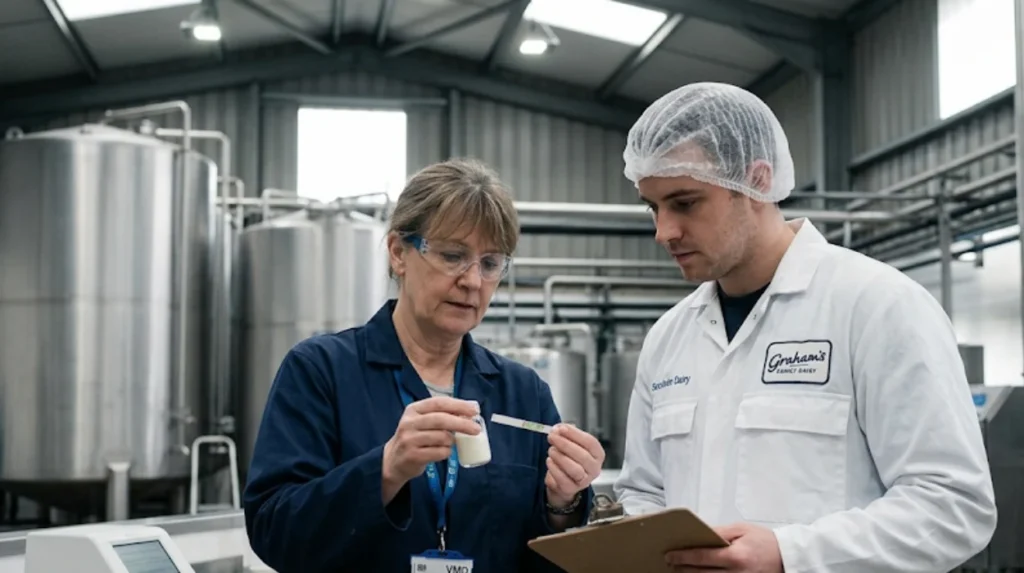
The recall represents a precautionary measure implemented by Graham’s Family Dairy. The company stated that quality and consumer safety remain paramount to their operations. The contamination detection occurred through routine quality control testing before products reached retail shelves, though some batches had already been distributed.
What are the health risks from consuming recalled semi-skimmed milk?
Consuming recalled semi-skimmed milk containing veterinary medicines including penicillin may cause allergic reactions in sensitive individuals, ranging from mild symptoms to severe anaphylactic responses requiring emergency medical treatment.
Antibiotic contamination in milk products creates specific health hazards for different population groups. Individuals with documented penicillin allergies face the highest risk profile. Penicillin and related beta-lactam antibiotics can trigger immune system responses in sensitized individuals, producing symptoms within minutes to hours after consumption.
Mild allergic reactions to penicillin include skin manifestations such as hives, itching, and localized swelling. Respiratory symptoms may include nasal congestion, wheezing, and coughing. Gastrointestinal effects can include nausea, abdominal cramping, and diarrhea. These symptoms typically appear within one to two hours after exposure.
Severe allergic reactions, classified as anaphylaxis, require immediate emergency medical intervention. Anaphylactic symptoms include difficulty breathing, throat swelling, rapid pulse, dizziness, and loss of consciousness. Without prompt treatment with epinephrine, anaphylaxis can prove fatal.
The Food Standards Agency assessed that the presence of veterinary medicines makes the product unsafe to consume. The agency specifically warned that antibiotic contamination may pose possible health risks for anyone with allergies to antibiotics, particularly penicillin.
Consumers without antibiotic allergies face minimal acute health risks from trace antibiotic levels in the recalled milk. However, regulatory limits exist to prevent antibiotic residues in food products, as chronic low-level exposure contributes to antimicrobial resistance development in bacterial populations.
How can East London residents check if they have affected milk products?
East London residents should examine their refrigerators for Graham’s Family Dairy semi-skimmed milk bottles displaying use-by date 31 July 2026 in one pint, one litre, or two litre sizes to determine if they possess recalled products.
Product identification requires checking three specific attributes on milk packaging. First, verify the brand name reads “Graham’s Family Dairy” or “Grahams Family Dairy.” The company uses both spellings on different packaging variants.
Second, confirm the product type states “Semi Skimmed Milk” or “Semi-Skimmed Milk.” The recall applies exclusively to semi-skimmed variants, not whole milk, skimmed milk, or other dairy products from Graham’s Family Dairy.
Third, locate the use-by date printed on the bottle cap or label. Only products marked with use-by date 31 July 2026 fall within the recall scope. Graham’s Family Dairy confirmed that no other products or use-by dates are affected by this recall.
Pack sizes subject to recall include one pint bottles (approximately 568 millilitres), one litre bottles, and two litre bottles. All three sizes carry identical use-by dates and contamination risks.
The recall applies to products sold across England, including all East London boroughs: Tower Hamlets, Newham, Hackney, Waltham Forest, Redbridge, Barking and Dagenham, Havering, and Greenwich. Retailers including Tesco, Asda, Morrisons, Sainsbury’s, Waitrose, and independent convenience stores received affected stock.
What should consumers do if they have purchased recalled milk?
Consumers possessing recalled Graham’s Family Dairy semi-skimmed milk must not consume the product and should return it to the original purchase location for a full refund, with or without receipts.
The Food Standards Agency issued explicit guidance stating consumers should not consume the affected milk products. The agency’s advice emphasizes returning products to purchase locations for complete refunds. Retailers must accept returns regardless of whether customers retain original receipts.
Graham’s Family Dairy’s official statement instructs customers not to consume but to return the following products: one pint semi-skimmed milk with use-by date 31 July 2026, one litre semi-skimmed milk with use-by date 31 July 2026, and two litre semi-skimmed milk with use-by date 31 July 2026.
Retailers across East London implemented point-of-sale notices explaining the recall to customers. These notices appear in all stores selling the affected products. The notices detail why the product is being recalled and instruct customers on return procedures.
Consumers who already consumed the recalled milk before the recall announcement should monitor for allergic reaction symptoms. Individuals experiencing hives, breathing difficulties, or other allergic symptoms should seek immediate medical attention. Those with known penicillin allergies should contact their GP or NHS 111 if concerned about potential health impacts.
Graham’s Family Dairy apologized for the issue and reassured customers that no other company products or use-by dates are affected. The recall does not extend to whole milk, skimmed milk, butter, yogurt, ice cream, or other Graham’s Family Dairy products.
How does the UK food recall system protect consumers?
The UK Food Standards Agency operates a comprehensive food alert system that issues Product Recall Information Notices and Food Alerts for Action to notify consumers and local authorities about unsafe food products requiring withdrawal or recall.
The Food Standards Agency functions as the United Kingdom’s independent government department responsible for food safety and hygiene. The agency monitors food products continuously through testing programs, manufacturer notifications, and consumer complaints. When contamination or safety issues emerge, the agency coordinates recall actions with manufacturers and retailers.
Product recalls and withdrawals operate under distinct definitions. Withdrawn products are removed from retail shelves before reaching consumers. Recalled products have already been sold to consumers, requiring notifications requesting product returns. The agency issues Product Recall Information Notices to inform consumers and local authorities about problems associated with food products.
Food Alerts for Action provide local authorities with specific instructions to implement on behalf of consumers. These alerts reached East London borough councils during the Graham’s Family Dairy recall, enabling local environmental health teams to verify retailer compliance and ensure proper point-of-sale notices appeared in stores.
The agency maintains a public alerts database where consumers can access current and historical recall information. The agency publishes alerts with product details, risk statements, company actions, and consumer advice.
Graham’s Family Dairy’s recall notice appeared on the agency website on 22 July 2026, designated with an official alert reference number. The alert included the agency’s official Twitter account broadcasting the information to reach wider audiences through social media channels.
What precedent exists for milk recalls in the UK?
UK milk recalls occur periodically, with notable historical examples including Sainsbury’s semi-skimmed UHT milk recall in August 2020 for microbiological contamination and multiple infant formula recalls in early 2026 for cereulide toxin contamination.
Historical milk recalls in the United Kingdom demonstrate the food safety system’s responsiveness to contamination events. In August 2020, Sainsbury’s recalled semi-skimmed less than 2% fat UHT milk in one litre cartons with best-before dates of 28 and 29 December 2020. The recall addressed possible microbiological contamination that could lead to spoilage and make the product unsafe to consume.
Local councils issued recall notices for the Sainsbury’s product. The agency confirmed that microbiological contamination may make products unsafe, advising consumers to return items to purchase locations for full refunds.
Early 2026 saw unprecedented infant formula recalls affecting thousands of families across the UK. Danone recalled multiple batches of Aptamil and Cow & Gate First Infant Milk and Follow On Milk formula products due to cereulide toxin presence. Cereulide, produced by Bacillus cereus bacteria, causes nausea, vomiting, and abdominal cramps, with symptoms appearing rapidly after consumption.
The UK Health Security Agency confirmed 36 reports of children with symptoms consistent with cereulide poisoning after consuming contaminated baby formula. The recalls expanded through January and February 2026, covering specific batches with best-before dates ranging from June 2026 to February 2027.
Nestlé also initiated precautionary recalls of several SMA Infant Formula and Follow-On Formula products in January 2026 due to possible cereulide toxin presence. The coordinated recalls across multiple manufacturers demonstrated the agency’s capacity to manage complex, multi-brand contamination events.
How does semi-skimmed milk differ from other milk types?
Semi-skimmed milk contains approximately 1.5% to 1.8% fat content, positioned between whole milk’s 3.5% to 4% fat and skimmed milk’s less than 0.5% fat, making it the most popular milk variety in the United Kingdom.
Semi-skimmed milk undergoes partial cream removal during processing, reducing fat content while retaining flavor and nutritional value. The pasteurization process heats milk to 72°C for at least 15 seconds, destroying harmful bacteria while preserving nutritional properties. Semi-skimmed milk represents the most widely consumed milk type in the UK, accounting for approximately 63% of household milk purchases.
Whole milk, also called full-fat milk, retains all natural cream content with fat percentages ranging from 3.5% to 4%. Whole milk provides higher calorie content and fat-soluble vitamin levels but carries more saturated fat than semi-skimmed variants.
Skimmed milk undergoes nearly complete cream removal, resulting in fat content below 0.5%. Skimmed milk offers the lowest calorie and fat content but may taste thinner and less flavorful than semi-skimmed or whole milk. Some nutrients, particularly fat-soluble vitamins A and D, are reduced during skimming and often added back through fortification.
Graham’s Family Dairy produces all three milk varieties, but the July 2026 recall applies exclusively to semi-skimmed milk products. The contamination affected only semi-skimmed production batches, with whole milk and skimmed milk from the same company remaining unaffected and safe for consumption.
What regulatory standards govern antibiotic levels in UK milk?
UK regulations strictly limit antibiotic residues in milk, with maximum residue levels established under European Union legislation retained in UK law, requiring milk to test negative for antibiotics before entering the food supply.
The Veterinary Medicines Directorate oversees antibiotic use in UK livestock, including dairy cattle. Farmers must observe withdrawal periods after administering antibiotics to lactating cows, ensuring milk contains no detectable antibiotic residues before entering the food chain. Withdrawal periods vary by antibiotic type, ranging from 24 hours to several weeks.
Maximum Residue Levels define the maximum concentration of veterinary medicine residues legally permitted in food products. The UK retains EU regulations post-Brexit, with milk subject to particularly stringent testing requirements. Milk must test negative for beta-lactam antibiotics including penicillin before processing and distribution.
Dairy processors conduct routine antibiotic screening on all milk deliveries. Testing methods include microbial inhibition assays and rapid immunoassay tests detecting beta-lactam antibiotics at parts-per-billion levels. Milk failing antibiotic tests is rejected and destroyed, preventing contaminated product from reaching consumers.
The Graham’s Family Dairy recall indicates that antibiotic detection occurred either during routine processor testing or through subsequent verification testing. The company’s statement about trace-level antibiotic presence suggests contamination levels exceeded regulatory thresholds, triggering the precautionary recall despite representing small risks to the general population.
Where can East London consumers find ongoing food safety updates?
East London consumers can access current food safety information through the Food Standards Agency website, local borough council environmental health pages, and the agency’s official Twitter account.
The agency maintains a comprehensive alerts database updated continuously with new recalls and withdrawals. The website provides searchable filters by product type, allergen, retailer, and date, enabling consumers to identify relevant alerts quickly.
Local East London borough councils publish food safety alerts on their environmental health pages. Tower Hamlets, Newham, Hackney, Waltham Forest, Redbridge, Barking and Dagenham, Havering, and Greenwich councils all maintain food safety information sections on their websites, sometimes providing borough-specific guidance during major recalls.
The agency operates active social media accounts, particularly Twitter, broadcasting real-time alerts to followers. The agency’s feed announced the Graham’s Family Dairy recall on 22 July 2026, reaching consumers who may not visit the website regularly.
Specialized databases track milk-related food recalls in the UK, documenting numerous alerts naming milk between July 2025 and June 2026. These sites provide historical context and pattern analysis for consumers researching recall trends.
Consumers can subscribe to email alerts and RSS feeds, receiving automatic notifications when new alerts matching their interests appear. The agency encourages subscription to ensure timely awareness of food safety issues affecting specific product categories.
What Graham’s Family Dairy milk has been recalled?
The recall affects Graham’s Family Dairy semi-skimmed milk sold in one pint, one litre, and two litre bottles with a use-by date of 31 July 2026. No other Graham’s Family Dairy milk products or dates are included in this recall.