
In their Declaration of Independence first published on the night of the 4th of July 1776 the English Colonists in America resolved:
That these United Colonies are, and of Right ought to be, Free and Independent States; that they are absolved from all Allegiance to the British Crown, and that all political Connection between them and the State of Great-Britain, is and ought to be totally dissolved.
The authors of document included Thomas Jefferson, John Adams and Benjamin Franklin who proclaimed that self-evident truth that
“all Men are created equal, that they are endowed by their Creator with certain unalienable Rights, that among these are Life, Liberty, and the Pursuit of Happiness.”
They also concluded that to secure these rights,
Governments are instituted among Men, deriving their just Powers from the Consent of the Governed, that whenever any Form of Government becomes destructive of these Ends, it is the Right of the People to alter or to abolish it…
But when a long Train of Abuses and Usurpations, pursuing invariably the same Object, evinces a Design to reduce them under absolute Despotism, it is their Right, it is their Duty, to throw off such Government, and to provide new Guards for their future Security.
It must be remembered that these demands were the basic rights they believed they enjoyed as every Englishman enjoyed engrained in their understanding from Magna Carta 1215 and the Bill of Rights 1689 restraining the powers of the crown and abuse of the law. In King George III they no doubt perceived the absolute tyranny of James II evident from the wording of the Declaration. Clearly, the English colonists had reached deadlock with the Mother Country and amongst the grievances and causes they listed: that King George III refused his assent to Laws, forbid State Governors to pass laws urgently required or otherwise neglected to give consent; prevented a right of representation in the legislature, dissolving representative Houses in the States which repeatedly opposed his interference with the peoples’ rights, preventing State elections and the naturalisation of foreigners, as well as refusing to pass laws to encourage their immigration.
In these charges Americans today might reflect on such despotic rule in eighteenth century colonial America and Republican presidential rule today. Some may even reflect with alarm that the charges made in the Declaration describe certain current abuses of their current government in terms of obstruction of the administration of justice, verbal attacks and criticism of the judiciary, and attempts to intimidate the judiciary.
Other charges in the Declaration also have reverberations regarding recent events in America as the Declaration charged the King with erecting:
a Multitude of new Offices, and sent hither Swarms of Officers to harass our People, … He has kept among us, in Times of Peace, Standing Armies, without the consent of our Legislatures.
He has affected to render the Military independent of and superior to the Civil Power…For cutting off our Trade with all Parts of the World:
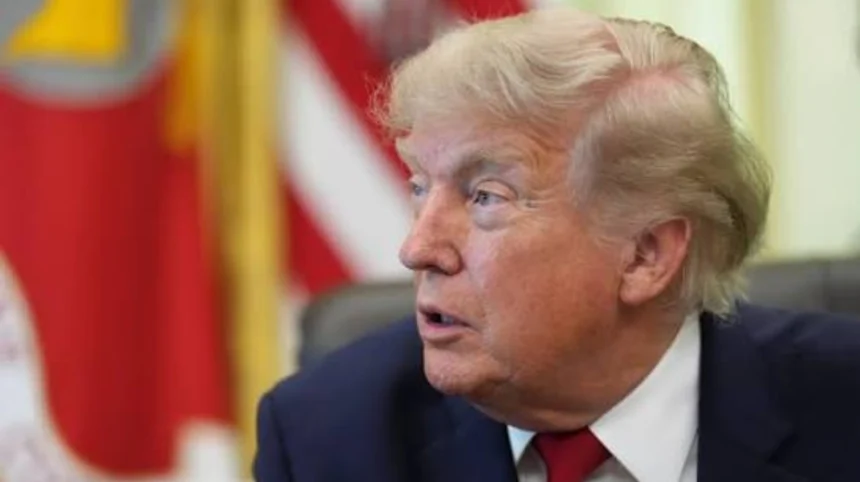
In a sense Donald Trump has taken steps that raise questions as to the efficacy of his actions in relation to the grievances of the colonists which gave them grounds for their dissatisfaction and led to their revolutionary war. Trump has not cut off all trade as did King George III but his imposition of tariffs has undoubtedly damaged the US economy as they did in the 1920s. His attacks on migrants and the forceful detentions and deportations also have overtones of what the Declaration denounced.
It must be said that the colonists did not just suddenly declare independence they had taken many legal steps to reconcile matters with the King by way of Petitions as they were British subjects.
It is unsurprising to note that at this time many colonists did not have a view on the question but many of those with political responsibilities understood them well, just as in England there was opposition to the King’s autocratic government of the colonies despite the King’s Speech to Parliament in 1775 that as subjects “of Great Britain, with all its Consequences, is to be the freest Member of any Civil Society in the known World.” The fact was that Americans were not in that condition and this was brought home to the king forcibly by Edmund Burke in his Address to the King in 1777. Burke was supported in his efforts to resolve what he termed an English Civil War by Lord Rockingham, Leader of the Rockingham Whigs in Parliament and the Duke of Portland. Later Rockingham in his second term as Prime Minister began peace talks to end the American War for Independence, and took steps to prevent similar problems in Ireland by giving Ireland legislative independence,
Burke’s support for the colonists in his Address was as much an affirmation of the rights of Englishmen as it was of the colonists. He identified the grievances: subversion of solemn fundamental charters without due process or cause, suspension of commerce and trade, the imposition of military force not accountable to any authority in the country, and despite George III’s speech to parliament in 1775 suggesting relief of the disasters in the colonies and correcting the errors of his administration the King could not be a strong protector of the liberty and aspirations of the colonists. Burke charged that the government’s policy was an instrument of despotism which he condemned as fatal to the British Empire because it would destroy all trust and dependence of Britain’s allies. His Address disputed the need for every coercive measure the government brought in against the colonists. Burke and his colleagues saw that the war was a civil war which would be detrimental to the British Empire. It would mean
“the reduction of free people to slavery by foreign mercenaries.”
Burke argued that the cause of discontent and revolution in the colonies was due to
“the misconduct of the government: – that they are owing to plans laid in error, pursued with obstinacy and conduct it without wisdom.”
He submitted that the real cause of the American revolt was the attempt to deprive people of their property: in other words their fundamental legal rights.
Burke also wrote an Address to the English colonists telling them that most English people preserved “the most perfect unity of sentiment, principles, and affection” for their American friends and relatives. The Address to the King had set out the English colonists grievances against the autocratic views of the administration of the colonies with the support of a number of politicians in the House of Commons and House of Lords. In fact, Burke proposed that all members who opposed the government’s policies towards the colonists should secede from parliament if Britain continued its war against the colonists. He suggested this in 1775 before the Declaration. Despite all this the British public did not seem disturbed by the war and this was had potential for disturbing consequences of “imbecility and meanness.” Burke suggested that Benjamin Franklin who was then the American Minister in Paris should meet with Lord Stormont and that the Whig party should act as mediators.
Burke associated the Marquess of Rockingham and the Duke of Portland in his quest for resolution of the crisis, but Burke and his colleagues had an uphill task against the Establishment. He warned Rockingham that they could lead to proceedings for seditious libel or impeachment. That did not happen but the tragic war continued and as Burke and his colleague predicted ended in defeat. What started as a civil war became a world war.
Another Englishman who supported the American revolutionaries was Thomas Paine and, in his pamphlet, Common Sense he opined:
And is there any inhabitant in America so ignorant, have not to know, that according to what is called the present constitution, that this continent can make no laws but what the king gives leave to; and is there any man so unwise, as not to see, that (considering what has happened) he will suffer no law to be made here, but such as suit his purpose.
Another warning from history perhaps.