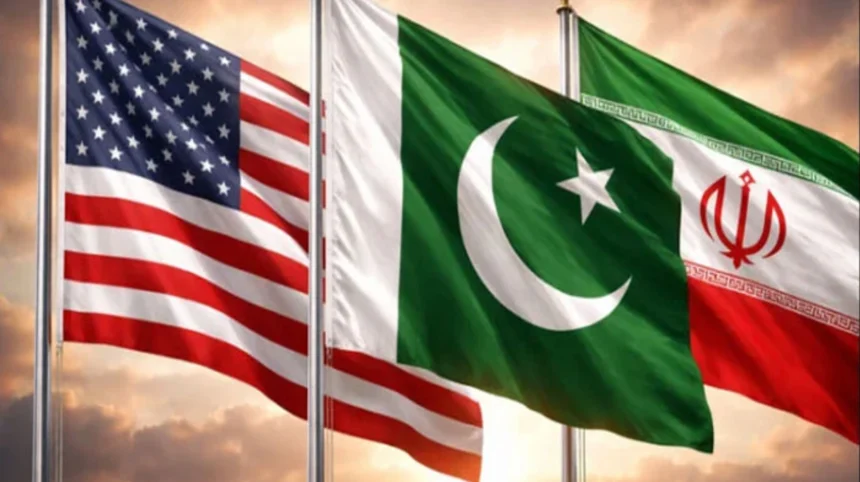
Whilst Mr Trump claims victory over a ceasefire that appears unilateral in terms of the United States, and questionable in so far as its ally Israel is concerned, the real credit for enabling more serious negotiations must go to the Government of Pakistan, in particular to its Prime Minister Shehbaz Sharif and Field Marshal Asim Munir as well as Pakistan’s diplomats promoting an Islamabad Accord entailing an immediate ceasefire and reopening of the Strait of Hormuz. Credit must also go to Turkey and the Gulf states who supported these highly intense urgent negotiations.
Reports from several news agencies report that the peace proposals suggested by Iran include:
- Fundamental commitment to non-aggression from the US.
- Controlled passage through the Strait of Hormuz in coordination with the Iranian armed forces, which would mean that Iran retains its leverage over the waterway.
- An acceptance of Iran’s nuclear enrichment programme.
- The lifting of all primary and secondary sanctions and resolutions against Iran.
- End of all resolutions against Iran at the International Atomic Energy Agency.
- End of all resolutions against Iran by the United Nations Security Council.
- The withdrawal of US combat forces from all bases in the region.
- Full compensation for damages suffered by Iran during the war – to be secured through payments to Iran by ships passing through the Strait of Hormuz.
- The release of all Iranian assets and properties frozen abroad.
- The ratification of all these matters in a binding UNSC resolution.
It appears that Mr Trump has agreed these 10 points in principle as a basis for negotiation although his spokesperson denies that. Whether any of this will be formerly agreed remains to be seen although a ceasefire appears to be agreed for a period of two weeks to enable these and other matters to be considered. It seems that there may be some misunderstanding regarding Israel and its war in Lebanon which has intensified its bombing against cities in Lebanon with no ceasefire in sight. Israel wanted certain exclusions from any ceasefire in terms of “certain fronts” whilst Iran wanted a complete ceasefire. This is a matter that emphasises the need for clarity when agreeing such critical matters. It will be one of those many differences that will be part of the Islamabad talks. From another perspective what this provisional unilateral agreement by America (without concurrence of its ally Israel’s participation) must be seen as an unconditional agreement the United States and Iranian delegates to meet to try and agree a permanent end to hostilities. in effect, it is a provisional unconditional agreement for a two-week ceasefire to agree a peace agreement, an Islamabad Accord. Iran has proposed the above 10 points, but such a position will obviously take a considerable amount of negotiation during a tenuous ceasefire which is by no means a truce between belligerents.
The United States wanted regime change in Iran, but its systems of government remain in place as do its institutions. The earlier nuclear agreement concluded by the Obama administration was terminated by Trump which restricted development of nuclear weapons. At the end of the 12 Day War last year Pete Hegseth, the US Secretary for War, and Mr Trump proclaimed that they had destroyed Iran’s nuclear programme. Recent hostilities contradict that. It also seems that the matters discussed during the negotiation sessions before 28 February 2026 appear to be different from the matters now apparently demanded by the United States e.g., opening the Strait of Hormuz which were open before Isarel and the United States launched this illegal war.
The possible miscalculation as to the strategic importance of the Strait of Hormuz and how that could have an impact on the world economy war is incredible for the best military organisation in the world. It may well be that the intelligence assessments clearly pointed to the consequences of the Israeli plan to kill the Iranian leadership and that Trump ignored that advice as well as detailed briefings and just decided to go to war. In war geography sometimes holds the key as chroniclers down the ages have related. No doubt the United States military have the resources to take the Strait, but the human, economic costs, and political risk appear to outweigh what Trump had in mind for a quick war. With one eye on the Stock Market and the other on the mid-term elections Trump is probably reluctant to take the political risk, his poll ratings being at their lowest ,even amongst Maga supporters, since he became president.
But this war has much deeper and wider consequences for Trump and America if he remains president and continues his illegal wars undermining international law, the United Nations and European security by his friendship with Putin and sending his Vice President to interfere in the election in Hungary supporting Putin’s protégé. He permits Russian oil sanctions to be lifted and continues to insult President Zalensky even when he offers military help to the Gulf States. Apart from that his reckless approach to foreign policy since he was returned to the presidency has damaged not only the trust of America’s long-standing allies, but its credibility around the world. Thus, the cost of this war for America is not just measured in billions but in terms in its leadership. As Fred Iklé wrote in his study:
Like a businessman’s credit rating, the reputation of fulfilling treaty obligations toward our allies is too important to be sacrificed for one-time gains except in the case of emergency. Fred Iklé, How Nations Negotiate, Centre for International Affairs, Harvard University. (Harper and Row, 1964)
As previously suggested in an earlier opinion (Trump is no Woodrow Wilson) this war by the United States is illegal under international law and made more reprehensible and egregious by statements recently made by its president. As one American commentator stated that
“no world leader in history ever threatened to annihilate a whole civilisation.”
It must be said, however, that Adolf Hitler told a dinner party in Berlin in 1940:
“We can do it with incendiaries; we can destroy London completely.”
In 1942 Professor Hersch Lauterpacht opined that such an attack would constitute a war crime if used to terrorise the civilian population. Today any attack on bridges, power stations etc., such as Hegseth and Trump suggested over the Easter weekend would be a war crime. It is also a war crime to threaten to destroy a civilisation and as such in the United States this statement is an impeachable offence which is a matter for the US Congress where Articles of Impeachment have already been filed even before Trump made his remarks. There is also discussion about his removal under Article 25 of the United States Constitution, even amongst Republicans. This providesfor the President’s removal where he is unable to discharge the powers and duties of his office. That may be more difficult than impeachment as it requires a two-thirds vote in the House and the Senate and both remedies seem unlikely. It may be more likely if the Democratic Party win convincingly in the Mid Term Elections in November.
America was regarded as a great experiment in democracy- a Shining City upon a Hill as the Tudor-Stuart Protestant and Puritan English immigrants called it. This was translated by President Washington when he left office, after leading Americans in its war for independence, in his Farewell Address. Whilst he warned against any involvement with “the insidious wiles of foreign influence” and not to “entangle our peace and prosperity in the toils of a European ambition rivalship, interest or caprice” nevertheless he also stated the general approach to foreign relations as being to:
Observe good faith and justice towards all Nations. Cultivate peace and harmony with all. Religion and morality enjoin this conduct; and can it be that good policy does not equally enjoin it? It will be worthy of a free, enlightened, and, at no distant period, a great nation, to give to mankind the magnanimous and too novel example of a people always guided by an exalted justice and benevolence.
Today many Americans may like to reflect on President Washington’s words.