Key Points
- Major Venue Expansion: London Stadium, valued at £1.2 billion, is positioning itself to become a primary host for elite British boxing events.
- Planning Reclassification: Venue operator LS185 plans to recategorize boxing shows from general sporting events to “unique events,” enabling a capacity increase from 60,000 to 85,000.
- Financial Imperative: The move comes as London Stadium LLP faces annual operational losses of roughly £19 million, compounded by anchor tenant West Ham United’s reduced rental yields.
- Competitive Market: The arena aims to directly challenge Wembley Stadium and the Tottenham Hotspur Stadium for lucrative domestic fight nights.
- Broader Economic Impact: Operators estimate an expanded event calendar could generate an additional £15 million annually for the local Newham economy through hundreds of thousands of new visitors.
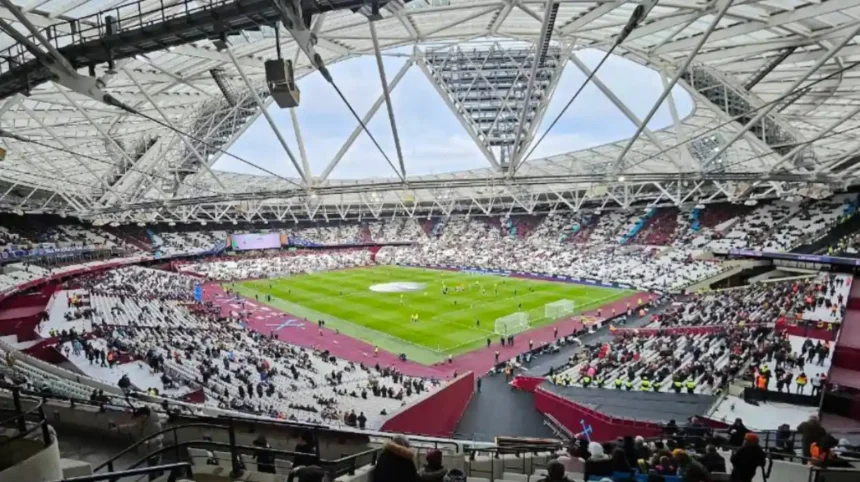
West Ham United (East London Times) October 29, 2026 – London Stadium, the former Olympic venue valued at £1.2 billion and currently serving as the home of West Ham United, is positioning itself to become a primary destination for major British boxing events through proposed planning changes.
As reported by City AM, the venue’s operator, LS185, plans to recategorize boxing shows from standard sporting events to “unique events.” This reclassification would allow the stadium to lift its sporting crowd ceiling from 60,000 to an upper limit of 85,000 spectators for mega fight nights, placing it in direct competition with established London venues such as Wembley Stadium and the Tottenham Hotspur Stadium.
Why Is the London Stadium Targeting Elite Boxing Events?
The strategic pivot towards combat sports is driven by a requirement to improve the venue’s commercial return and reduce public subsidy dependency. As noted by Harry Ewing of Inside World Football, London Stadium chair Lyn Garner has stated that the arena currently incurs annual operating losses of around £19 million.
These financial pressures have intensified following West Ham United’s lower rental yields under their long-term tenancy agreement, where annual payments fall below £5 million and decrease further during periods of league relegation. To offset these shortfalls, the London Stadium group is aggressively expanding its non-football programming.
As reported by City AM, a spokesperson for the London Stadium stated:
“As demonstrated by our recent planning submission and wider campus development proposals, our focus is on enhancing the visitor experience, supporting further investment and expanding the range and number of events hosted at the Stadium.”
The venue operator’s internal assessment indicates that expanding the event portfolio could generate an additional £15 million annually for the wider Newham economy by attracting approximately 800,000 incremental visits.
How Does London Stadium Compare to Existing British Fight Venues?
Historically, Wembley Stadium in North London has served as the primary arena for domestic heavyweight spectacles, holding crowds exceeding 90,000 for bouts featuring fighters like Anthony Joshua, Tyson Fury, and Daniel Dubois. Following its opening in 2019, the Tottenham Hotspur Stadium also established itself as a prominent host for major bouts in the capital. Outside London, Cardiff’s 80,000-seat Principality Stadium remains a major venue for closed-roof, high-capacity stadium events.
According to reporting by Aaron Clarke of Boxing News, despite its 14-year history since the 2012 London Games, the Stratford-based arena has never previously staged a professional boxing card. By adjusting its licensing layout to accommodate up to 85,000 fans on pitch level and in the stands, London Stadium aims to establish a comparable footprint to Wembley, leveraging its existing East London transport links and infrastructure to secure world-title bouts.
The demand for high-capacity venues remains strong within the domestic fight sector, as promoters regularly seek large-scale outdoor arenas across the spring and summer event calendars. Furthermore, local interest continues to grow among regional fighters; prospective boxers, including West Ham-linked prospect Connor Mitchell, have publicly expressed ambitions to compete on the pitch.
Background of the London Stadium’s Financial and Operational Model
Originally constructed at a cost of £486 million for the London 2012 Olympic and Paralympic Games, the Stratford site subsequently underwent a £323 million conversion to transform into a multi-purpose stadium. Modern valuations place the total asset value at approximately £1.2 billion.
In 2013, West Ham United secured a 99-year anchor tenancy agreement with the London Legacy Development Corporation (LLDC). Under the terms of the agreement, the public sector retains responsibility for running costs, maintenance, and pitch conversion expenses, while West Ham pays a fixed annual rent.
Because the anchor tenancy alone does not cover annual operational and maintenance costs—resulting in the reported £19 million yearly deficit borne by taxpayers—the stadium operator LLP has systematically sought non-football revenue streams. Over recent years, these have included major concert residencies by artists such as Metallica, Take That, and Sam Fender, as well as international athletics and Major League Baseball London Series fixtures. Staging elite boxing events represents the next phase in the venue’s strategy to maximize commercial utilization during the football off-season.
Prediction: How Will This Development Affect British Boxing Promoters, Athletes, and Fans?
If local planning authorities approve the proposed reclassification, the entry of an 85,000-capacity London Stadium into the boxing market will alter the commercial landscape for UK boxing promoters, fight fans, and professional athletes.
Enhanced Bidding Competition for Promoters
For major promotional entities such as Matchroom Boxing, Queensberry Promotions, and international partners, an additional high-capacity stadium in London creates leverage during venue negotiations. Increased competition between Wembley Stadium, Tottenham Hotspur Stadium, and London Stadium could reduce venue hire overheads and open additional summer scheduling dates for stadium-level events.
Broader Ticket Access and Pricing Dynamics for Fans
For combat sports supporters, an added venue capable of hosting 85,000 spectators increases overall ticket supply for high-demand fights. Enhanced market competition among primary venues may help stabilize entry-level ticket pricing for marquee events. Additionally, Stratford’s established rail, tube, and high-speed transit links provide accessible transportation options for spectators traveling from across the United Kingdom and abroad.
Greater Opportunities for British Fighters
For top-tier British fighters, particularly those with strong East London and Essex follower bases, the availability of London Stadium provides a localized arena for major title defenses. The expansion ensures that high-profile domestic fights can remain within the United Kingdom rather than being moved abroad, offering fighters the opportunity to headline major events in front of home crowds.